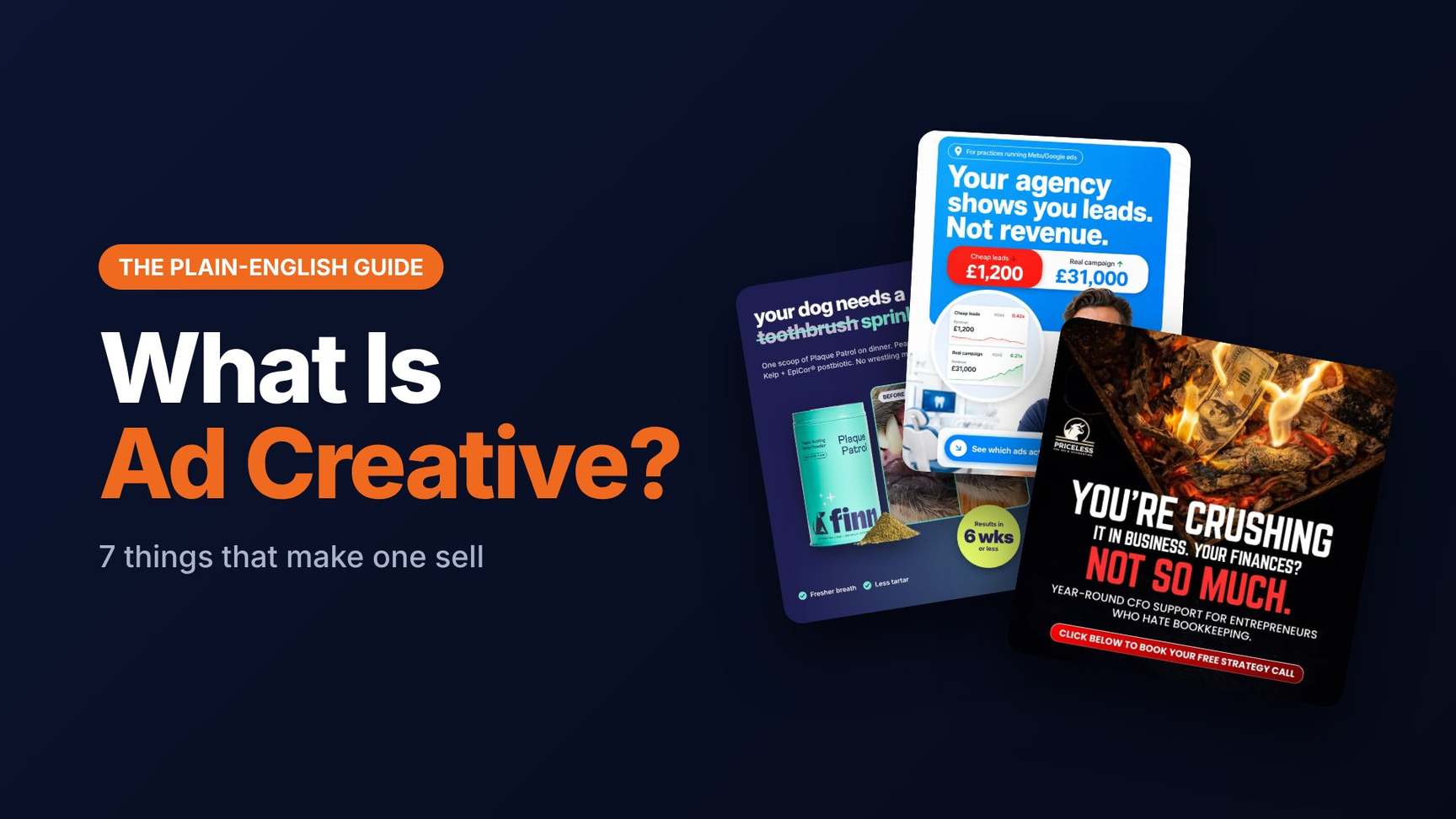
TL;DR: Ad creative is everything the buyer sees and hears in your ad: the image or video, the headline, the text and the button. On Meta today, the creative also does most of the targeting, because the algorithm uses it to decide who to show the ad to. A creative ad that sells has one clear idea, made for one buyer, with proof and one next step. Below I explain what ad creative is, the types, and the seven things that make one sell, with real examples from my own work.
"Ad creative" is one of those terms everybody uses and few people define. Ask three marketers and you get three answers. One means the picture. One means the whole ad. One means "the fun part that the designer does."
This guide clears it up. I design static ads for a living, so I will explain it the way I explain it to clients: in plain words, with real ads, and with the parts that actually decide whether the ad makes money.
What is ad creative?
Ad creative is the part of an ad that the audience actually experiences. That includes:
- The visual: an image, a video, a carousel or an animation
- The copy on the visual: the headline and any text on the image
- The copy around the visual: the caption (primary text), the headline under the image, the description
- The call to action: the button and the words on it
What it does not include is the setup behind the ad: the budget, the bidding, the audience settings, the campaign structure. That is media buying. Creative is what people see. Media buying is who sees it and how much you pay.
You will also hear "creatives" in the plural. "We need ten new creatives this week" just means ten new ads, or ten new visuals with their copy.
Ad creative vs creative advertising vs creative ads
These three get mixed up all the time, and Google treats them as close cousins, so here is the short version:
- Ad creative is the asset itself: the actual image, video and copy of one ad.
- Creative advertising is the wider practice of making ads that use an original idea to get attention. It is the term you see in agency award shows and in famous print campaigns.
- Creative ads usually means ads with a clever or unusual idea, the kind people share.
For a small brand running ads on Meta, the first one is what matters. You do not need an award. You need an ad creative that the right person stops for, understands, and acts on.
Why ad creative matters more than it used to
A few years ago, a good media buyer could win with tight targeting. You picked the right interests, the right age, the right lookalike, and even an average ad could work.
That has changed. Meta's own systems, like Advantage+ audiences, now decide much of the targeting for you. The algorithm looks at the ad itself, and at who stops and clicks, to decide who else should see it. In plain words: your creative is now your targeting.
That means:
- An ad that names "loan officers" in the headline will be shown to more loan officers, because loan officers are the ones who react to it.
- A vague ad that could be for anyone gets shown to anyone, and you pay for all of them.
- Testing new creative is now the main lever you have, not testing new audiences.
This is why so many brands now test more creative per week than they used to. I break that down by budget in how many ad creatives to test per week. For the AI side of this, see Meta Advantage+ creative for static ads.
Types of ad creative
Here are the main types you will run into on paid social:
| Type | What it is | Best for |
|---|---|---|
| Static image | One still image with text | Testing messages fast and cheap |
| Carousel | 2 to 10 swipeable cards | Showing steps, products or features |
| Video | Filmed or edited footage | Telling a story, showing a product in use |
| UGC | Content that looks made by a customer or creator | Trust and a native feel |
| Motion graphic | Animated design, no filming | Adding movement to a static idea |
| Catalog / dynamic | Auto-built from a product feed | Retargeting people who viewed products |
Most brands need a mix. But if your budget is small, static image ads are the easiest place to start, because you can make many versions and learn what message works before you spend on video. I compare the two in static vs video ads, and I explain the format itself in what is a static ad.
The 7 things that make an ad creative sell
Here is the checklist I use on every ad I design. Each point has a real example from my portfolio.
1. One idea, not three
The strongest ads say one thing. Not "fast, cheap, organic, award-winning and family-owned." One thing, said well.
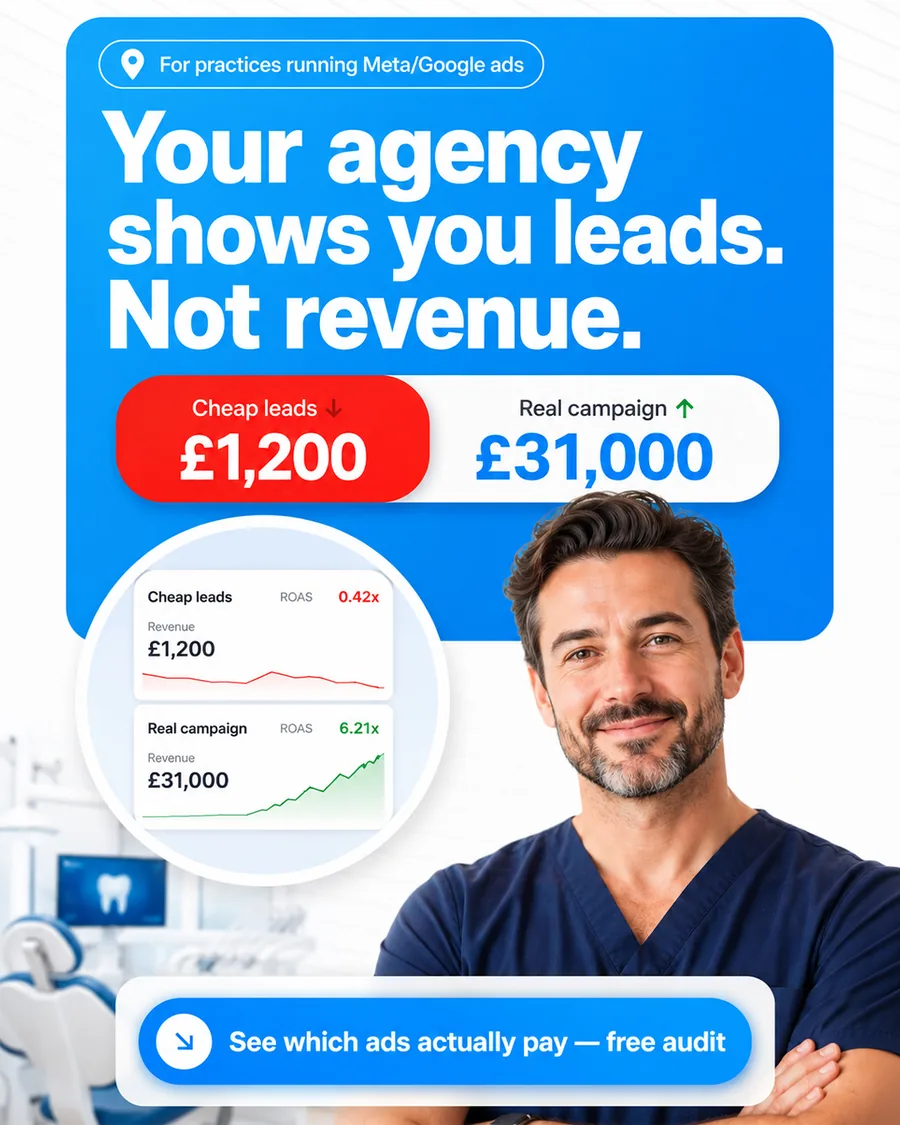
This ad for a dental marketing service has one idea: "Your agency shows you leads. Not revenue." Two numbers prove it, side by side: £1,200 from cheap leads and £31,000 from a real campaign. Everything else on the ad supports that one idea. A clinic owner gets the point in about two seconds.
Try this: Before you design, finish the sentence "The one thing this ad says is..." If you need "and" in the answer, you have two ads.
2. A buyer who can see themselves
People stop for ads that are about them. The fastest way is to name them: their job, their situation, their exact problem.
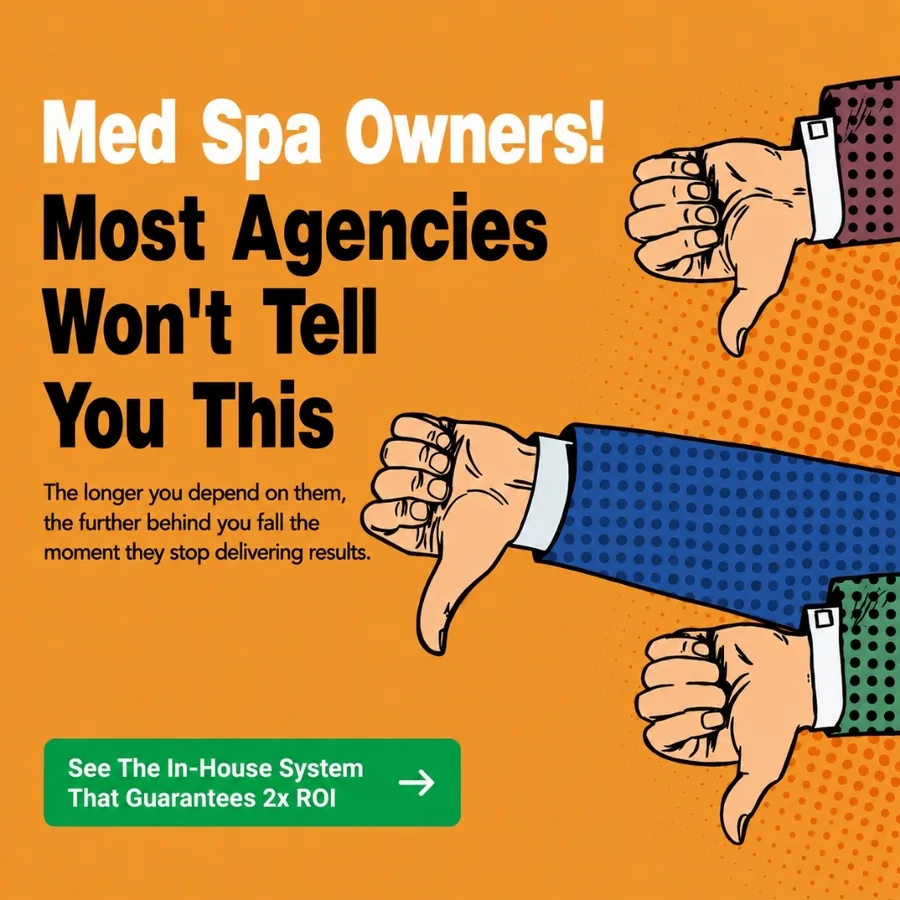
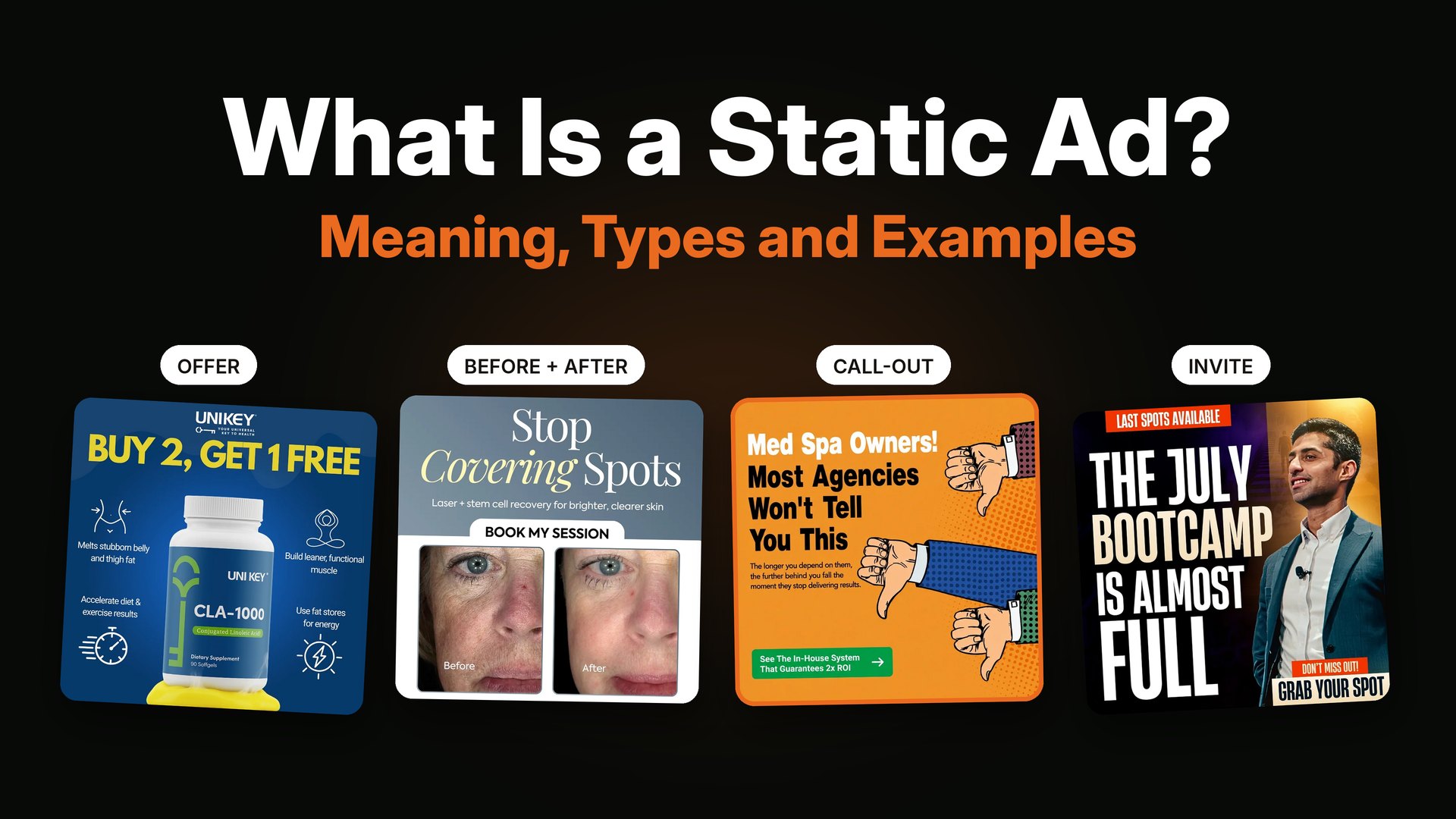
"Med Spa Owners!" is the first thing you read on this ad. Then: "Most agencies won't tell you this." A med spa owner feels called out and curious at the same time. Everyone else scrolls past, and that is fine, because you are not trying to reach them.
Try this: Put the buyer's title or situation in the first three words of the headline.
3. A hook that creates tension
A hook is the first thing that makes someone stop. The best hooks create a small gap: a surprise, a contradiction, a question the reader needs answered.
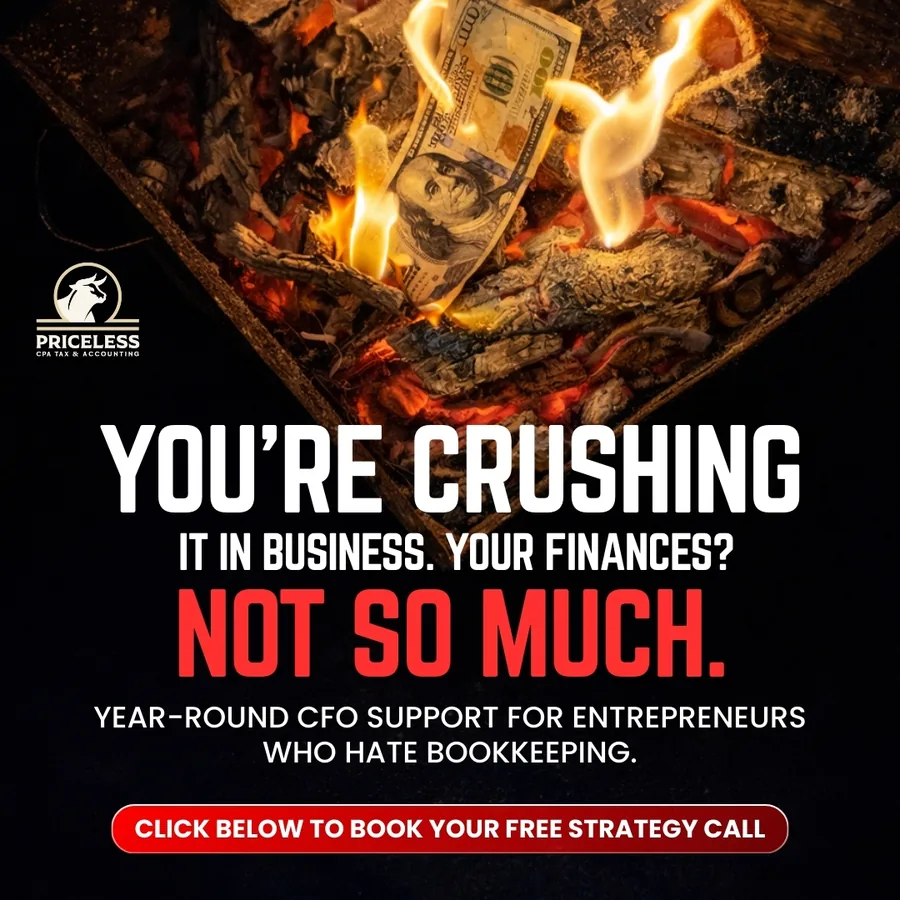
"You're crushing it in business. Your finances? Not so much." It starts with a compliment and ends with a punch. The burning cash in the background makes the point before you read a word. The target is a successful business owner who hates bookkeeping, and the tension between "crushing it" and "not so much" is exactly their feeling.
Try this: Write a headline in two parts. Part one is what the buyer believes. Part two is the uncomfortable truth.
4. A visual that says the message without words
If you covered the text, would the picture still tell the story? In strong ads, the image and the headline say the same thing in two languages.
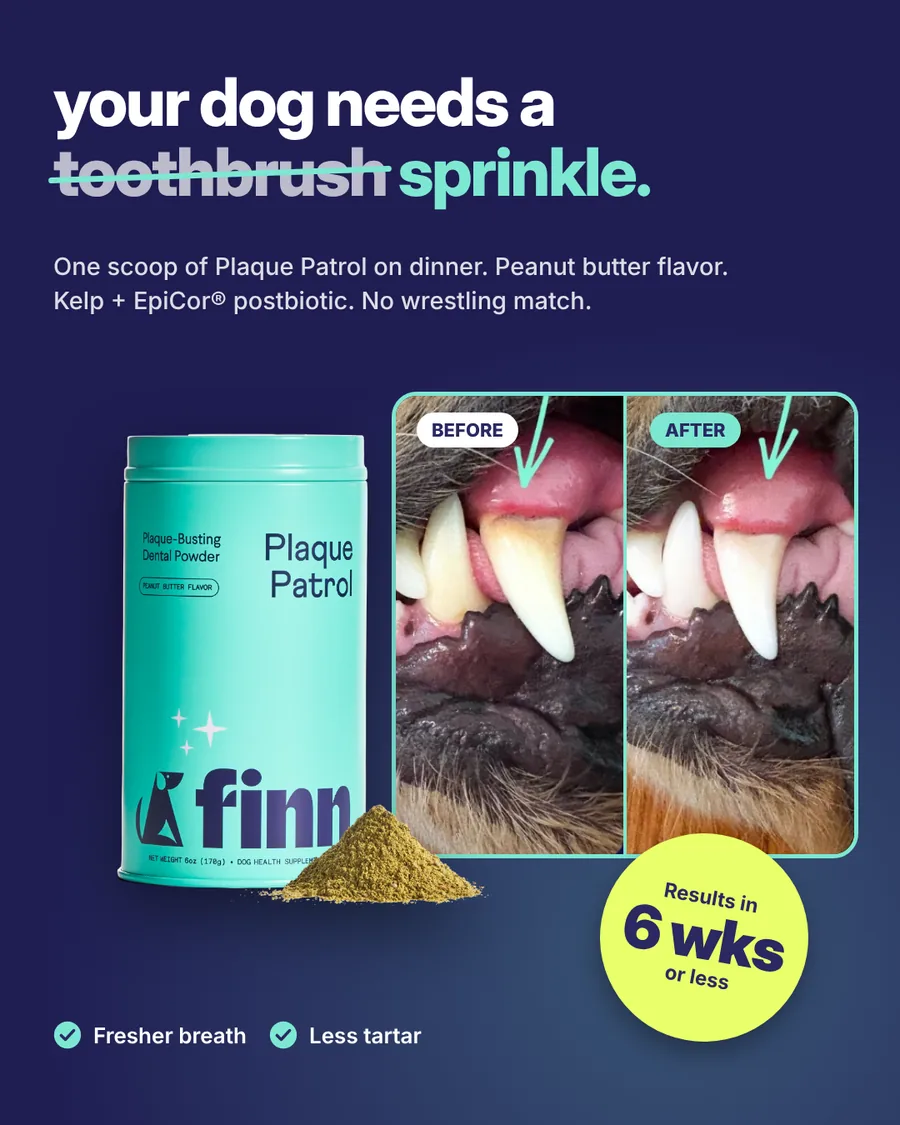
This dental powder ad has a before and after of a dog's teeth, right next to the tin. The headline has a fun twist too: "Your dog needs a toothbrush sprinkle," with the word "toothbrush" crossed out. That crossed-out word does the selling. Brushing a dog's teeth is a fight, a sprinkle on dinner is not.
Try this: Ask what the "after" looks like for your buyer, and show it. Only use real results you are allowed to show.
5. Proof you can see
Claims are cheap. Proof is what makes people believe. Proof can be a number, a review, a comparison, a guarantee or a result.
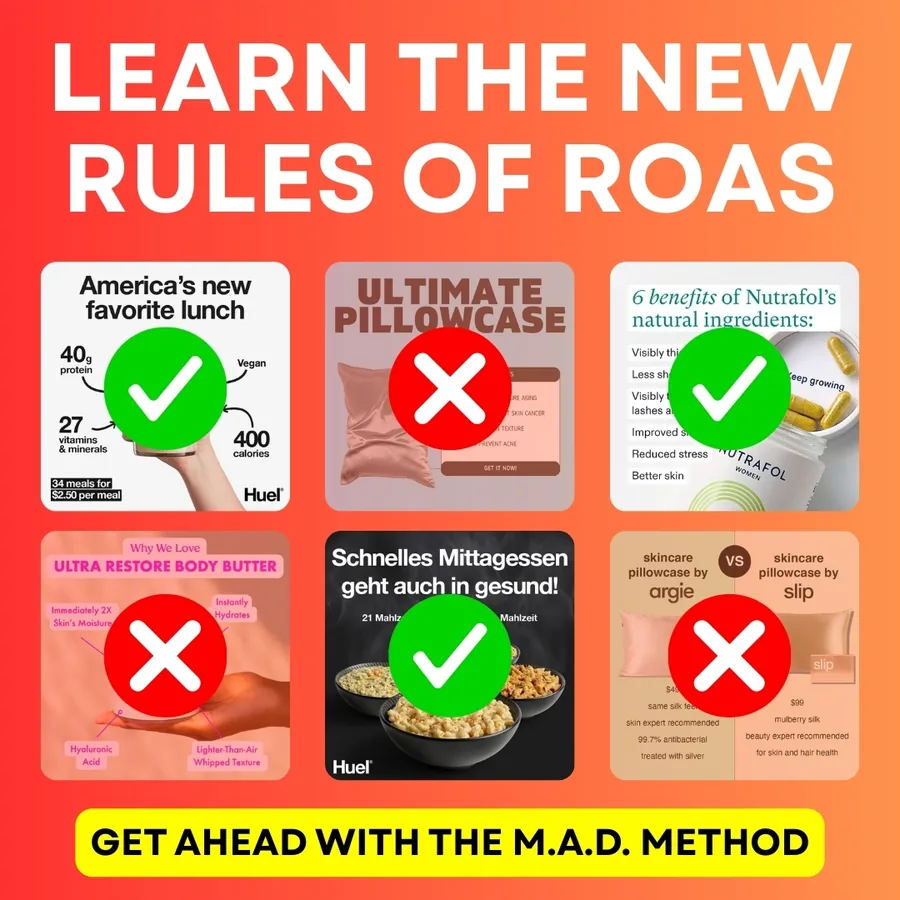
This ad sells a creative strategy method. Instead of claiming "we know what works," it shows a grid of six real ad styles, each marked with a big green tick or red cross. The proof is visual: you can see the method in action. It also makes you curious about why each one passed or failed.
Try this: Replace one adjective in your ad with one piece of proof. "Fast" becomes "Ads launched same day." "Trusted" becomes "1,330 reviews."
6. A clear offer
What do I get, and what does it cost me? If the buyer has to guess, they will not click.
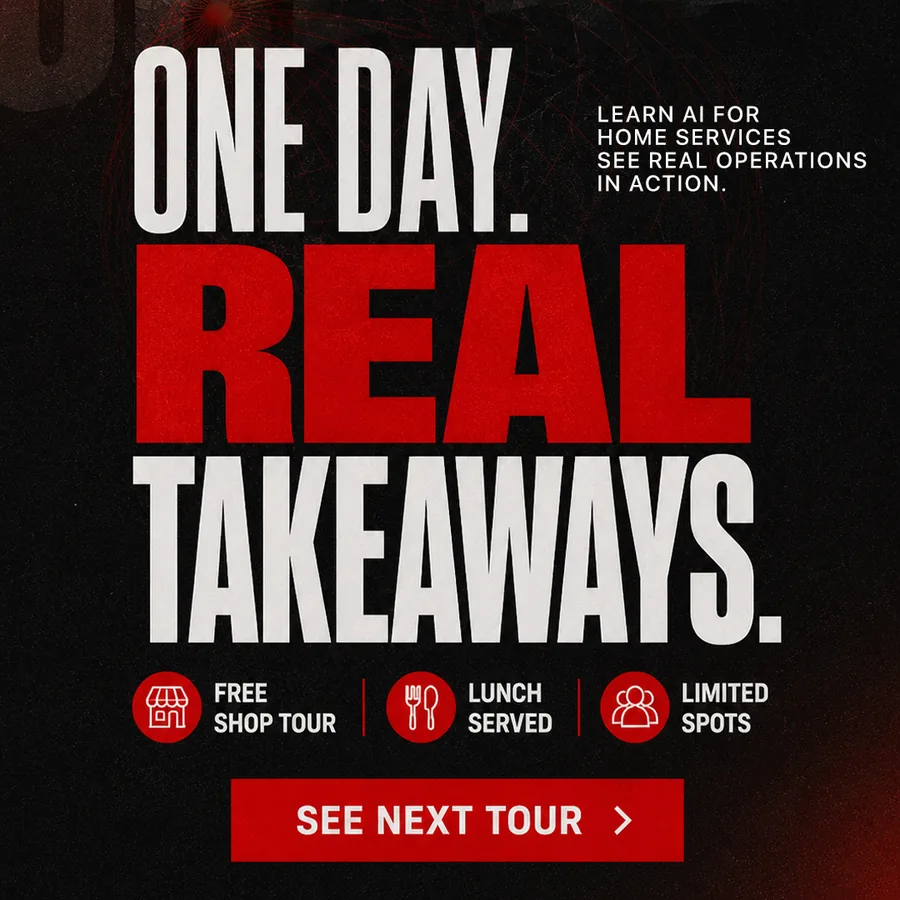
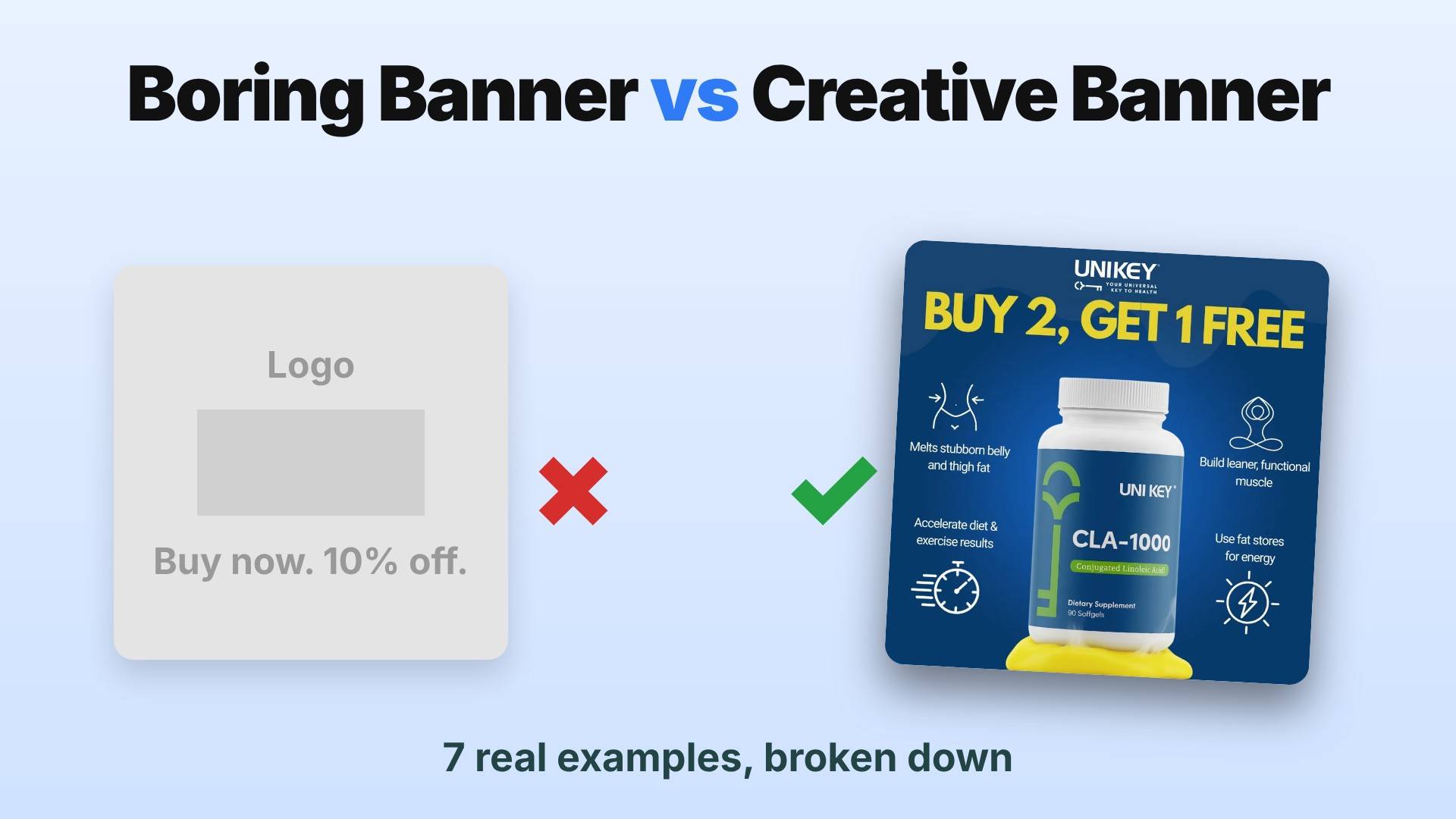
"One day. Real takeaways." Under the giant headline, three icons spell out the offer: free shop tour, lunch served, limited spots. The button says "See next tour." In one look, you know what it is, what you get and what to do.
Try this: List the three things the buyer gets, as icons or short labels, right above the button.
7. One next step
Every good ad ends with one action, and the button words tell you exactly what happens next. "Book a free call" is better than "Learn more" because it is honest and specific.
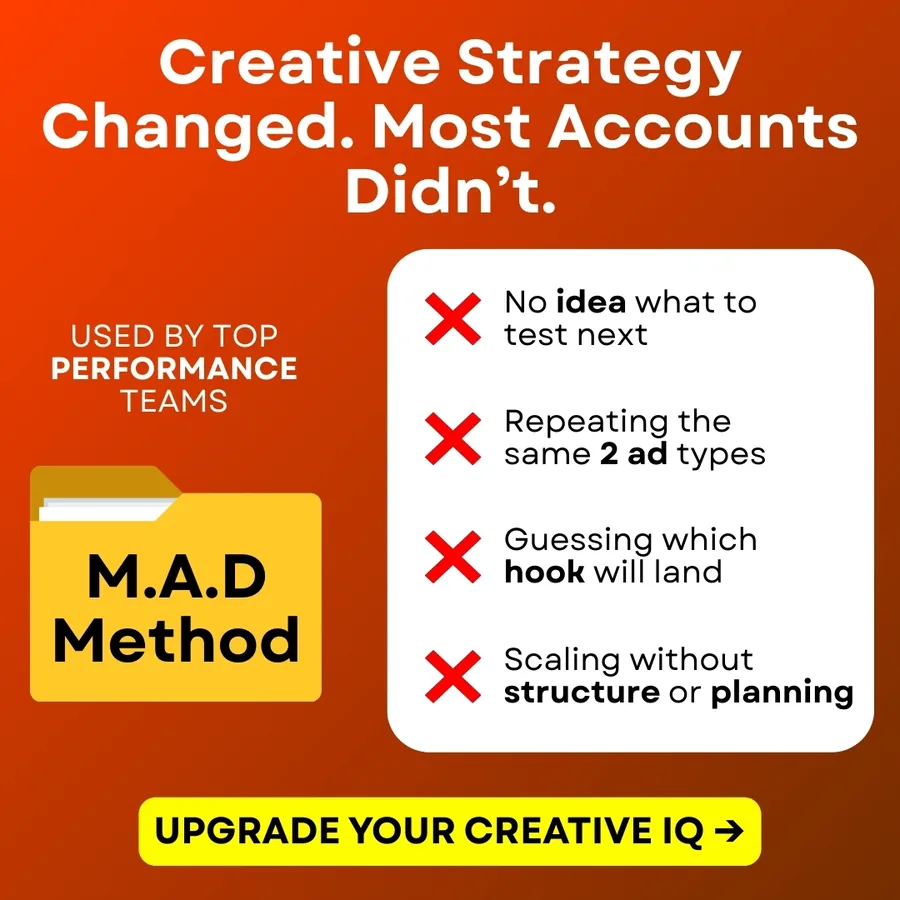
This ad lists four problems with red crosses: no idea what to test next, repeating the same two ad types, guessing which hook will land, scaling without structure. Then one yellow button: "Upgrade your creative IQ." Four problems, one way out.
Try this: Use a verb plus a benefit on the button. "Get my free audit," "Save my seat," "Try it 40% off."
How to make better ad creative (a simple process)
You do not need a big team. You need a repeatable process. Here is the one I use:
- Research first. Read reviews, comments, sales calls and Reddit threads. Write down the exact words buyers use for their problem. Your best headlines are often sitting in a one-star review of a competitor.
- Pick angles, not designs. An angle is the reason someone would buy: save time, save money, fix a pain, look better, avoid a mistake. Pick three to five.
- Write the headlines. Five headlines per angle. Choose the strongest one for each.
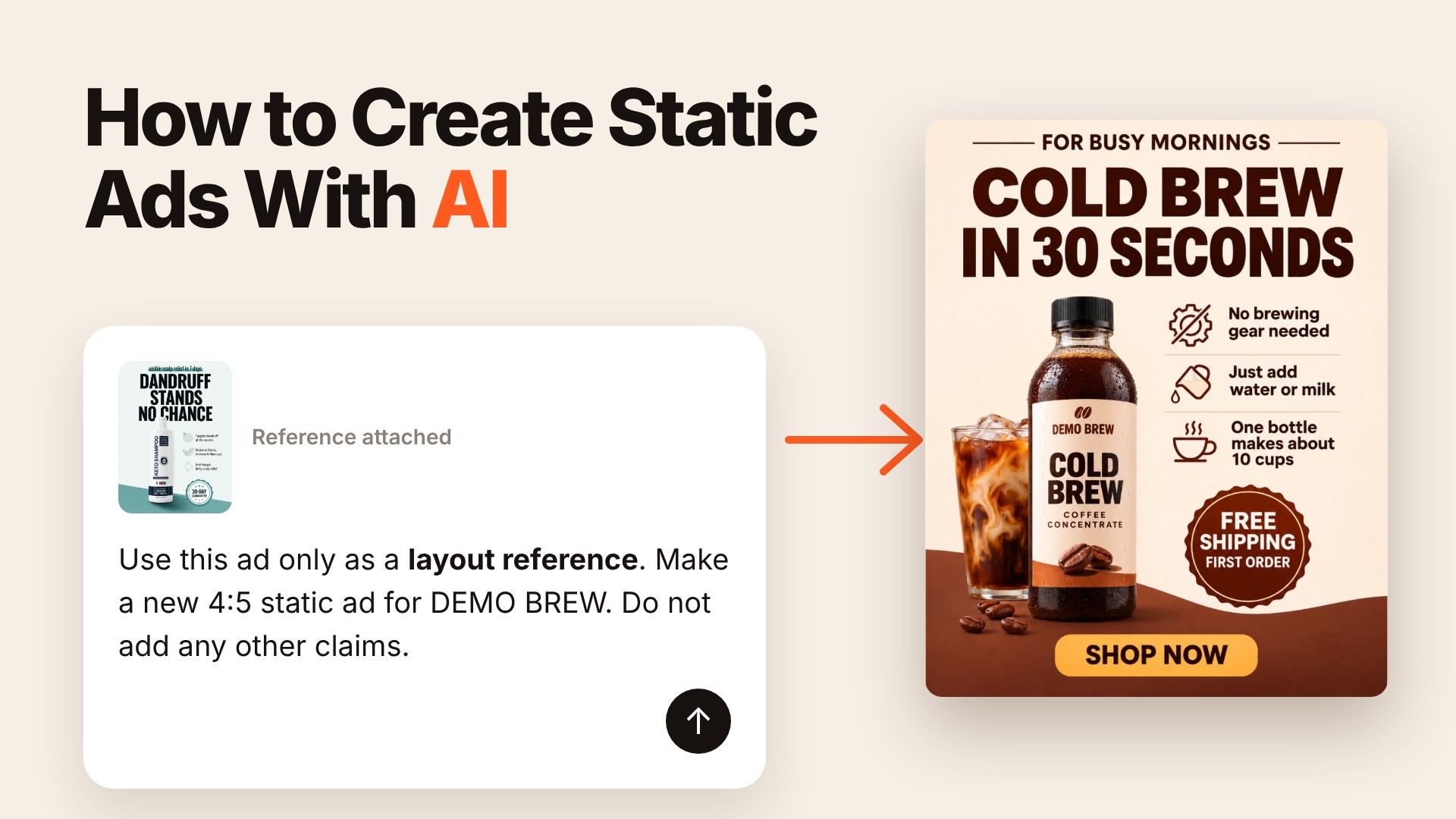
- Write a brief. One page per ad: the buyer, the angle, the headline, the proof, the offer, the button, and a reference layout. A good brief saves hours of back and forth.
- Design for the placement. 4:5 for feeds, 9:16 for Stories, and check the safe zones.
- Launch in a batch. Test several angles at the same time so you learn which one wins.
- Read the numbers and iterate. Keep the winning angle. Change one thing at a time: the headline, the visual, the format. When results drop, it is usually creative fatigue, not a broken account.
For the design part in detail, read how to design a static ad. For what goes inside one ad, read the anatomy of a static ad.
How to tell if your ad creative is working
Do not judge creative by how much you like it. Judge it by what the buyer does. These are the numbers I look at first:
- Hook or thumb-stop rate (for video), or CTR (for static): Are people stopping and clicking? Low numbers usually mean the headline or visual is not landing.
- Cost per result: What you pay for a lead, a sale or a sign-up. This is the number that pays the bills.
- Conversion rate after the click: If people click a lot but nobody buys, the ad might be promising something the landing page does not deliver. I cover this in high CTR but no sales.
- Frequency over time: If the same people keep seeing the ad and results fall, it is time for new creative.
One more point: give an ad a fair test before you kill it. A creative that loses after one day and twenty dollars has not really lost yet.
Common ad creative mistakes
- Designing before deciding the message. A beautiful ad with a weak idea is still a weak ad.
- Talking about the brand, not the buyer. "We are passionate about quality" says nothing to the person scrolling.
- Too much text, all the same size. If everything is important, nothing is.
- Testing tiny changes. Changing the button color teaches you almost nothing. Test different angles first.
- Copying a competitor's ad exactly. Use them for ideas, but your offer and proof are different, so your ad should be too.
- Using AI tools without a strategy. Tools can make a hundred versions of a bad idea in a minute. I compare the options in static ad makers vs a designer.
Keep reading: need inspiration? Here are 30 ad ideas that sell, each with a real example.
FAQ
What does ad creative mean?
Ad creative means the parts of an ad that people see and hear: the image or video, the headline, the text and the call to action. It does not include the targeting or the budget.
What is the difference between ad creative and ad copy?
Ad copy is the words: the headline, the caption and the button text. Ad creative is the whole package, including the visual and the copy together. Copy is part of creative.
What is a creative in Facebook ads?
In Facebook and Instagram ads, a creative is the image, video or carousel and its text in a single ad. When people say "test new creatives," they mean launch new versions of the ad itself, not new audiences.
How many ad creatives should I have?
It depends on your budget. A small account can start with 3 to 5 creatives with clearly different angles and add a few new ones each week. Larger accounts test many more. I give a plan by budget in how many ad creatives to test per week.
What makes an ad creative good?
A good ad creative has one clear idea, speaks to one buyer, stops the scroll with a strong hook, shows proof, makes a clear offer and asks for one action. Most of all, it gets results for the money spent, whether or not it looks fancy.
Who makes ad creative?
Usually a designer or video editor, often with a creative strategist who decides the angles and writes the brief. Small brands often have one person doing both. If you want to hire for it, read how to hire a static ad designer.
Need ad creative that is built to sell?
I design static ads and YouTube thumbnails for DTC, e-commerce, info-product and coaching brands, and I do the strategy too, so you get angles and not only layouts. You can see what is included on my services page. If it looks like a fit, book a short call and we can start with a small test batch.