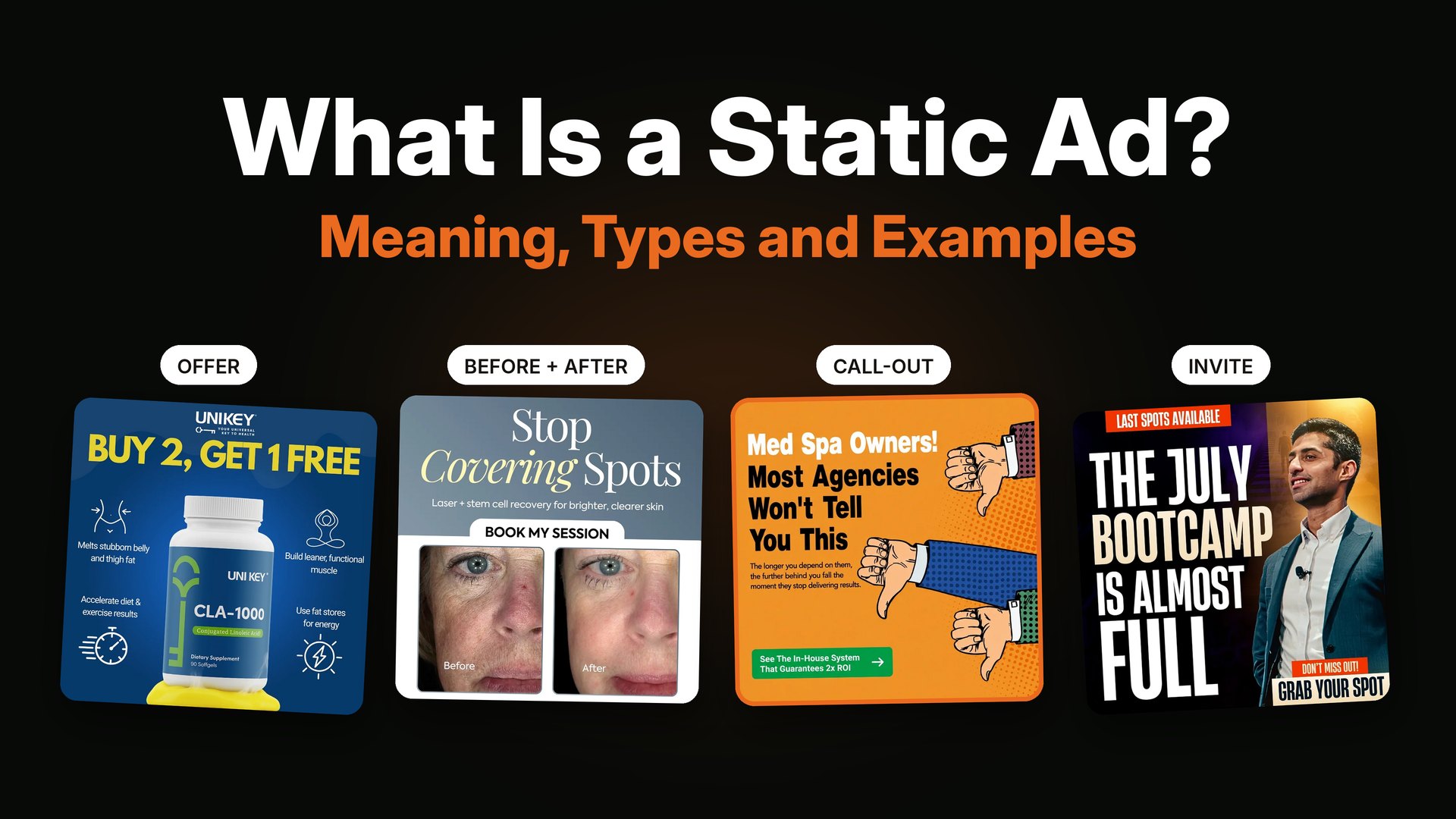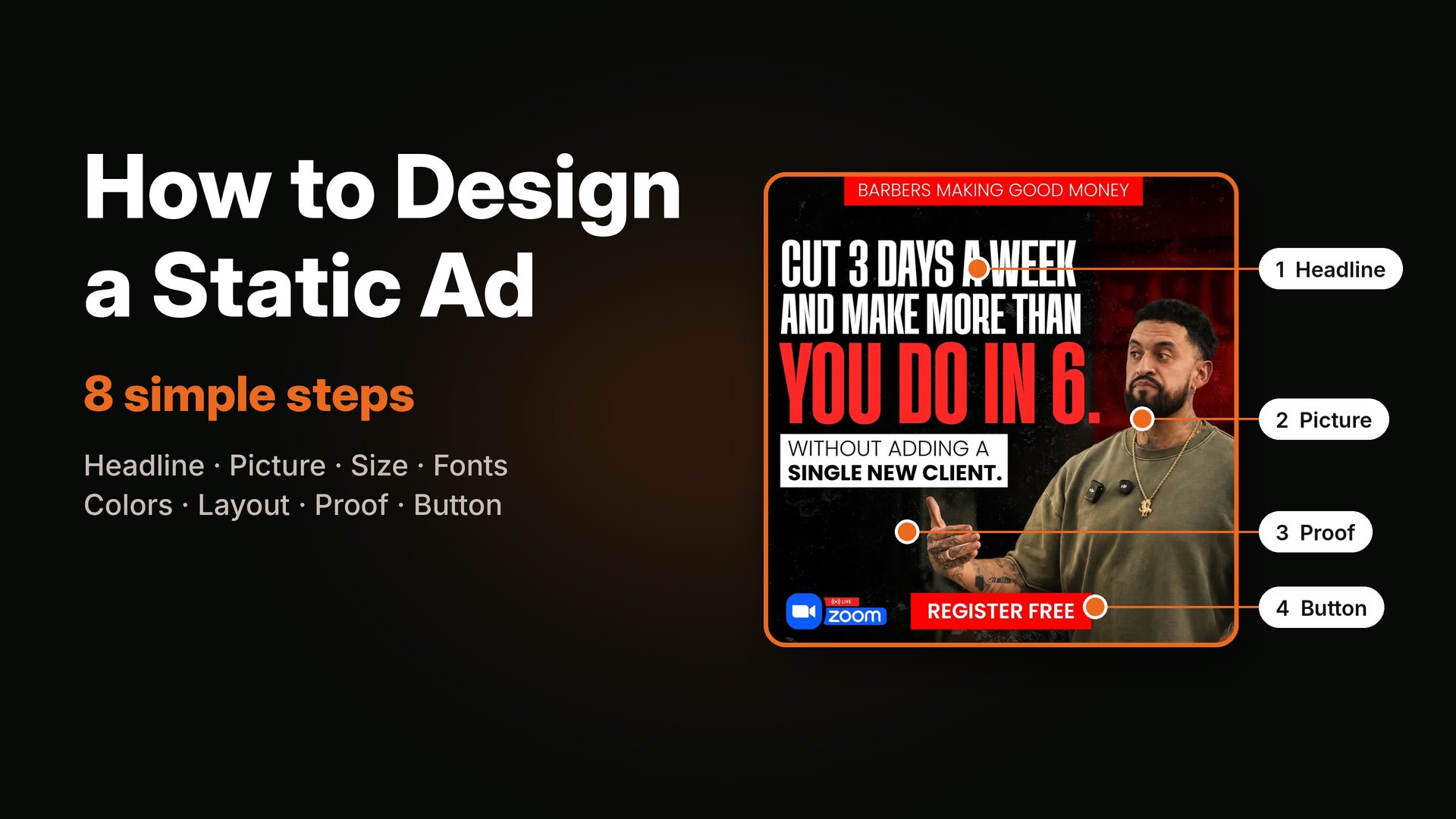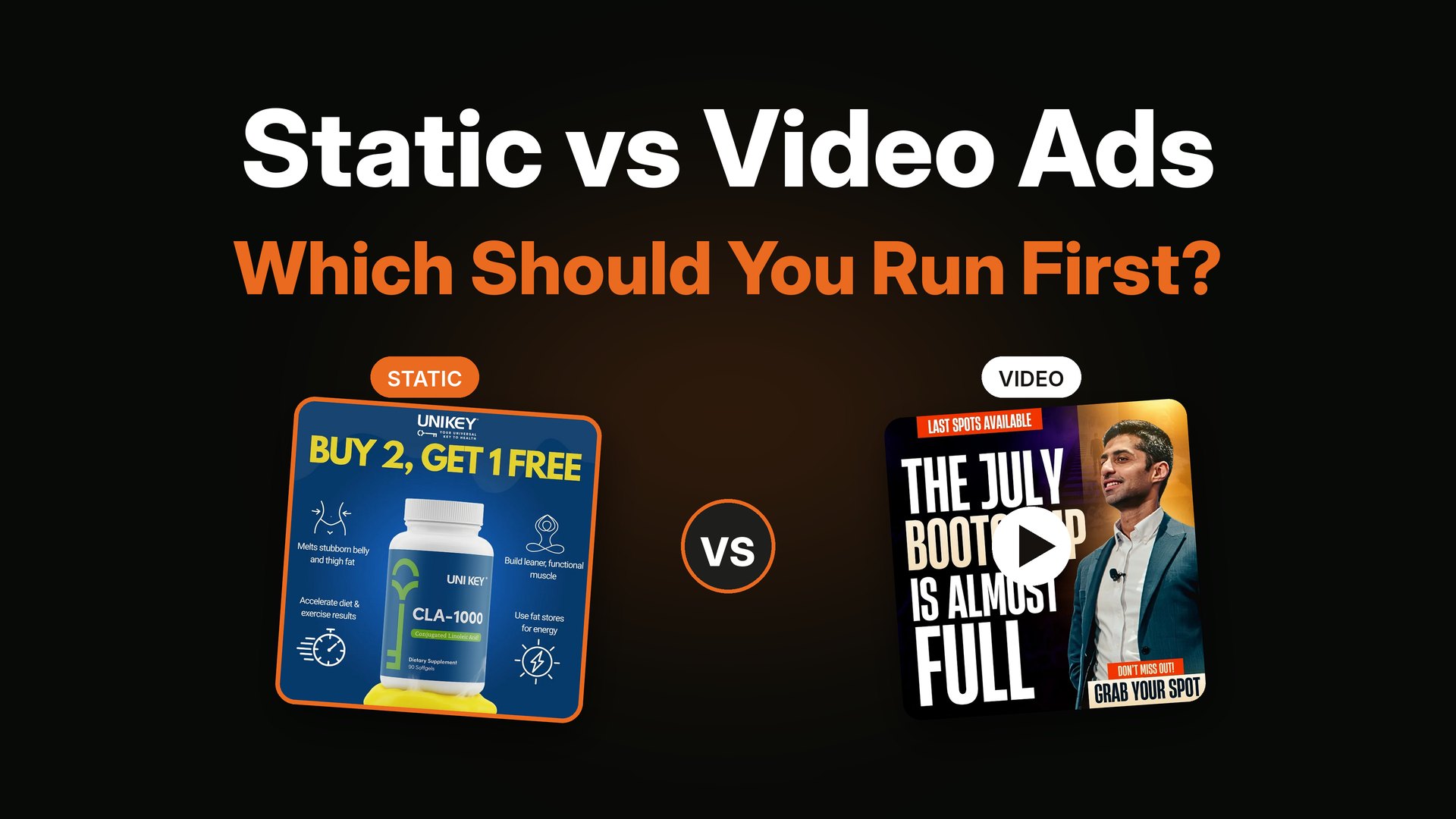
TL;DR: If your ad budget is small, start with static ads. You can make many more of them for the same money, so you learn what message works faster. Once you have a message that sells, add video to reach colder audiences and to tell the story at length. Published studies disagree on which format "wins," so the honest answer is: it depends on your product, your price and your stage, and you need to test it yourself.
One of the most common questions I hear from founders is: "Should I run static ads or video ads?"
It sounds like a simple choice. It is not, because most of the advice online is written by companies that sell video tools or static tools, and each one finds that its own format wins. So in this post I will go through what the data actually says, where the numbers disagree, and how I would decide for a small or mid-size account.
I design static ads for a living, so you may think I am biased. Fair. That is why I will keep every number below attached to its source, say where the sources disagree, and tell you when video is the better call.
What the data says (and why it does not agree)
Let me start with what we know, and be clear about where each number comes from.
How many top accounts use each format. A 2025 review of 67,000 Facebook ads from more than 100 top accounts, summarized by Segwise, found that the median account ran about 61% static and 39% video. But it varied a lot by industry. Beauty, skincare and shapewear brands ran 80% or more video, while some fashion retailers ran almost all static.
What agencies report about results. The same Segwise article quotes 2026 benchmarks from ATTN Agency (the sample size is not stated):
| Metric | Video | Static |
|---|---|---|
| Click-through rate | 1.9% | 1.1% |
| Cost per acquisition | $48.20 | $34.50 |
| Engagement rate | 5.2% | 1.4% |
Notice something interesting: video gets more clicks and more engagement, yet static has the lower cost per acquisition in that data. A format can win on attention and lose on cost, or the other way around. It depends on which number you care about.
What another agency reports. The article also quotes the MHI Growth Engine team, who manage more than $30 million of DTC ad spend. They say static ads have a CPM about 40 to 60% lower, and that static ads tend to wear out faster, with a refresh cycle of about 20 to 30 days compared with 40 to 60 days for video.
What a third source says by industry. A September 2026 piece from Stackmatix says static ads tend to do better for B2B software, commodity e-commerce and local services, and video tends to do better for lifestyle and fitness DTC brands, mobile apps and beauty. It does not give exact numbers by industry.
Here is the honest summary. These are agency and vendor reports, not controlled experiments. The samples are different, the metrics are different, and the numbers sometimes disagree. You cannot take any one of them as a law. What they do agree on is a pattern:
- Static is cheaper to make and easier to test in volume.
- Video is better at holding attention and telling a story.
- The winner depends on the industry and the offer.
The real reason to start with static: volume per dollar
Here is the argument that matters most for small accounts, and it has nothing to do with which format "performs" better.
Imagine you have $3,000 a month to spend. Stackmatix uses almost this exact example. If you spend $2,000 on one video shoot, you have $1,000 left for ads and one creative to test. If you spend the same $2,000 on static design, a good designer can make 20 or more variants, and you have the same budget left for media.
That is the whole game in the early days. You do not yet know which message, which angle or which offer your buyers care about. The fastest way to find out is to test many ideas cheaply. Statics let you do that.


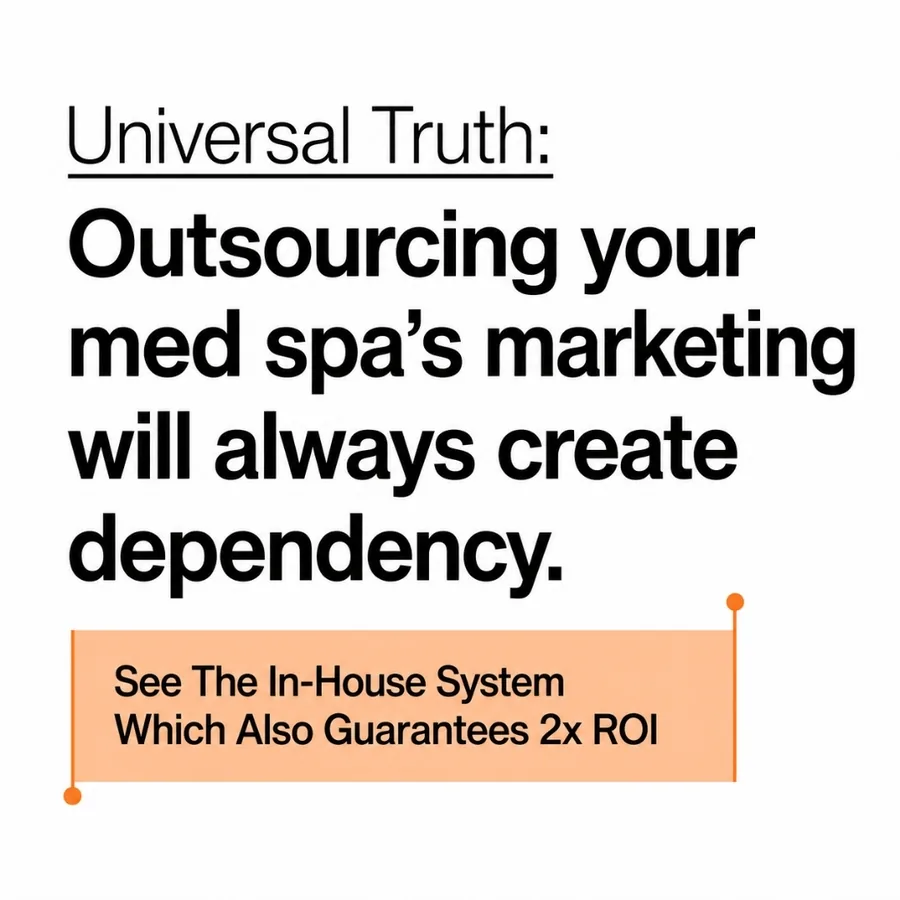
Three different angles, scarcity, a bundle offer and a plain opinion, can be made and launched in the time it takes to plan one video shoot.
I explain how many ads to launch and how to read the results in how many ad creatives to test per week.
When static wins
Static is often the better first choice when:
- Your budget is small. More tests per dollar.
- You are still finding your message. Cheap tests find the angle before you pay for production.
- Your product is easy to understand in a picture. A shampoo bottle, a software dashboard, a clear offer.
- Your buyers are searching for a solution. B2B services, local services and commodity products fit this well.
- You need to move fast. A new offer or a sale can go live the same day.
- You need a lot of variety. Different headlines, prices and audiences are easy to change in a static layout.
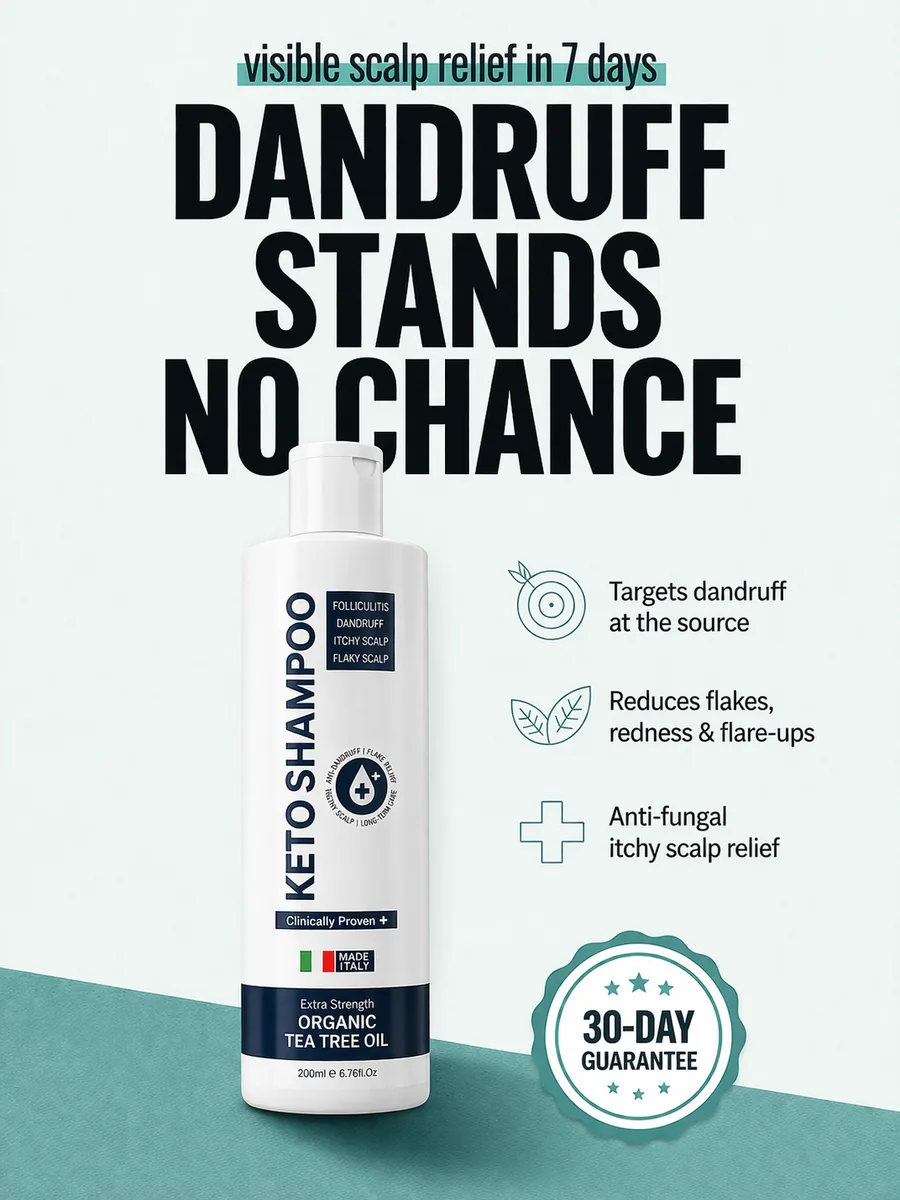

A product or an idea that can be understood at a glance is a good fit for a still image.
When video wins
Video is often the better choice when:
- The product needs to be seen in use. Beauty, fitness, gadgets, food and anything where the result is visual.
- The buyer needs to trust a person. Founders, coaches and experts talking to the camera.
- The price is high and the story matters. Stackmatix suggests video starts to make sense when the average order value goes above about $100.
- You are reaching a cold audience. One agency quoted by Segwise reports video doing better on cold audiences, meaning people who do not know you yet.
- You already know your message. Once a static ad has proven an angle, a video can tell the same story with more depth.
In short: statics are great for finding the message, and video is great for telling it well.
A simple split by budget
Segwise offers a rule of thumb in its article, based on its own experience and not on a study. I think it is a decent starting point as long as you treat it as a guess:
| Monthly ad budget | Suggested mix |
|---|---|
| Under $20,000 | About 70% static |
| $20,000 to $100,000 | Somewhere between 50/50 and 60% video |
| Over $100,000 | About 65 to 70% video |
My own take is a bit simpler. If you are earlier than that, say under $5,000 a month, run mostly static until you find two or three angles that work. Then use video to build on them.
How to test static against video fairly
Many people run a test and make a decision in three days. That usually tells you nothing. Here are the minimums that Stackmatix suggests, which I think are sensible:
- Test budget: about 15 to 20% of your media spend. On a $10,000 a month account, that is $1,500 to $2,000.
- Budget per creative: at least about $500 for the result to mean something.
- Conversions before you compare: at least 50 per format.
- Time window: about 90 days before you make a big format decision.
A few more rules from my own work:
- Test the message before the format. If a static ad with the angle "save time" does not work, a video with the same angle will probably not work either. Fix the message first.
- Keep everything else equal. Same audience, same offer, same landing page.
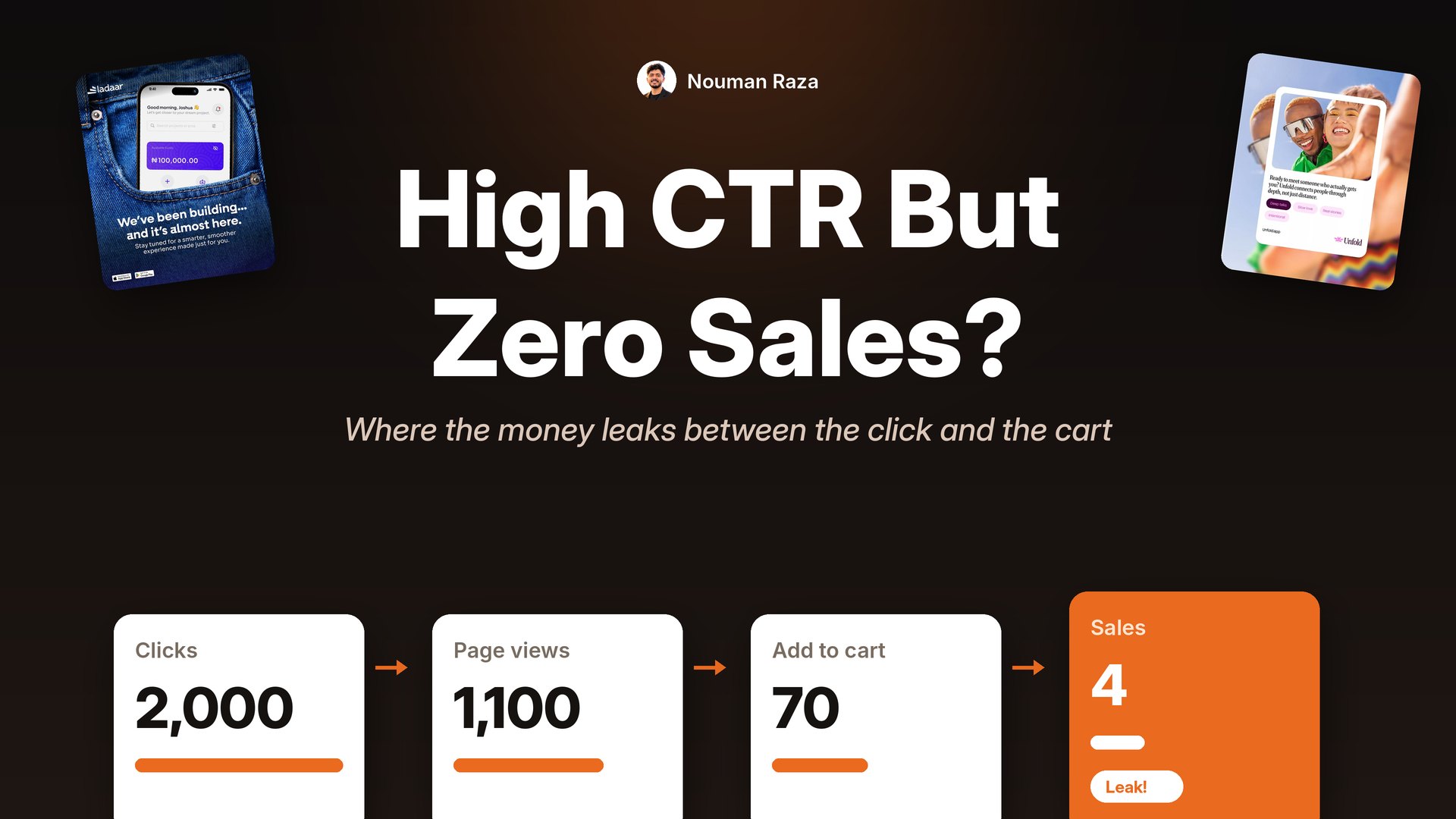
- Look at the whole path. A video can win on clicks and lose on sales. Check cost per purchase, not only click rate. I wrote about this trap in why a high CTR can still mean no sales.
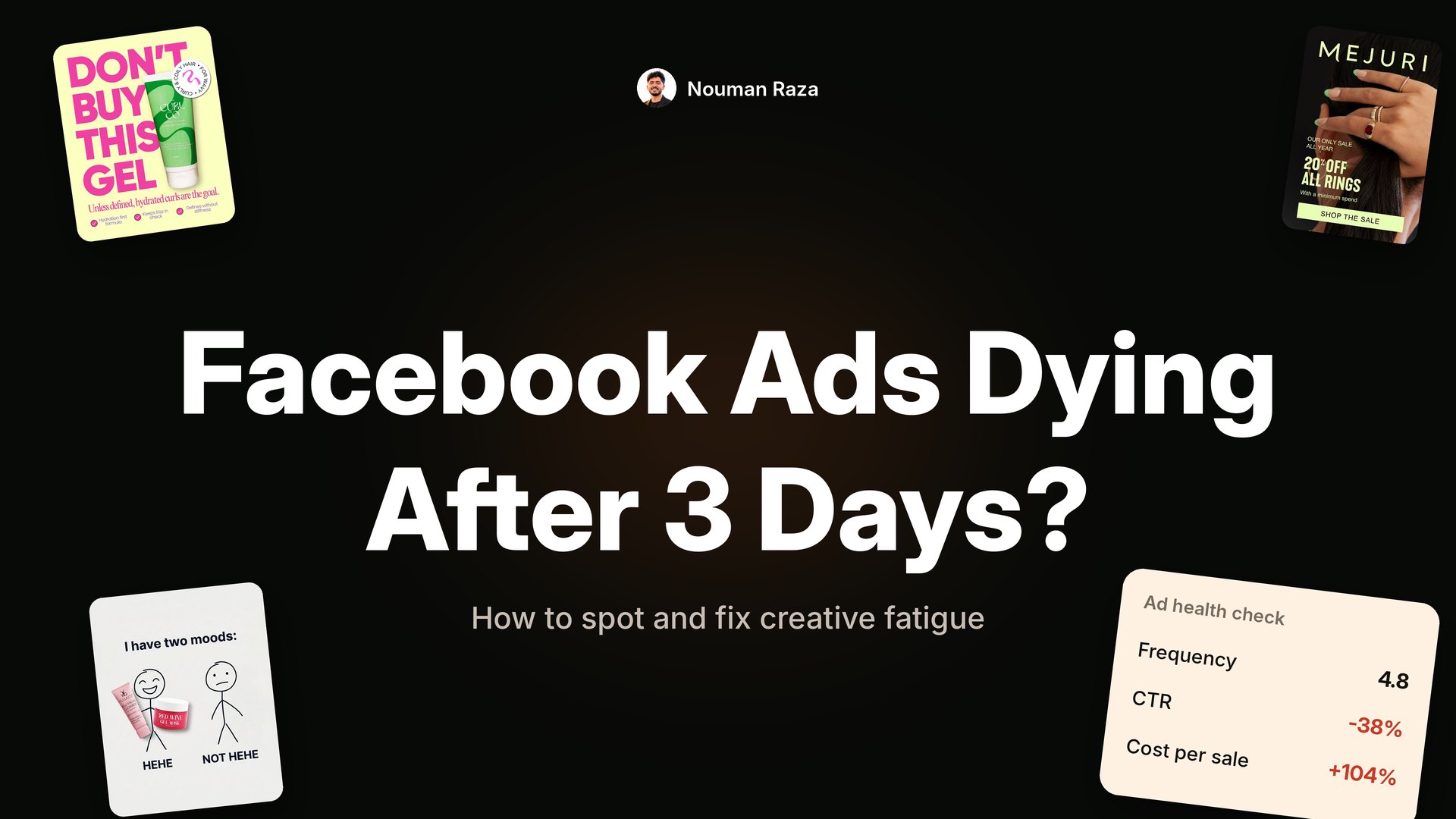
- Watch for fatigue. Static ads tend to wear out faster in the reports above, so plan to refresh them. My post on why Facebook ads stop working after a few days shows how to spot it.
The smart way to use both: turn winning statics into video
You do not have to choose forever. A very practical workflow looks like this:
- Launch 5 to 10 static ads with different angles.
- Wait for the data. Find the two or three that bring sales at a good cost.
- Take the winning angle and make a short video. A simple version can be the same headline, a few seconds of the product or speaker, and the same offer.
- Keep running the static. They often work well together, since people see the same idea in two forms.
This way you only pay for video production on messages that have already proven themselves. It is one of the lowest-risk ways to grow your creative.
Which is better for your type of business?
Use this as a rough guide, not a rule.
| Business type | Start with | Add later |
|---|---|---|
| B2B services, SaaS | Static | Short founder video |
| Local services and clinics | Static (before and after, offers) | Video testimonials |
| E-commerce, simple product | Static | Product-in-use video |
| Beauty, skincare, fitness | Static plus video together | More video |
| Coaches and webinars | Static with a face and a strong hook | Speaker clip or promo video |
| High-ticket offers | Static to find the angle | Video to build trust |
If you run webinars or coaching, see webinar ads for coaches, where I share the benchmarks and the checklist I use.
Common mistakes
- Choosing a format because of a trend. "Video is king" or "statics are back" are not a strategy.
- Spending the whole budget on one video. One shot is one guess.
- Comparing results too early. Three days of data is rarely enough.
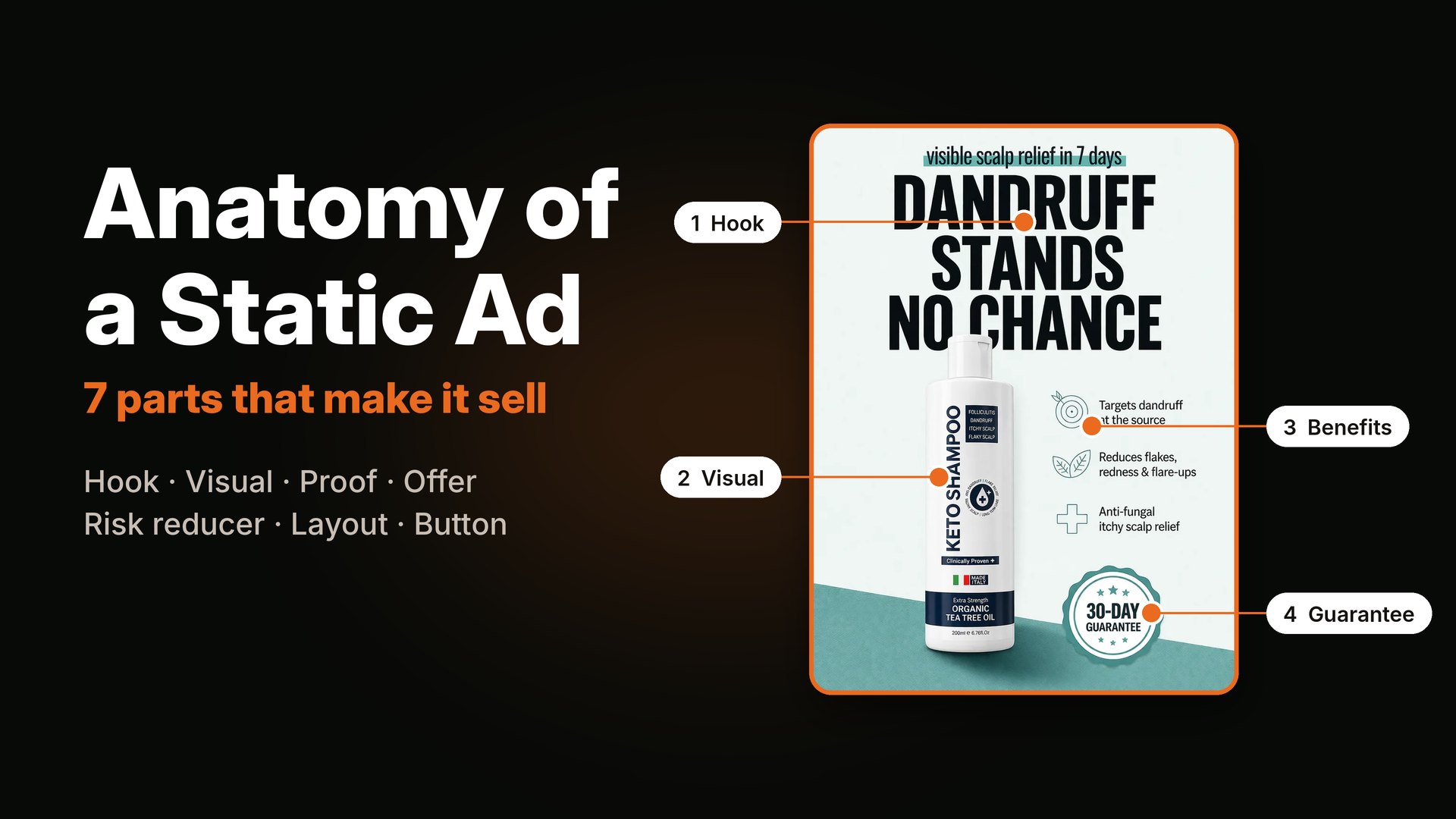
- Ignoring creative quality. A weak static and a weak video both lose. The format does not save a bad message. See the anatomy of a static ad for how to check yours.
- Forgetting the landing page. Even the best ad cannot fix a page that does not match it.
FAQ
Are static ads better than video ads?
Neither is better in every case. Studies and agency reports disagree, and results depend on industry, price and audience. Static is usually cheaper and faster to test, while video is usually better at telling a story and reaching cold audiences.
Should I start with static or video ads?
If your budget is small and you are still learning what works, start with static. You can test many more ideas for the same money. Add video once you have proven an angle.
Do static ads still work on Meta in 2026?
Yes. Many top accounts still run a majority of static ads. A review of 67,000 Facebook ads found the median account used about 61% static, though the mix varies by industry.
How many static ads should I test at once?
For most small accounts, a batch of 5 to 10 with different angles is a good start. I show how to scale this to your budget in how many ad creatives to test per week.
How long should I run a test before deciding?
Give each ad enough budget to get real data, at least about $500 and ideally 50 conversions per format, before you compare. Format decisions usually need weeks, not days.
Is video more expensive to produce?
Usually yes, and by a lot. A single shoot can cost as much as a month of static design that produces 20 or more variants. That is why many brands test the message in static first.
Can I turn a static ad into a video?
Yes, and it is a smart move. Take a static ad that has already worked and add simple motion, a voice or a short clip, using the same headline and offer.
New to the basics? Read what a static ad is. Running ads on Meta? See Meta Advantage+ creative for static ads for the AI settings to watch.
Need static ads to test your next angle?
I design static ads and YouTube thumbnails for DTC, e-commerce, info-product and coaching brands, and I do the strategy too, so you get angles and not only layouts. You can see what is included on my services page. If it looks like a fit, book a short call and we can start with a small test batch.