TL;DR: Most small brands should test 3 to 5 new ad creatives a week, and give each one enough money to mean something (a good rule is at least one to two times your target cost per sale). Bigger budgets can test more. Test different ideas, not 20 copies of the same ad, and expect most of them to lose. That is normal.
"How many creatives should I be testing?" is a question I see in every founder group. The answers go from "just one good one" to "50 a week." Both are wrong for most people.
The honest answer is: it depends on your budget. You cannot test 30 ads on $50 a day, because none of them will get enough money to tell you anything. And you cannot scale a $3,000 a day account on two ads, because they will burn out in days.
So here is a simple plan, by budget, that you can actually follow.
Why the number matters so much
Most ads do not win. That is not a guess. Runneth looked at more than 550,000 ads from over 6,000 advertisers, around $1.3 billion in spend, and found that only about 5 to 8% became real winners. About half never got real spend at all. You can see the numbers in Runneth's 2026 creative benchmarks.
So if one in every 12 to 20 ads is a winner, a brand that tests 2 ads a month finds a new winner maybe once or twice a year. A brand that tests 4 a week finds one almost every month. That is the whole game.
Testing more ads is not about being busy. It is about giving yourself more chances to find the one that pays for all the others.
The simple budget rule
Before the numbers, one rule. Each ad needs enough spend to tell you something. A good guide is to let each new ad spend at least one to two times your target cost per sale before you judge it. If you want sales at $40 each, that is roughly $40 to $80 per ad before you decide.
Then you work backwards:
- Take your weekly testing budget.
- Divide it by the spend each ad needs.
- That is how many new ads you can test this week.
AdManage gives a similar starting point: three to five ads at a time, with at least $100 to $150 each for a clean read.
How many ads to test, by budget
Here is the plan I would follow. "Testing budget" means the part of your spend you set aside for new ads, usually 10 to 20% of the total.
| Monthly ad spend | New ads per week | What to test |
|---|---|---|
| Under $3,000 | 2 to 3 | One new angle a week, plus a fresh version of your current winner |
| $3,000 to $10,000 | 3 to 5 | Two angles, each in two different formats |
| $10,000 to $50,000 | 5 to 10 | New angles, new formats, and new people to talk to |
| $50,000 and up | 10 to 30+ | A full weekly batch with a mix of brand new ideas and versions of winners |
These are starting points, not laws. If your product is cheap and sells fast, you get data quicker and can test more. If you sell something expensive with few sales a week, test fewer ideas and give each more time.
A worked example: a $6,000 a month store
Let us make this real. Say you run a store that spends $6,000 a month on Meta, about $200 a day. Your target cost per sale is $35.
- Testing budget: 15% of $6,000 is $900 a month, about $225 a week.
- Spend each new ad needs: one to two times $35, so about $35 to $70. Let us use $55.
- New ads per week: $225 divided by $55 is about 4.
So this store should launch about 4 new ads a week, or 16 a month. Not 2, and not 20.
What would those 4 look like? Something like this:
- A brand new angle as a benefit ad.
- The same new angle as a review ad.
- A fresh version of the current winner with a new visual.
- A fresh version of the current winner with a new hook.
At the end of the week, you will know if the new angle has legs, and you have two new versions ready if the winner starts to slow down.
What actually counts as a "new" creative
This is where most brands waste their budget. Changing the background color is not a new ad. Here is how I think about it, from biggest change to smallest:
- New angle. A different reason to buy. Saving money, saving time, looking better, fixing a pain, beating a competitor.
- New format. Same angle, different shape. Before and after, comparison, review, us vs them, a list of benefits.
- New hook. Same angle and format, different first line.
- New visual. Same everything, different picture.
For testing, focus on the top two. Angles and formats are where the big jumps come from. Hooks and visuals are what you change later to keep a winner alive.
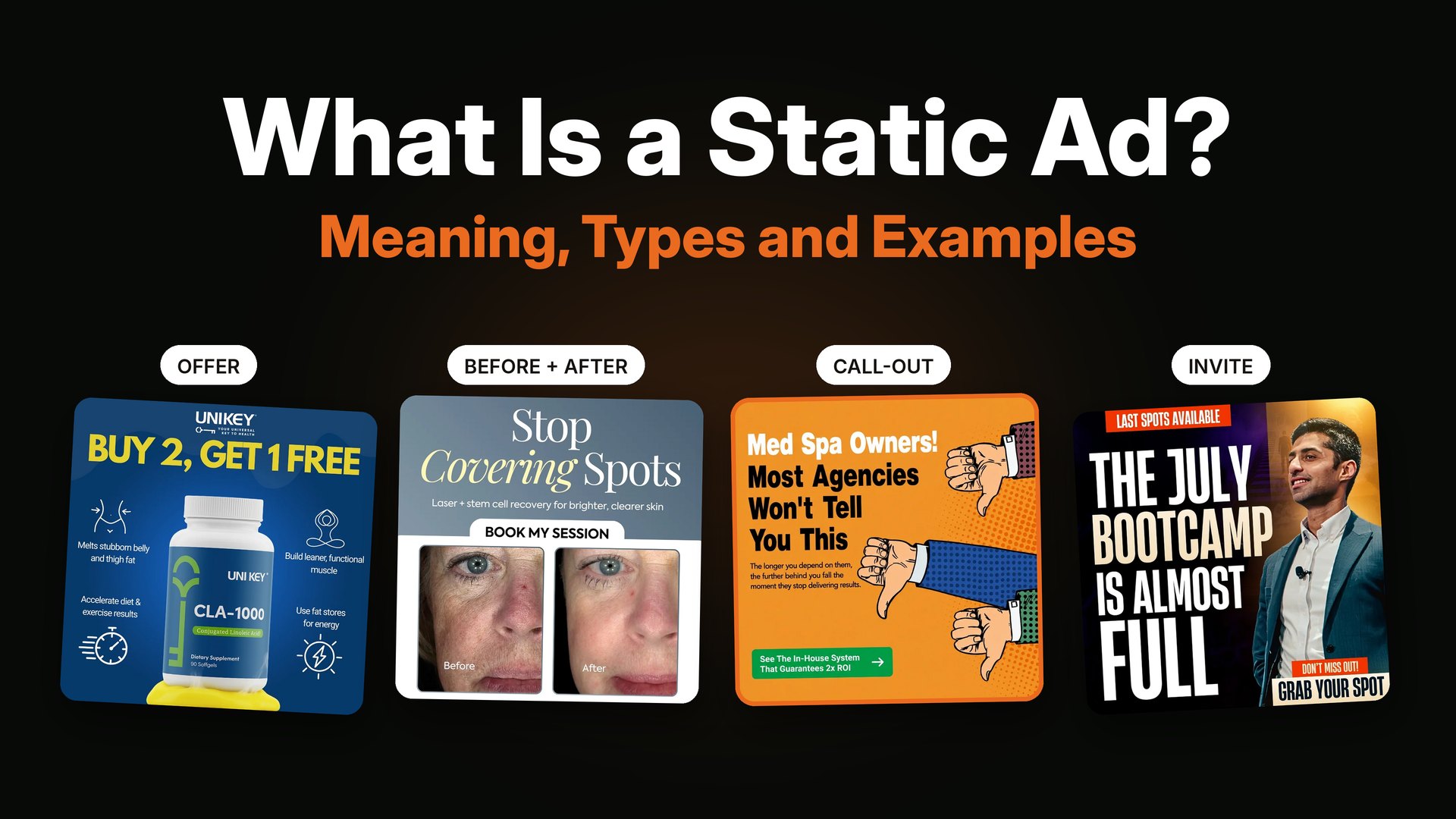
Here is what that looks like for one product. These are three ads I made for the same face towel brand. Same product, three different reasons to buy.

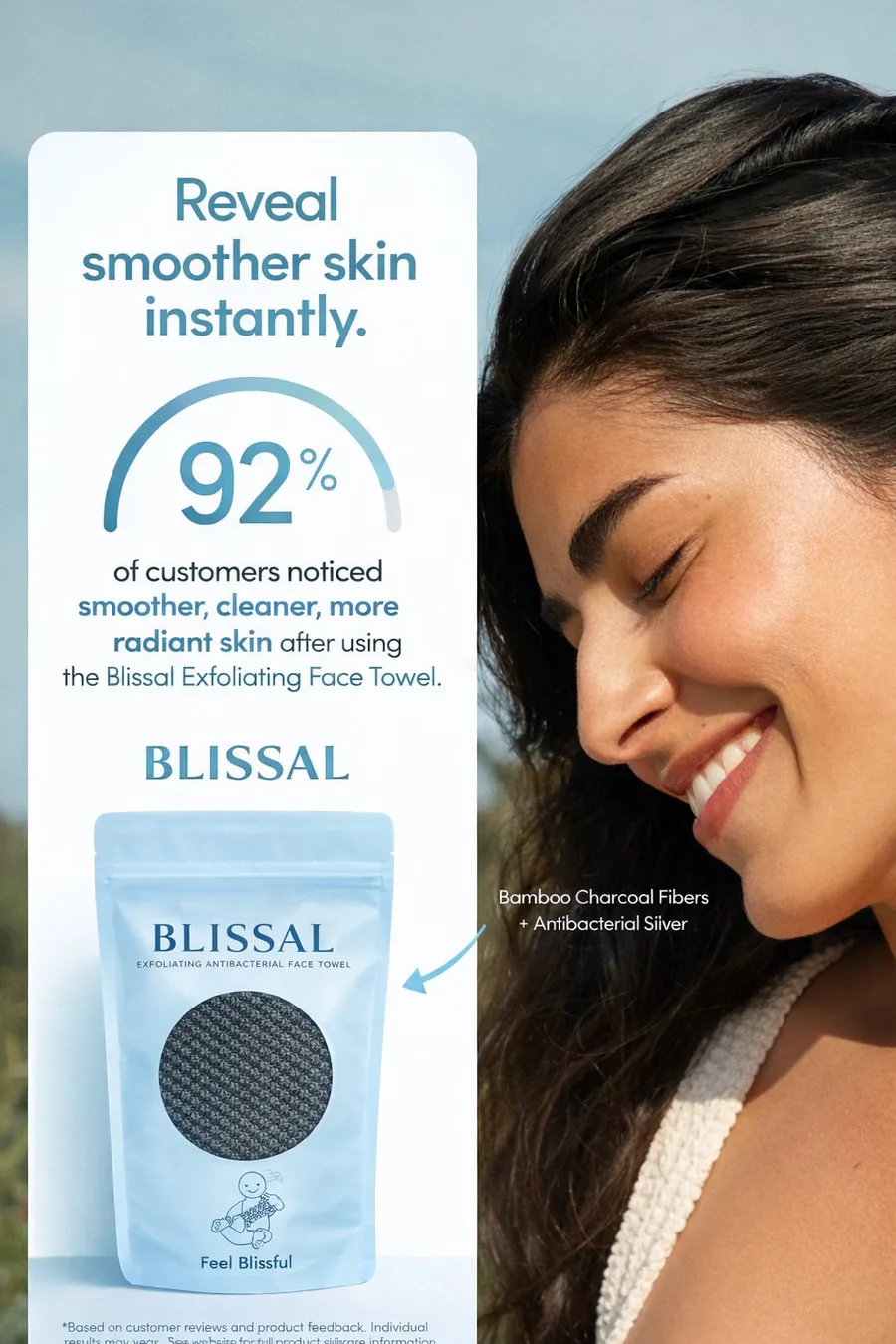
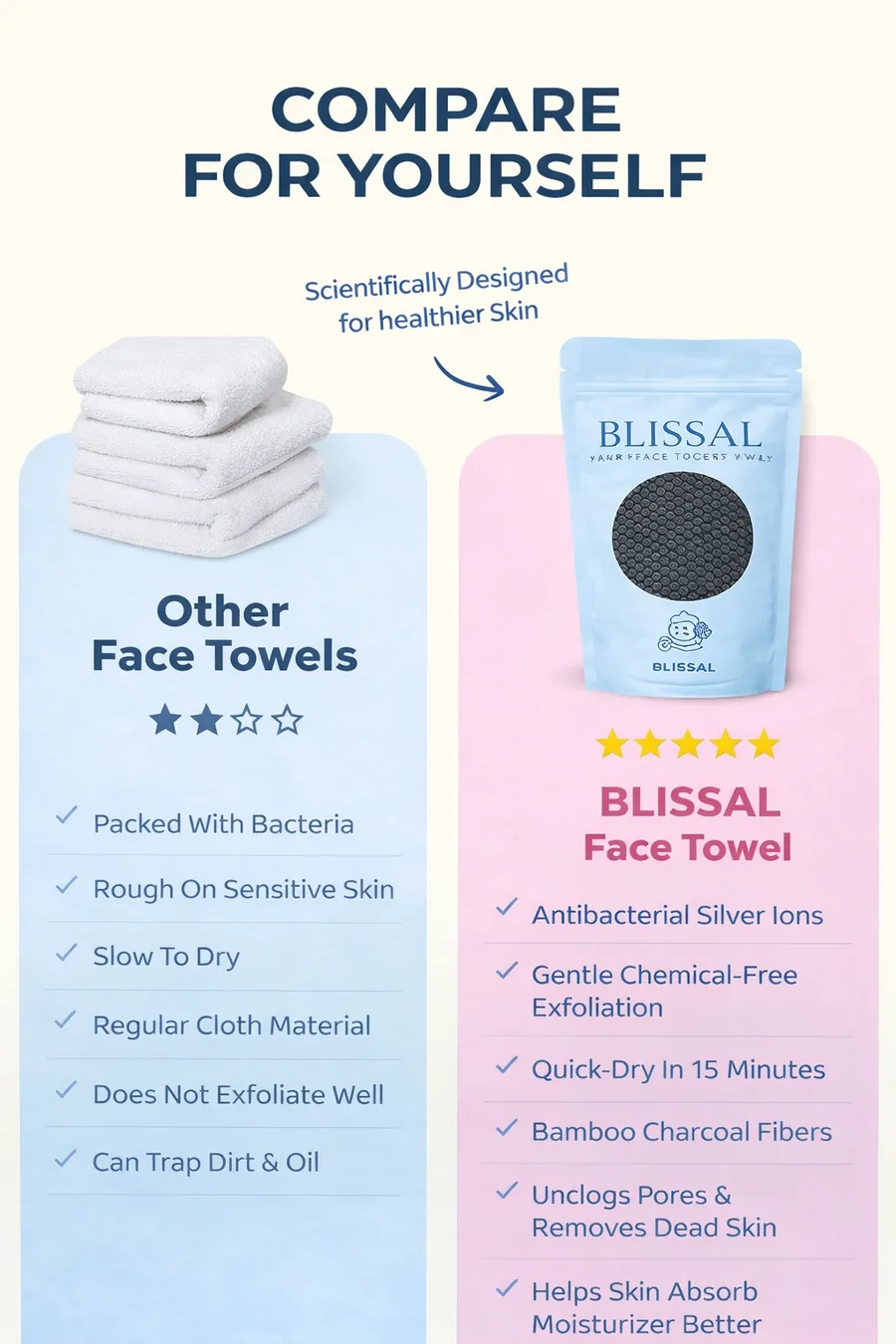
Offer, proof, and comparison. Three angles for one product. That is three real tests, not one.
Statics or video for testing?
If budget is tight, start with statics. They are faster and cheaper to make, so you can test more angles for the same money. Once a static angle wins, then spend on video for that angle. The same idea works for lead gen too, see webinar ads for coaches.
The data backs this up. Biddy looked at 848 top ads across 17 accounts with $14.9 million in spend. Statics took about a third of the spend, had around 15% lower CPMs, and their cost per purchase was about even with video. So statics are not a "cheap backup." They hold their own.
A weekly testing routine you can copy
- Monday: review. Look at last week's new ads. Which ones got spend? Which ones got sales at a good cost? Write down why you think each one won or lost.
- Tuesday: plan. Pick your angles for this week. One or two new ideas, plus fresh versions of your current winner.
- Wednesday: make. Brief and design the ads.
- Thursday: launch. Add them to your testing ad set with equal chances.
- Next Monday: repeat.
Keep a simple sheet with the date, angle, format, hook and result for every ad. After two months, that sheet becomes the most useful document in your business, because it tells you what your buyers actually respond to.
When to call a winner and when to kill an ad
Testing only works if you make clear decisions. Here are simple rules I like, which you can adjust to your numbers:
- Kill early if an ad has spent about two times your target cost per sale with zero sales and weak signs, like a very low click rate.
- Keep watching if it has a sale or two but the cost is a bit high. Give it a few more days.
- Call it a winner when it has spent at least three to five times your target cost per sale and is still at or below target.
- Scale slowly. Move winners into your main campaign or raise budgets step by step, not all at once.
Write these rules down before you launch. It stops you from making emotional decisions on a bad Tuesday.
How to track your tests so you actually learn
Give every ad a clear name, so you can read results at a glance. A simple pattern works:
Date / Angle / Format / Hook / Version
For example: "1031 / saves-time / review / question / v2". Then, in a simple sheet, add one row per ad with the spend, cost per sale and a short note on why you think it won or lost.
After a month, sort the sheet by angle. You will usually see that one or two angles do most of the work. Those are the angles to build your next month around. After three months, this sheet becomes your creative strategy.
What to do with a winner
When something wins, do not just leave it running and hope. Use it:
- Make three to five new versions of it right away (new visual, new hook, new format).
- Try the same angle on a different persona.
- Turn the winning static into a short video with the same message.
- Use the winning headline on your landing page and in your emails.
One winner can feed your account for a whole month if you use it well.
Build a simple test matrix
A test matrix stops you from testing the same thing over and over. Draw a small grid. Put your angles down the side and your formats across the top. Each box is one possible ad.
| Angle | Benefit ad | Review ad | Comparison | Lo-fi native |
|---|---|---|---|---|
| Saves time | Tested | Tested | Next week | |
| Saves money | Tested | Next week | ||
| Looks better | ||||
| Beats the normal option | Tested |
Now you can see at a glance what you have tried and where the gaps are. Each week, fill a few empty boxes. When one row starts winning in more than one format, you have found a strong angle. When one column wins across angles, you have found a format your buyers like.
You can add a third layer later: the persona. The same "saves time" angle speaks very differently to a busy mom and to a gym owner. That alone can double your list of real tests.
Where AI tools fit in
AI tools can help you move faster. They are good for writing many hook options, making backgrounds, cleaning up product shots, and resizing ads for different placements.
What they do not do well on their own is pick the right angle for the right buyer. That still comes from your reviews, your customer calls and your own numbers. Use AI to make more versions of good ideas faster, not to replace the thinking. A batch of 20 AI ads that all say the same thing is still one test.
Common mistakes
- Testing too many ads with too little money. Ten ads on $30 a day means each ad gets $3. That is not a test, that is a guess.
- Testing ads that are too similar. If you cannot tell the difference at a glance, neither can your buyer.
- Killing ads too early. One bad day is not data. Wait until the ad has had a fair amount of spend.
- Sending tests to a page that does not match. Good ads fail when the page breaks the promise. See high CTR but no sales.
- Only testing when things go wrong. If you wait until your winner dies, you are already too late. I wrote more on this in why Facebook ads stop working after a few days.
FAQ
How many ad creatives should a beginner test?
Start with three to five, all with different angles, and make sure each one can spend at least one to two times your target cost per sale.
How many ads should go in one ad set?
For testing, three to six is a good range for most small accounts. Too many ads in one ad set means most of them get almost no spend.
How long should I run a test?
Usually five to seven days, or until each ad has spent enough to judge it. Meta's learning phase works on a 7-day window, so a week is a natural test length.
What percentage of my budget should go to testing?
Most brands put 10 to 20% of spend into new ads, and the rest into proven winners. If you have no winners yet, testing is the whole budget.
How many creatives do I need per month?
Multiply your weekly number by four. For most small and mid-size brands, that is somewhere between 12 and 40 new ads a month.
Should I test new ads in a separate testing campaign?
Both ways work. Small accounts often do fine adding new ads into their main ad set. Bigger accounts often use a separate testing campaign so new ads get a fair chance before moving to the main campaign. Pick one and stay consistent.
Is it bad to have lots of ads that never get spend?
Not really. It is normal for Meta to put most of the money on a few ads. If an ad gets almost no spend after a week, Meta did not see much in it. Learn from it and move on.
Need help keeping up with the volume?
Most founders know they should test more. The hard part is making the ads every single week. If you want to hand it off, here is how to hire a static ad designer and what it costs. That is where I come in. I plan the angles and design the static ads, so you always have a fresh batch ready to launch. Book a call and we can work out the right number for your budget.