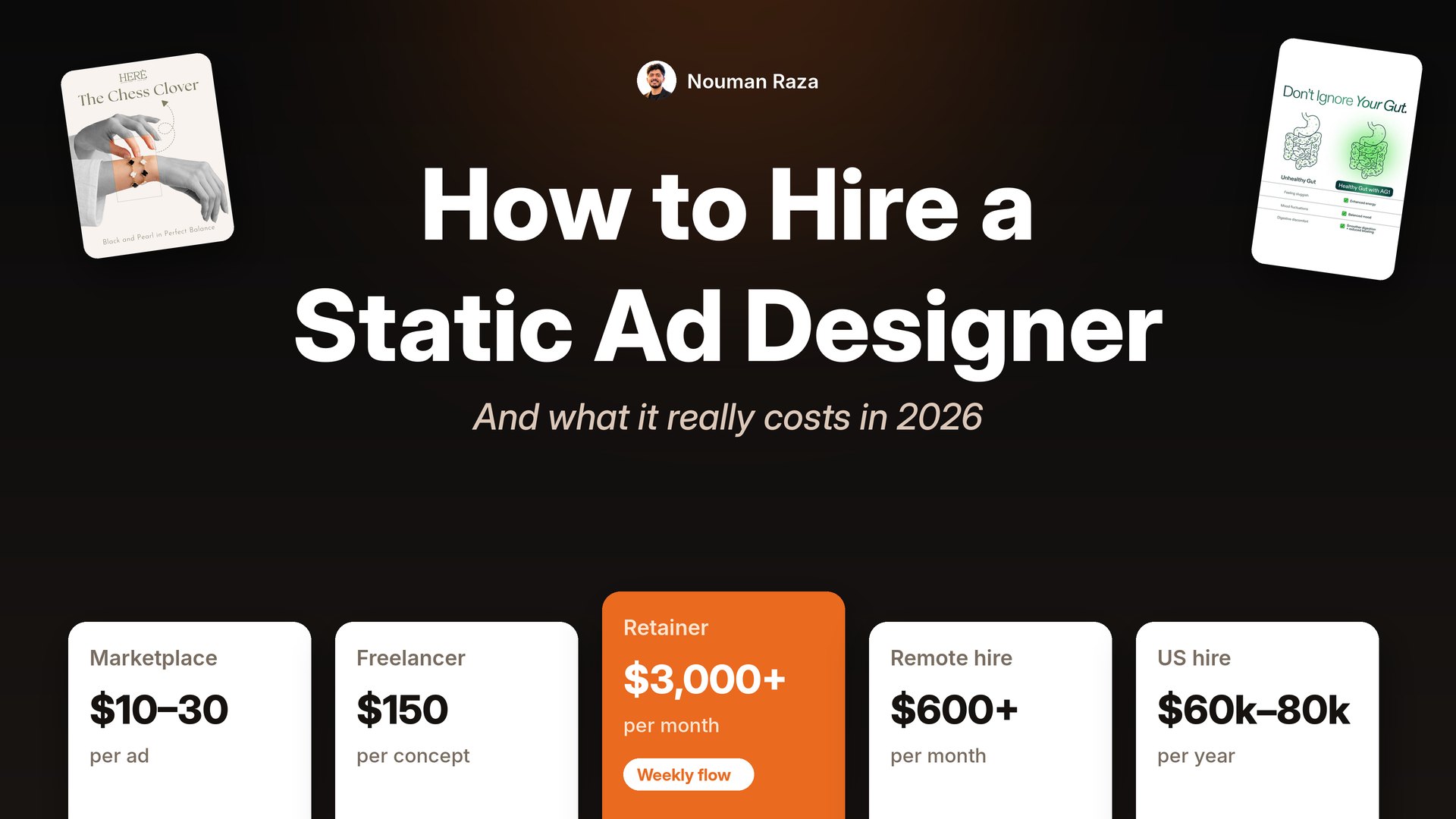
TL;DR: A static ad designer can cost anything from $10 an ad on marketplaces to $3,000+ a month for a monthly retainer, and roughly $600 to $6,500+ a month for a full-time hire. The price matters less than three things: a portfolio of real paid ads (not pretty posters), the ability to think about angles and not just layouts, and the speed to ship new ads every week. Start with a small paid test batch before you commit.
If you run a DTC brand, an online store, or a coaching business, sooner or later you hit the same wall. You know you need new ads every week, but you do not have the time to make them, and the ones you make yourself are starting to look the same.
So you go looking for a designer. And you find thousands of them. Some charge $10, some charge $5,000. Everyone says "high converting" and "scroll stopping." How do you pick?
I am a static ad designer and creative strategist myself, so I will be honest about this from the inside. Here is what it really costs, what to look for, and the mistakes I see brands make when they hire.
What does a static ad designer cost in 2026?
Here are real prices I found on public listings and job posts this month. They give you a good picture of the market.
| Option | Typical price | Good for |
|---|---|---|
| Marketplace gig (Fiverr, Dribbble quick hire) | Around $10 to $30 per ad | One-off ads, very small budgets |
| Freelancer, single concept | Around $150 per concept in two sizes | Testing someone before a bigger commitment |
| Freelancer monthly retainer | Around $3,000+ a month for about 20 concepts | Brands that need a steady weekly flow |
| Full-time remote hire | From around $600 a month to $1,500+ a month | Brands with high volume and someone to brief them |
| Full-time US-based hire | Around $60,000 to $80,000 a year | Bigger teams that want someone in-house |
Some examples behind those numbers: on Dribbble you can find social ad designers at $10 to $30 per creative, a single static ad concept for $150, and a monthly static ads package at $3,200 for 20 concepts. On the job side, one Philippines-based listing offers a full-time static ads designer at $600 to $700 a month, one DTC agency is hiring a Meta static ad designer at $1,500+ a month plus bonuses, and a New York studio lists a paid social static designer at $60,000 to $80,000 a year.
The cheapest ad is not the one with the lowest price. It is the one that finds a winner before your budget runs out.
Why the $10 ad usually costs more
I am not saying cheap designers are bad. Some are very talented. But at $10 to $30 an ad, the designer has to make a lot of ads very fast to earn a living. That usually means:
- Templates instead of ideas.
- No thinking about who the ad is for or why they would buy.
- Ads that look nice as a picture but do not work in a feed.
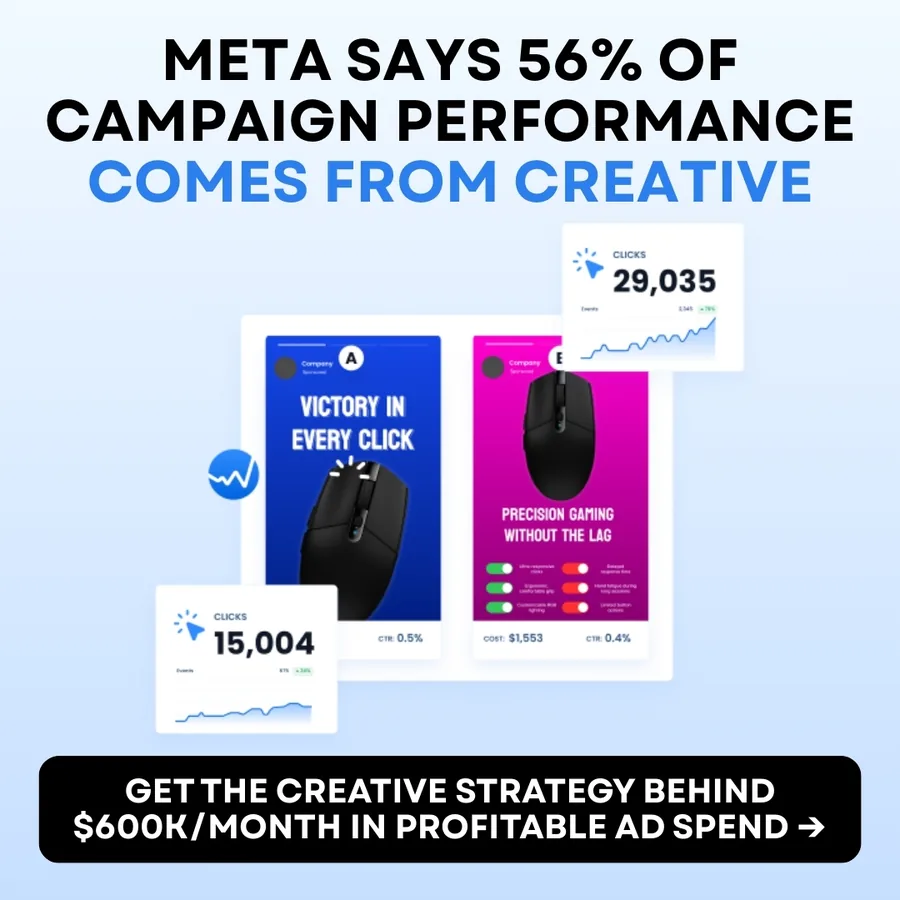
If you spend $2,000 testing ten ads that all say the same thing, the $200 you saved on design did not save you anything. The real cost of an ad is the ad spend it takes to find out it does not work. And even good ads wear out, which is why you need a steady flow of new ones. More on that in why Facebook ads stop working after a few days.
What to look for in a static ad designer
1. A portfolio of real paid ads
This is the first filter. Job posts from serious DTC brands all ask for the same thing: a portfolio that shows actual paid Meta creative, not brand posters or social posts. Ad design is its own skill. It has to work on a phone, in one second, between a friend's photo and a news story.
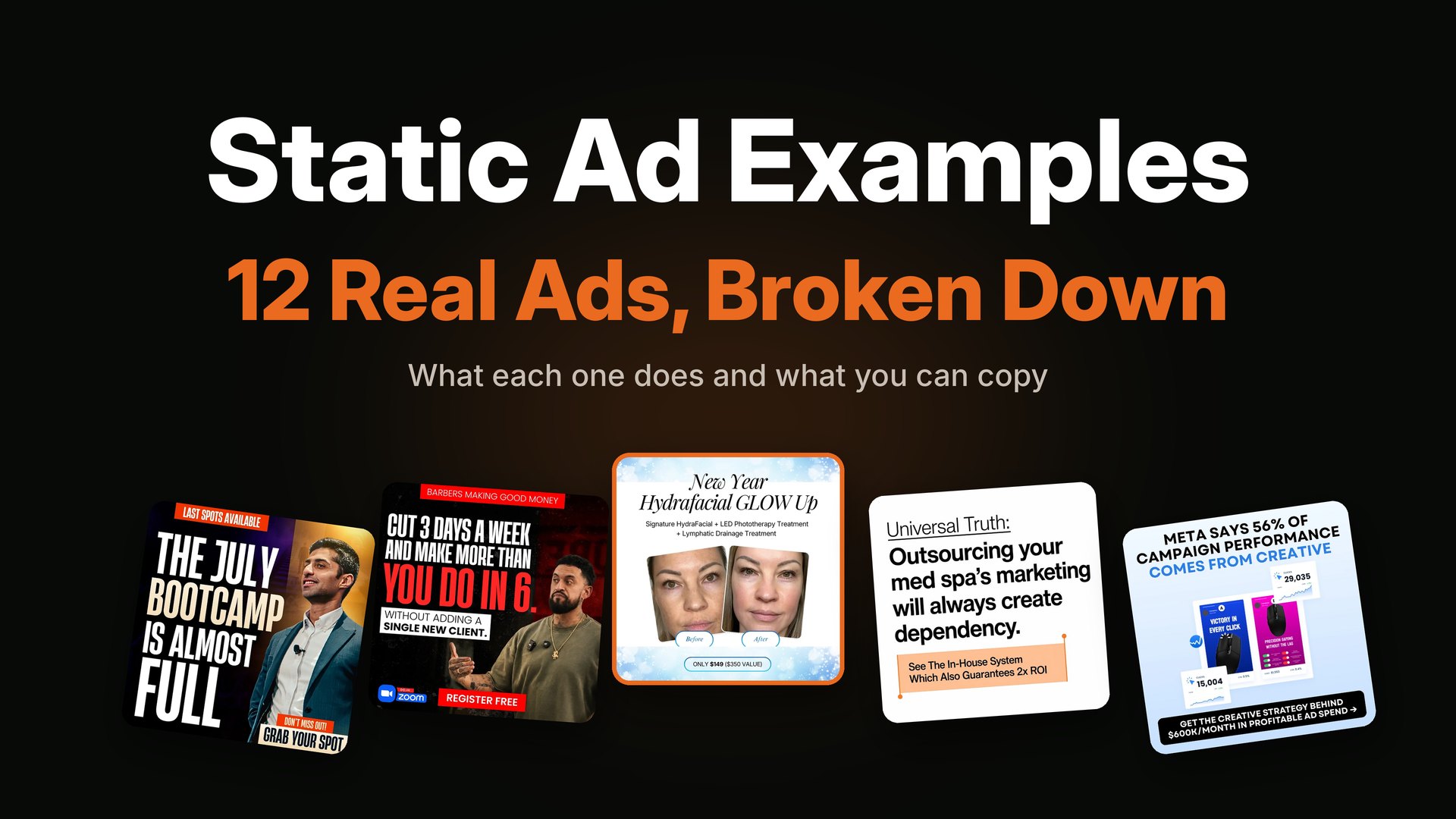
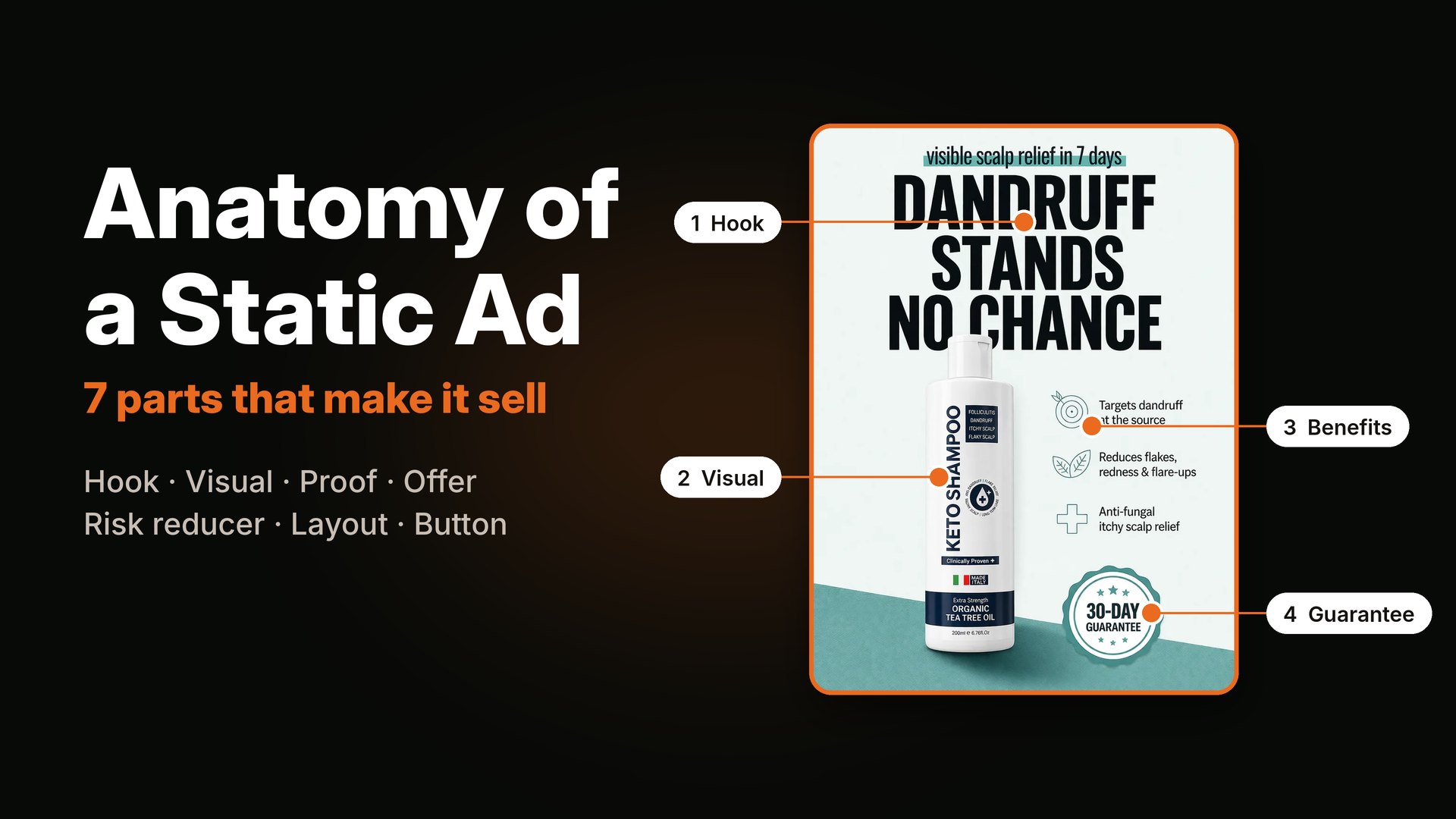
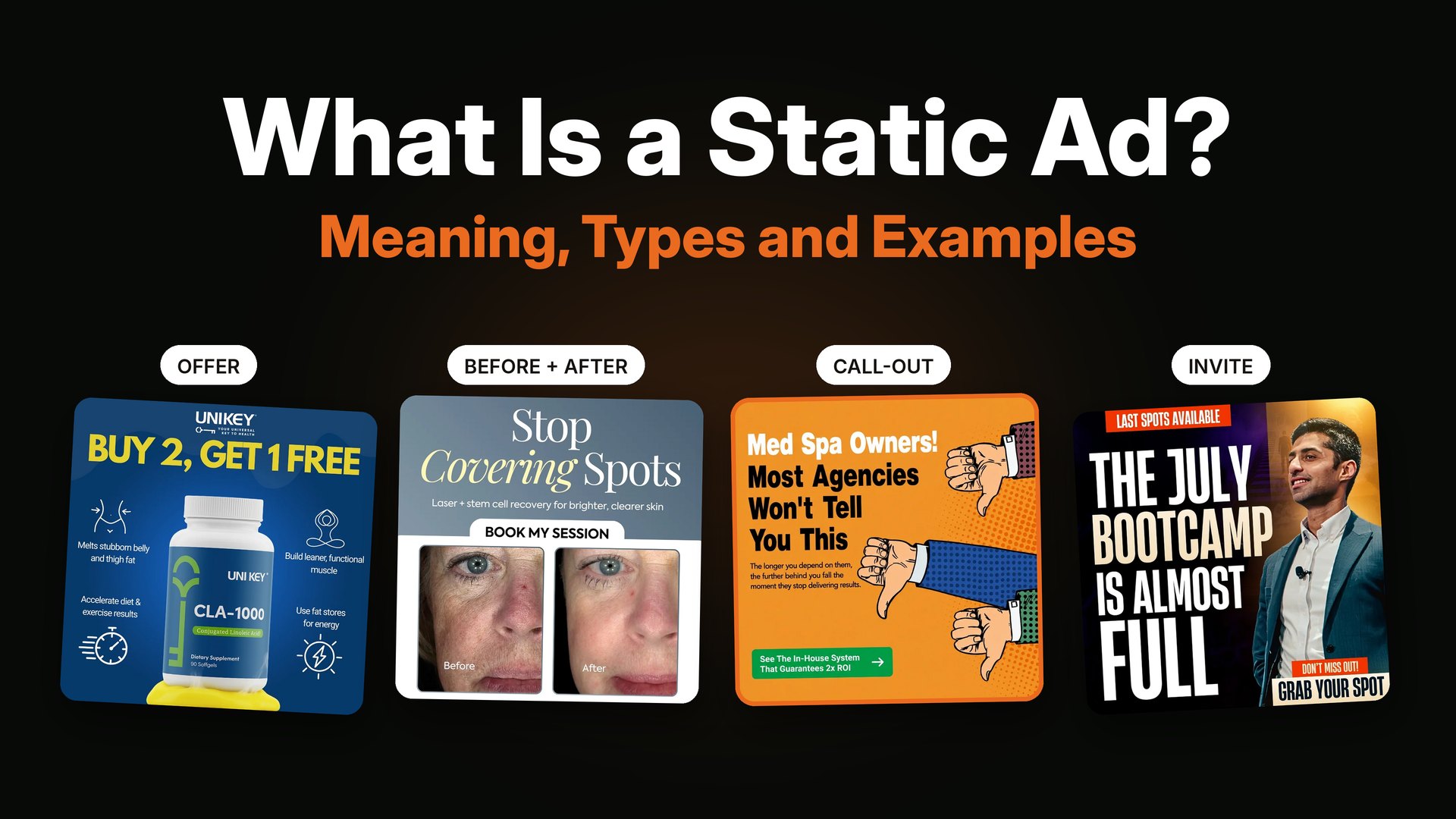
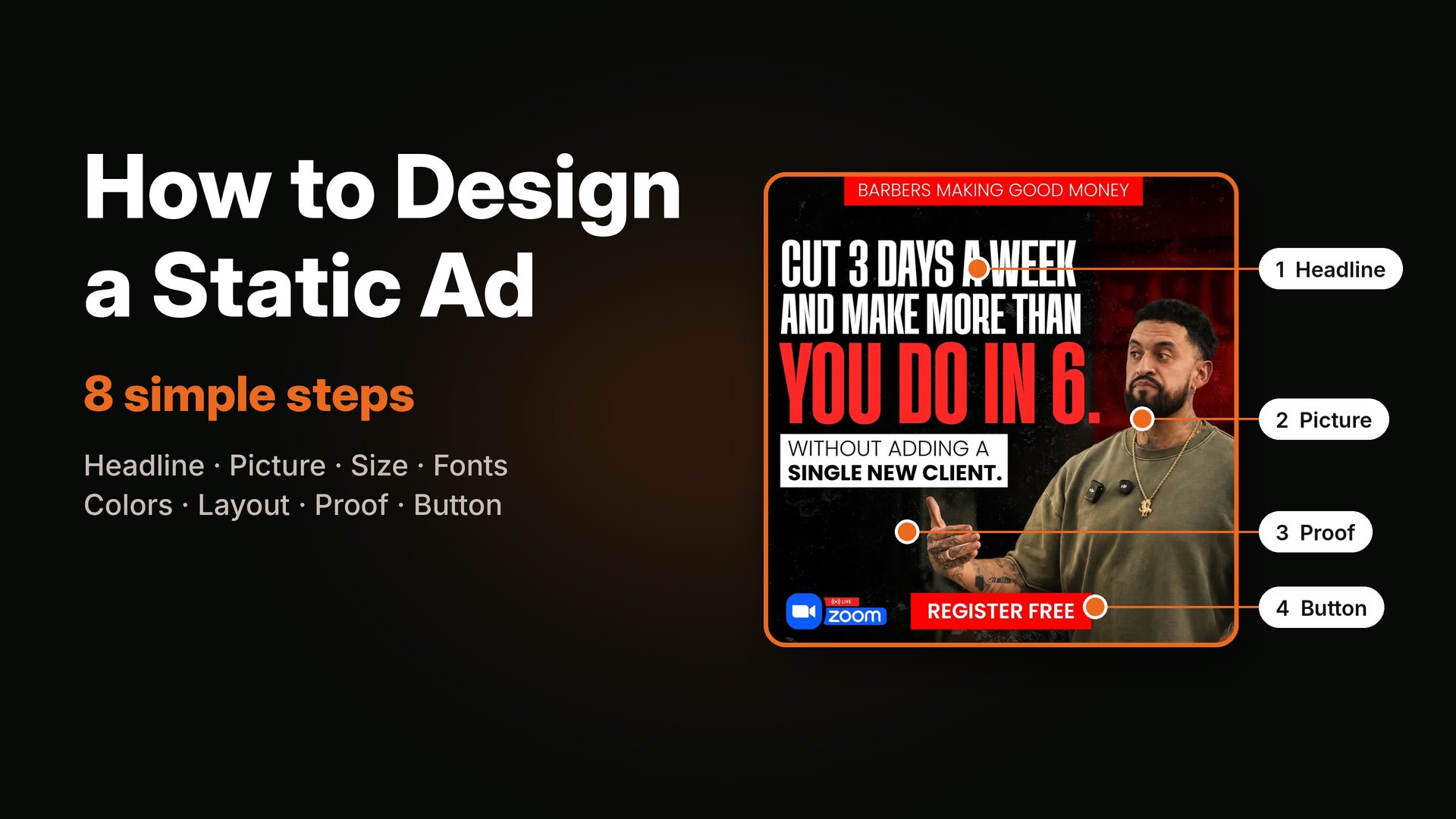
Look for ads with a clear headline, one main message, a product or person front and center, and an obvious next step. These are some examples from my own portfolio across different niches:


Different niches, same rules: one message, readable on a phone, clear next step.
2. Strategy, not just layout
A good static ad designer asks questions before they open Photoshop or Figma. Who is this for? What is the angle? What did your best ad say? What do your reviews keep repeating?
If a designer only asks for your logo, colors and "what text do you want," they are waiting for you to do the thinking. That is fine if you have a strategist. If you do not, you need someone who can do both.
3. Speed and consistency
Testing only works if new ads show up every week. Ask how many ads they can deliver per week and how fast they turn around changes. Then ask yourself if they reply fast. A great designer who disappears for five days slows down your whole account.
4. They understand formats
Ask them to name a few static formats they like and why. A good answer includes things like before and after, us vs them, review or testimonial ads, comparison charts, benefit callouts, lo-fi native style, and offer ads. If they only talk about colors and fonts, keep looking.
5. They design for every placement
Feed (4:5 or 1:1) and stories or reels (9:16) are different. A good designer builds both properly, keeping important text away from the areas the app covers, instead of just stretching one file.
How to judge a portfolio in five minutes
You do not need to be a designer to judge an ad portfolio. Open it on your phone, not your laptop, because that is where ads live. Then for each ad, ask:
- Can I tell what it is selling in one second? If not, it will be scrolled past.
- Is there one main message? Or are there five things fighting for attention?
- Can I read the text without zooming? Small text is the most common mistake in ad design.
- Does it look different from a normal brand post? Good ads are made for the feed, not for a brand book.
- Is there variety? Different formats, different angles, different niches. One style repeated 30 times is a red flag.
- Is it close to my world? Experience in your niche is a plus, but strong thinking matters more than the same industry. If you run webinars, ask for webinar ads too. Here is what good webinar ads look like.
If most of the portfolio passes these checks, the designer understands how ads work, not just how to make pretty pictures.
Red flags to watch for
- No real ads in the portfolio, only logos, posters or mockups.
- They promise results like "guaranteed 5x ROAS." Nobody can promise that. The ad is one part of the result.
- They never ask about your customer. Only about colors and fonts.
- Every ad looks the same, no matter the brand.
- Slow or unclear replies before you even hire them. It rarely gets better after.
- No sizes for stories and reels, only square.
Questions to ask before you hire
- Can you show me ads you made that ran with real spend?
- How do you come up with angles for a new brand?
- What would you test first for my product, and why?
- How many ads per week can you deliver, and how fast are revisions?
- What do you need from me in a brief?
- Do you deliver all the sizes I need for feed and stories?
How to test a designer before you commit
Do not sign a big retainer on day one. Start with a small paid test:
- Ask for 3 concepts for one product.
- Give them a short brief: product, buyer, best review, your current best ad, and the offer.
- Judge the thinking as much as the design. Did they come up with different angles, or one idea in three colors?
- Run the ads. Even a small amount of spend tells you a lot. If they get clicks but no sales, check the page first with this checklist.
If the first batch is strong and working with them feels easy, then move to a weekly or monthly setup.
What a good brief looks like
Even the best designer needs a good brief. Here is a simple one you can copy and fill in:
- Product: what it is, the price, and the link.
- Who it is for: one or two sentences about your best customer.
- The main problem it solves: in the customer's words.
- Proof: best reviews, ratings, numbers, press, before and after photos.
- Your current best ad: and why you think it works.
- What to test: the angle or idea for this batch.
- The offer: discount, bundle, free shipping, guarantee.
- Must-haves: logo, brand colors, things legal says you cannot claim.
- Sizes: usually 4:5 or 1:1 for feed, and 9:16 for stories and reels.
A clear brief saves you a full round of revisions, and the first batch will already feel close to right.
Per ad or monthly retainer: which pricing is better?
Paying per ad is good when you are just starting, testing someone new, or only need ads now and then. You pay for what you get, but you may wait longer because you are not their main client.
A monthly retainer is good when you need ads every week. You usually get a lower price per ad, faster turnaround, and a designer who knows your brand deeply after a month or two. The risk is paying for volume you do not use, so agree on a clear number of ads per month.
Many brands start per ad with a small test, then move to a retainer once they trust the designer.
Freelancer, agency or in-house?
- Freelancer: best value for most small and mid-size brands. You work directly with the person making the ads. The risk is if they are slow or unreliable, so check that early.
- Agency: good if you want strategy, design, copy and media buying in one place, but you pay for the team and the overhead.
- In-house: makes sense once you need a lot of ads every week and have someone to manage and brief them.
Your first 30 days with a new designer
The first month decides if the relationship works. Here is a simple plan:
- Week 1: share the brief, your brand files, your best and worst ads, and access to your reviews. Get the first batch of three to five concepts.
- Week 2: give clear feedback on the first batch. Say what you liked and why, not only what to change. Launch the best ones.
- Week 3: share the first results with the designer. Good designers want to know what worked. Get the second batch, built on what you learned.
- Week 4: decide if you want to keep going and agree on a steady weekly or monthly number of ads.
The key is to share numbers. A designer who sees which ads won will make better ads every month. A designer who never sees results is guessing.
FAQ
How much does a static ad cost to make?
Anywhere from about $10 on marketplaces to $150 or more per concept from a specialist freelancer. Monthly packages and full-time hires bring the cost per ad down if you need a steady volume.
How many ads should a designer deliver per month?
It depends on your budget. Most small and mid-size brands need somewhere between 12 and 40 new ads a month. I explain how to work out your number in how many ad creatives to test per week.
Should my designer also write the ad copy?
It helps a lot if they can. In static ads, the headline is half the design. A designer who understands copy will build the layout around the message, not squeeze text into a pretty picture.
What should I put in a brief for a static ad designer?
Your product, who it is for, the main problem it solves, your best reviews, your current best ad, your offer, and any brand rules. The more real customer words you share, the better the ads will be.
Is it better to hire a designer or use AI tools?
AI tools are great for quick ideas and backgrounds. But a winning ad still needs someone to choose the right angle for the right buyer, and to make it look like it belongs to your brand. Many good designers now use AI as part of their process.
How long does it take to get a batch of static ads?
For a good freelancer, a batch of three to five concepts usually takes a few days, depending on how clear the brief is and how many sizes you need. Revisions are usually faster once the first round is approved.
Should I own the design files?
Yes, ask for the source files (Figma, Photoshop or similar) as part of the deal. It lets you or another designer make small changes later without starting from zero.
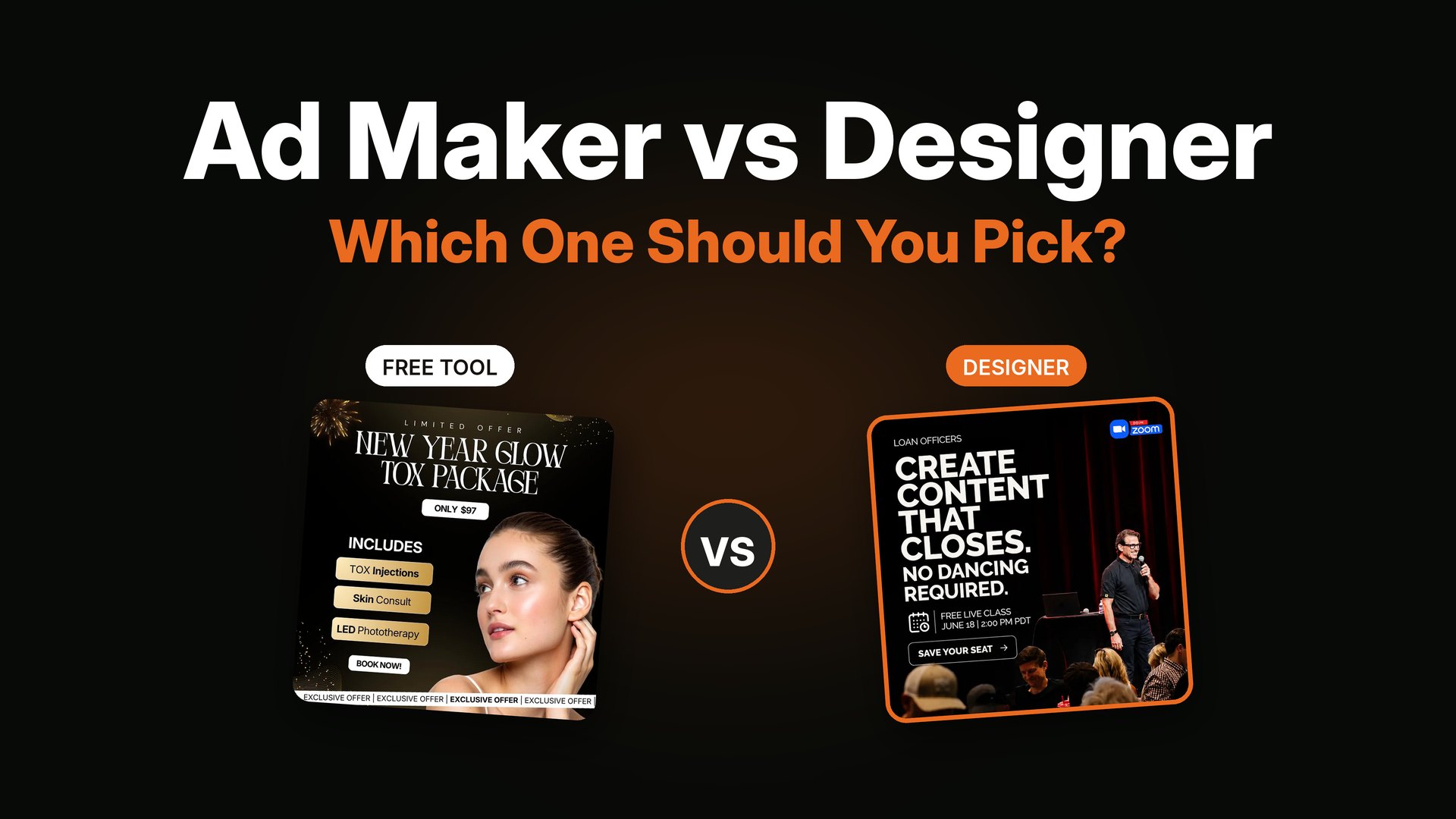
Not ready to hire yet? Learn how to design a static ad yourself first, or read free ad makers vs a designer to see which route fits. If you are weighing AI tools, see the AdCreative.ai review and alternatives.
Looking for a static ad designer?
I design static ads and YouTube thumbnails for DTC, ecommerce, info-product and coaching brands, and I do the strategy too, so you get angles, not just layouts. You can see what is included on my services page. If it looks like a fit, book a short call and we can start with a small test batch.