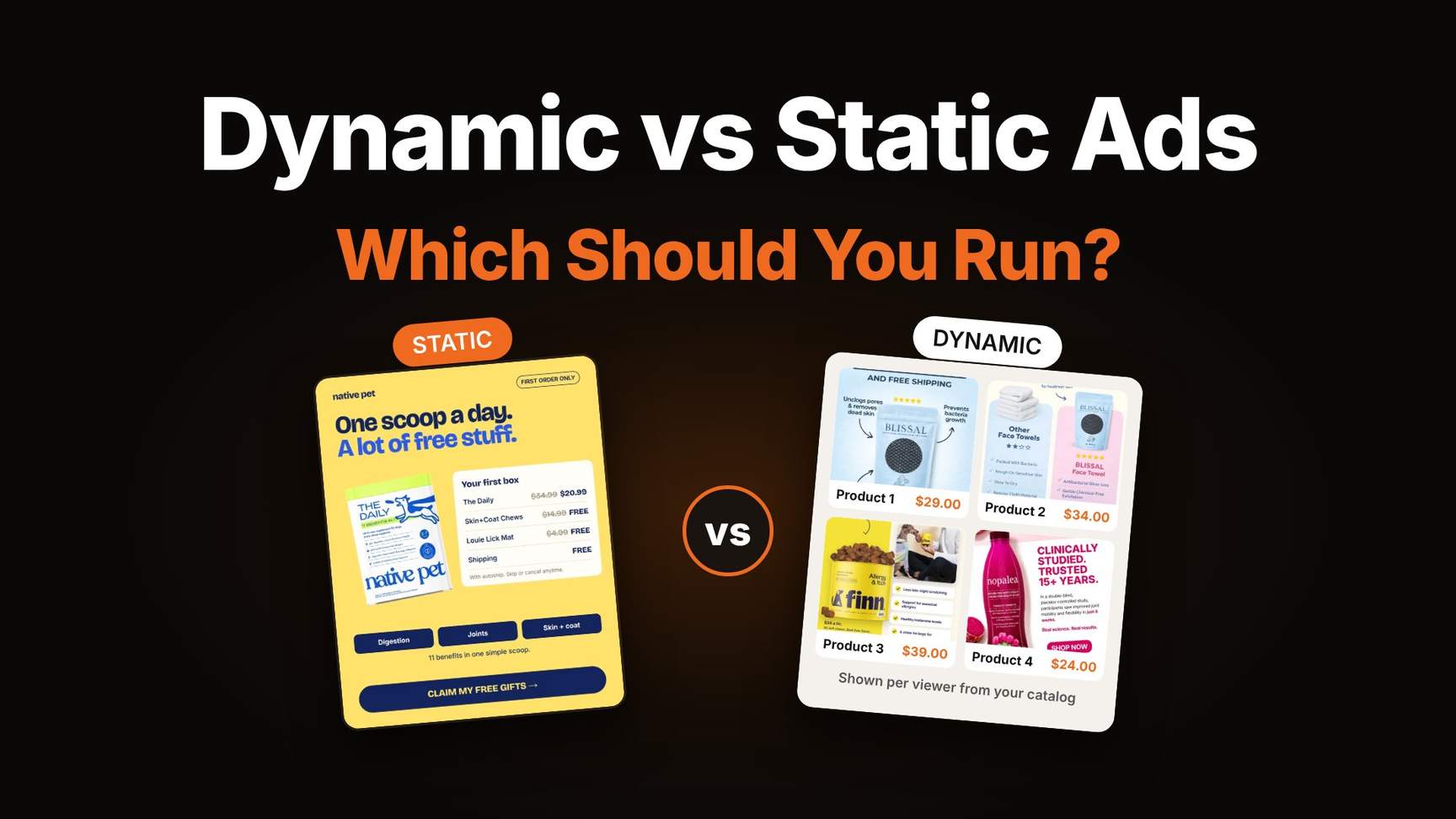
TL;DR: A static ad is one fixed image that every viewer sees the same way. A dynamic ad changes based on who is looking, by pulling products from a catalog or by mixing different images and text automatically. Static ads are best for testing a message and telling a clear story. Dynamic ads are best for retargeting people who already looked at your products, and for brands with big catalogs. Most brands should run both, and in this guide I show you how to decide, plus where carousel ads fit in.
"Should we run dynamic or static ads?" is a question I hear a lot, and the honest answer is that it is the wrong question. They do different jobs. Asking which is better is like asking whether a hammer is better than a screwdriver.
The confusing part is that "dynamic ads" means three different things depending on who you ask. So first, let me untangle the words. Then I will show you when to use each one, with a simple decision table at the end.
If you are not sure what a static ad is, start with what is a static ad.
What is a static ad?
A static ad is a single still image, usually with a headline, some supporting text and a button. Everyone who sees it sees exactly the same thing. You design it once, on purpose, with one message for one type of buyer.
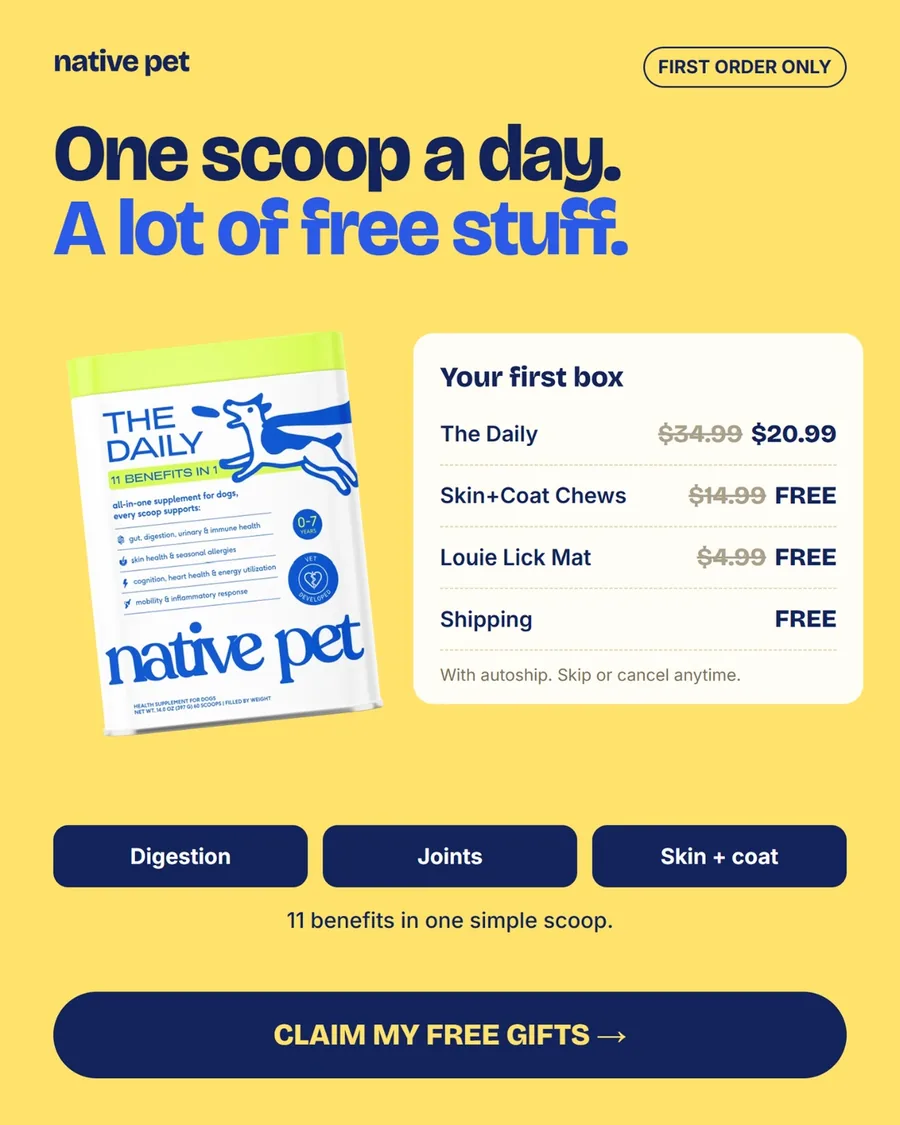
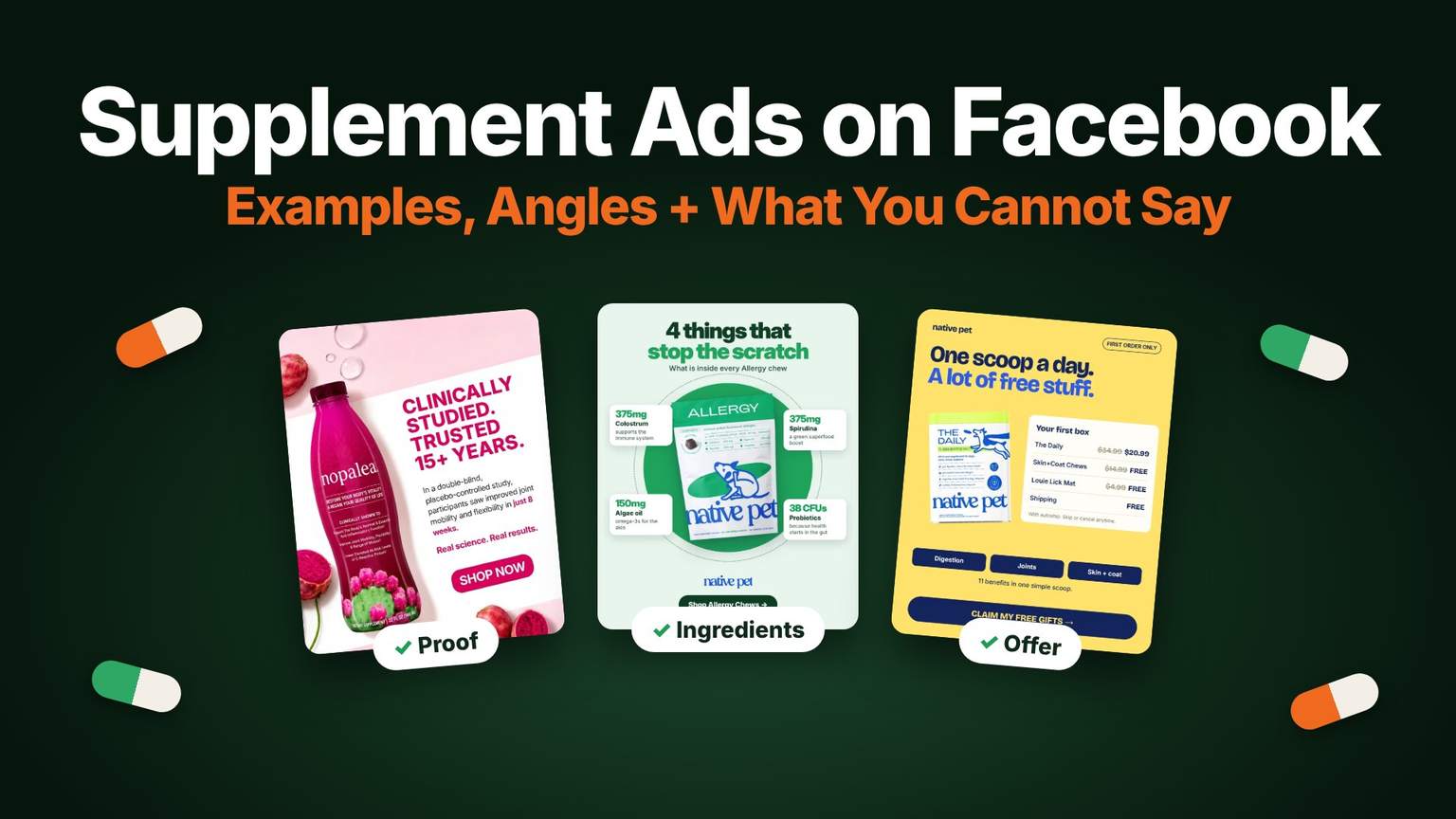
Here is a typical static ad from my portfolio. It is built around one first-order offer: "One scoop a day. A lot of free stuff." A clean box lists what is in the first order, with the old prices crossed out and "FREE" next to the extras. Three tabs show the main benefits, and there is one button. Every person who sees it gets the same pitch, in the same order, because a person designed that order.
Strengths of static ads:
- You control the whole message, the layout and the reading order.
- They are quick and cheap to make, so you can test many angles.
- They work for any business, including services, coaches and events with no product catalog.
- When one wins, you know exactly why, because you know what was in it.
What is a dynamic ad? (the three meanings)
Here is where people get confused. "Dynamic" is used for three different things:
Meaning 1: Dynamic product ads (catalog ads)
On Meta, these were called dynamic ads or dynamic product ads, and they are now called Advantage+ catalog ads. You upload a product catalog (a feed of your products with images, names and prices). Meta then builds ads automatically, showing each person the products they viewed, added to cart or are likely to want.
If someone looked at a blue hoodie on your store yesterday, a catalog ad can show them that blue hoodie today, with its price.
Meaning 2: Dynamic creative
This is different. Here, you give Meta several images, several headlines and several pieces of text. Meta mixes and matches them and shows different combinations to different people, looking for the best mix. Meta has been moving this toward a newer option called flexible ad format, which works in a similar way at the ad level. For sales and app campaigns, Meta now pushes the flexible format instead.
Meaning 3: Dynamic (animated) banner ads
Outside of Meta, especially in display advertising, "dynamic" is sometimes used for animated or HTML5 banners that move, as opposed to a still "static banner." This is closer to motion design than personalization.
When people search "dynamic vs static ads," they usually mean meaning 1 or meaning 2. I will focus on those, since they are what you will choose between in Ads Manager.
Dynamic vs static ads: the key differences
| Static ads | Dynamic catalog ads | Dynamic creative / flexible format | |
|---|---|---|---|
| What the viewer sees | One fixed design | Products from your feed, picked per person | A mix of your assets, picked per person |
| Who decides the message | You | The algorithm, from your catalog | The algorithm, from your assets |
| Best for | Testing angles, cold traffic, clear stories | Retargeting product viewers, big catalogs | Finding the best combo of assets |
| Needs a product catalog | No | Yes | No |
| Design control | Full | Low (mostly product photos and templates) | Medium |
| What you learn | Which message works | Which products sell | Which assets perform, but less clearly why |
| Effort | Design each ad | Set up the feed once | Make several assets per ad |
When static ads win
Static ads are the better choice when:
1. You need to find your message. Before you scale anything, you need to know which angle makes people buy. Is it price, speed, results, trust, a pain point? Static ads let you test five angles side by side, and because each ad says one thing, you learn which idea won.
2. You are talking to cold audiences. People who have never heard of you need a reason to care. A designed ad with a strong hook, proof and offer does that job better than a plain product photo from a feed.

This med spa offer is a good example. It bundles three treatments into one package with a price and a "value" anchor, and labels each treatment around the model's face. A catalog ad could not build this, because the package is the idea, not a single product in a feed.
3. You sell a service, an event or an info product. No catalog means no catalog ads. Coaches, clinics, B2B services and webinars run on static and video.
4. You have a specific offer or season. A bundle, a launch, a limited spot count, a new angle. These need a designed message.
5. You want to know why something worked. With dynamic creative, the algorithm mixes pieces, and reports on combinations can be hard to read. With a static ad, the winning ad is the lesson.
When dynamic ads win
Dynamic catalog ads are the better choice when:
1. You are retargeting product viewers. This is the classic use. Someone viewed a product and left. Showing them that exact product, with its price, is one of the most reliable ways to bring them back.
2. You have a big catalog. If you sell hundreds or thousands of products, designing a static ad for each one is not realistic. A catalog feed scales automatically.
3. Prices and stock change often. Catalog ads pull from your feed, so if a price changes or a product sells out, the ads update with it.
Dynamic creative or flexible format is useful when:
4. You have several good assets and want the algorithm to find the best mix. This can be a fast way to get a working combination, especially once you already know your angle.
The catch: dynamic ads are only as good as the inputs. A catalog full of plain product photos on white will look like every other store's catalog ad. A dynamic creative mix built from five weak headlines will just find the least weak one.
The best setup: static and dynamic together
In practice, the strongest accounts I have seen use both, at different stages:
- Top of funnel (cold audiences): static ads to test angles and introduce the brand. This is where design and messaging do the heavy lifting.
- Middle of funnel: winning static angles, plus video, to warm people up.
- Bottom of funnel (retargeting): dynamic catalog ads to show people the products they already looked at, plus static ads with a strong offer or reviews to push them over the line.
A good trick: once you find a winning static angle, use its headline and style in your catalog ad templates or overlays. That way the dynamic ads carry the message you already proved, instead of just a product photo and a price.
What about carousel ads vs static ads?
Carousel ads come up in the same conversation, so here is the short version. A carousel is 2 to 10 swipeable cards in one ad. It sits between static and dynamic: it can be designed by hand like a static ad, or filled from a catalog like a dynamic ad.
| Single static image | Carousel | |
|---|---|---|
| Message | One idea, one look | A sequence: steps, products, features, a story |
| Speed to understand | Instant | Needs a swipe for the full message |
| Best for | Testing hooks, bold offers | Showing a range, a step-by-step, or a before-to-after story |
| Effort | One design | 3 to 10 designs that work together |
Use a carousel when the message really needs more than one frame, for example "5 mistakes," "3 steps," or a range of products. Make the first card strong enough to work alone, because many people never swipe. If the message fits on one image, a single static is usually cleaner and easier to test.
Carousel ads vs catalog ads
These are not the same either. A carousel is a format (swipeable cards). A catalog ad is a source (products from a feed). A catalog ad can be shown as a carousel, a single image or a collection. A carousel can be built from a catalog or designed by hand.
So the real choice is: do you want to design the cards (manual carousel, more control) or let the feed fill them (catalog carousel, more scale)?
Quick decision guide
| Your situation | Start with |
|---|---|
| New brand, still finding the message | Static ads |
| Selling a service, course, event or app | Static ads (and video) |
| Store with many products, retargeting viewers | Dynamic catalog ads |
| Have 3 to 5 good assets, want to find the best combo | Dynamic creative / flexible format |
| Need to show steps or a range | Carousel |
| Running a bundle or limited offer | Static ads |
| Proven angle, want to scale retargeting | Catalog ads with your winning message in the template |
Common mistakes
- Running only catalog ads to cold audiences. People who do not know you need a reason to care, not just a price tag.
- Expecting dynamic creative to fix a weak message. It mixes your inputs. It does not invent a better idea.
- Never refreshing static ads. Even winners wear out. I explain the signs in how to fix creative fatigue.
- Testing tiny static changes. Test different angles first, then small tweaks.
- Leaving Advantage+ creative settings on without checking. Some automatic changes can affect how your static ad looks. See Meta Advantage+ creative for static ads.
Keep reading: see static image ads built around one clear idea in creative banner ads.
FAQ
What is the difference between dynamic and static ads?
A static ad shows the same fixed image to everyone. A dynamic ad changes per viewer, either by showing products from a catalog based on what they viewed, or by mixing different images and text automatically.
Are dynamic ads better than static ads?
Neither is better overall. Dynamic catalog ads are usually stronger for retargeting product viewers and for stores with big catalogs. Static ads are usually stronger for testing messages, reaching cold audiences and selling services or offers that are not single products.
What are dynamic ads called on Facebook now?
Meta's dynamic product ads are now called Advantage+ catalog ads. Dynamic creative still exists for some objectives, but Meta is moving advertisers toward the flexible ad format, especially for sales and app campaigns.
Do I need a product catalog for dynamic ads?
For catalog ads, yes. You need a product feed connected to Meta. For dynamic creative or flexible format, no. You just upload several images and text options.
Should I use carousel or static ads?
Use a single static image when one message is enough, which is most of the time when testing. Use a carousel when you need several frames, such as steps, a product range or a story. Make the first card work on its own.
How many static ads should I test?
Start with 3 to 5 static ads with clearly different angles, then make new versions of the winner. I give a plan by budget in how many ad creatives to test per week. And if you are also weighing video, see static vs video ads.
Need static ads to find your winning angle?
I design static ads for DTC, e-commerce, info-product and coaching brands, and I do the strategy too, so you get angles and not only layouts. You can see what is included on my services page. If it looks like a fit, book a short call and we can start with a small test batch.