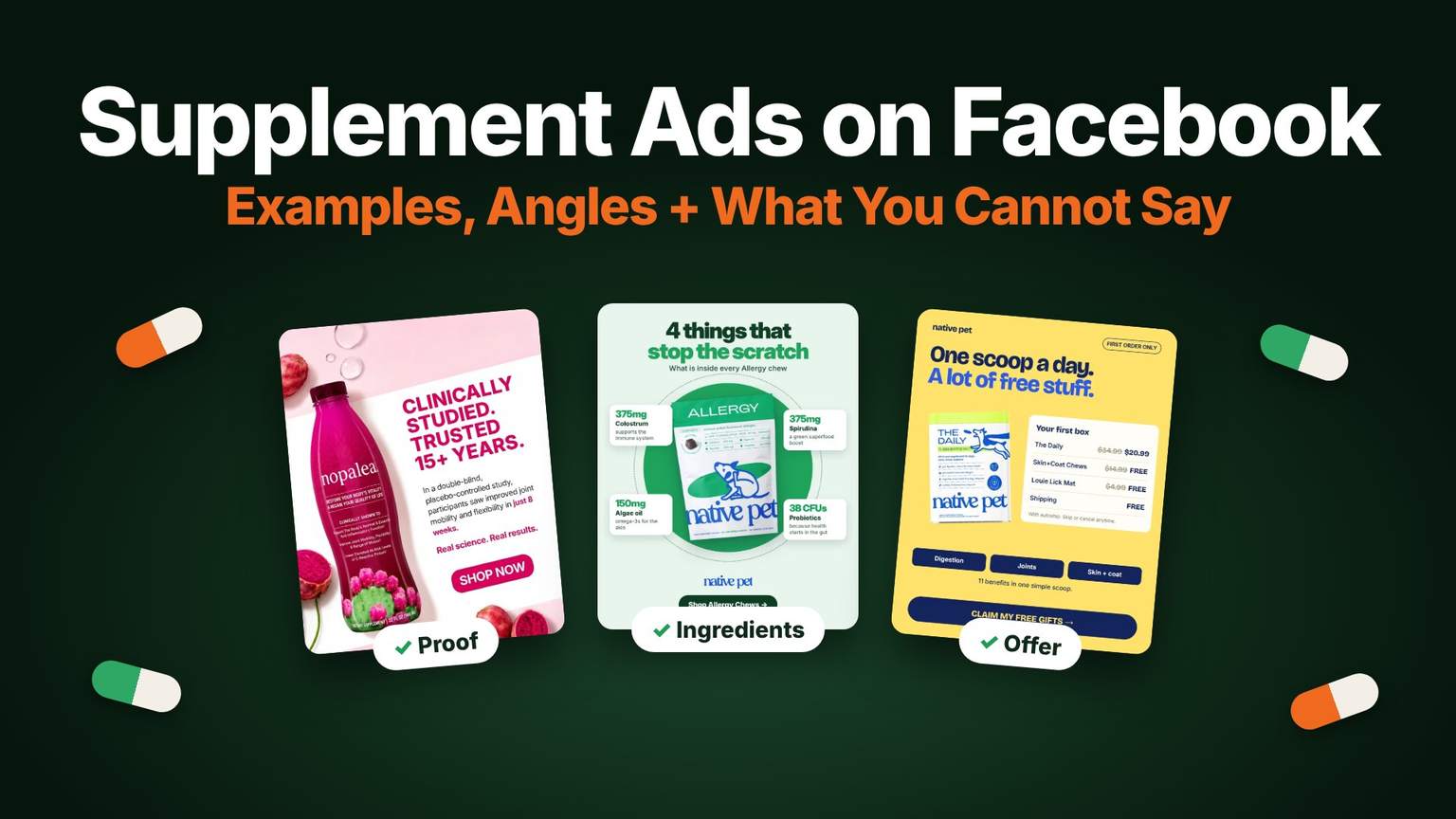
TL;DR: Supplement ads on Facebook live or die on two things: trust and compliance. The buyer has seen a thousand pills promising everything, and Meta and the law watch health claims closely. The ads that work lead with specific, provable benefits, show what is inside, and use proof like studies, ingredient amounts and reviews instead of big promises. Below are 6 static supplement ads from my portfolio, the angles that work, the claims to avoid, and a checklist before you launch.
Supplements are one of the biggest categories on Facebook and Instagram, and one of the most crowded. Every scroll has a gummy, a powder or a capsule promising more energy, better sleep, glowing skin or a flat stomach.
That creates two problems. First, buyers are tired and skeptical. Second, the more a supplement ad promises, the more likely it is to get rejected by Meta, or worse, to make a claim the brand cannot legally back up.
So good supplement ads are a balance: specific enough to stand out, careful enough to stay compliant. In this guide I show real static ads I designed for human and pet supplement brands, explain what each one does, and give you the angles and rules I follow.
I am a designer, not a lawyer. The rules here are a practical starting point, not legal advice. For anything you are unsure about, check with someone who knows supplement regulation in your country.
Why supplement ads are hard
- Skeptical buyers. Many people have bought supplements that did nothing they could feel. You have to earn belief.
- Invisible results. Unlike skincare, most supplement results cannot be photographed. You need other kinds of proof.
- Strict rules. Meta has policies on health and appearance claims, and in the US the FTC expects health claims to be backed by competent and reliable scientific evidence.
- Copycat products. Many brands sell nearly the same formula, so the ad has to find a real difference.
6 supplement ad examples (and why they work)
1. Proof as the headline
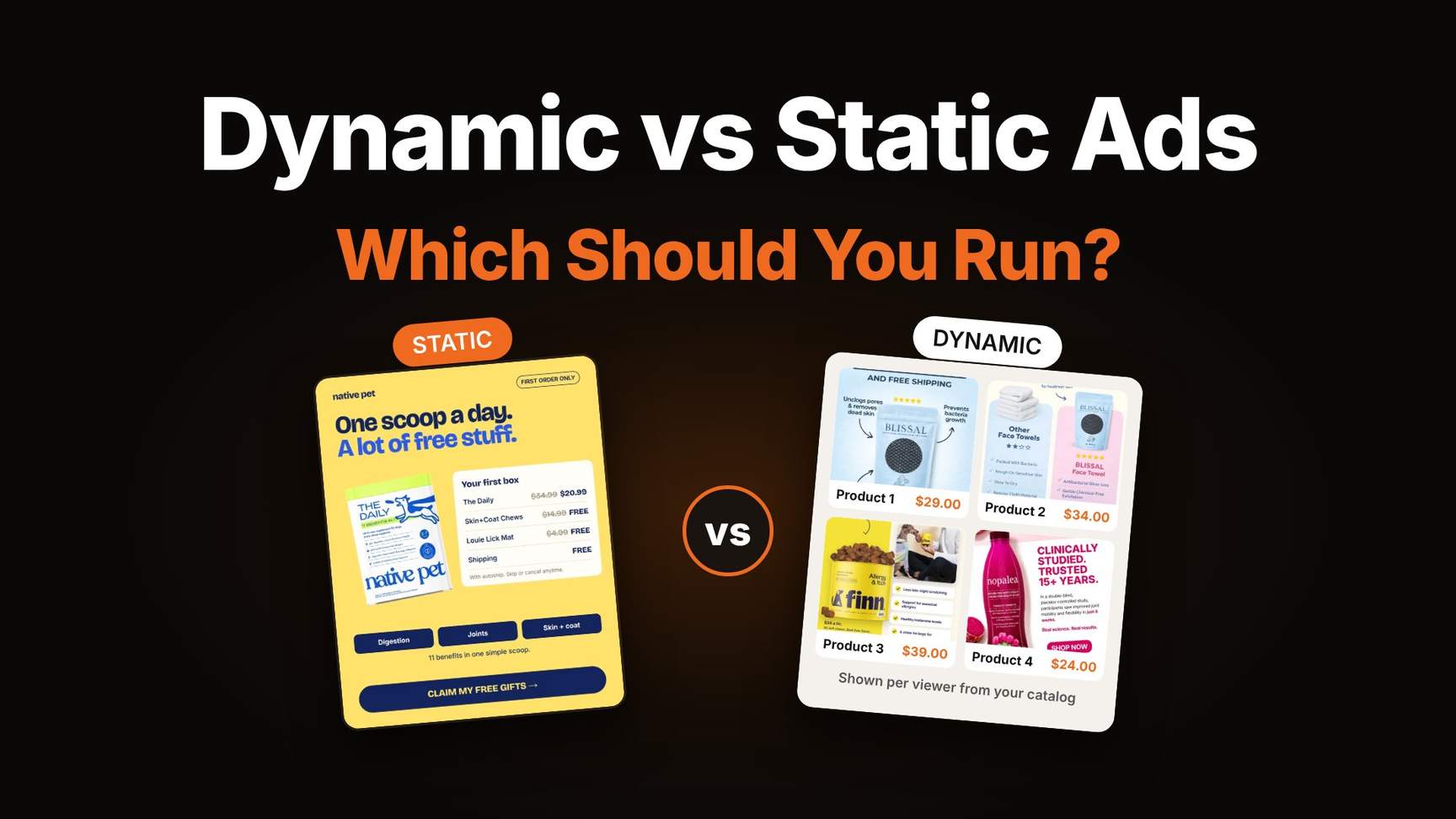
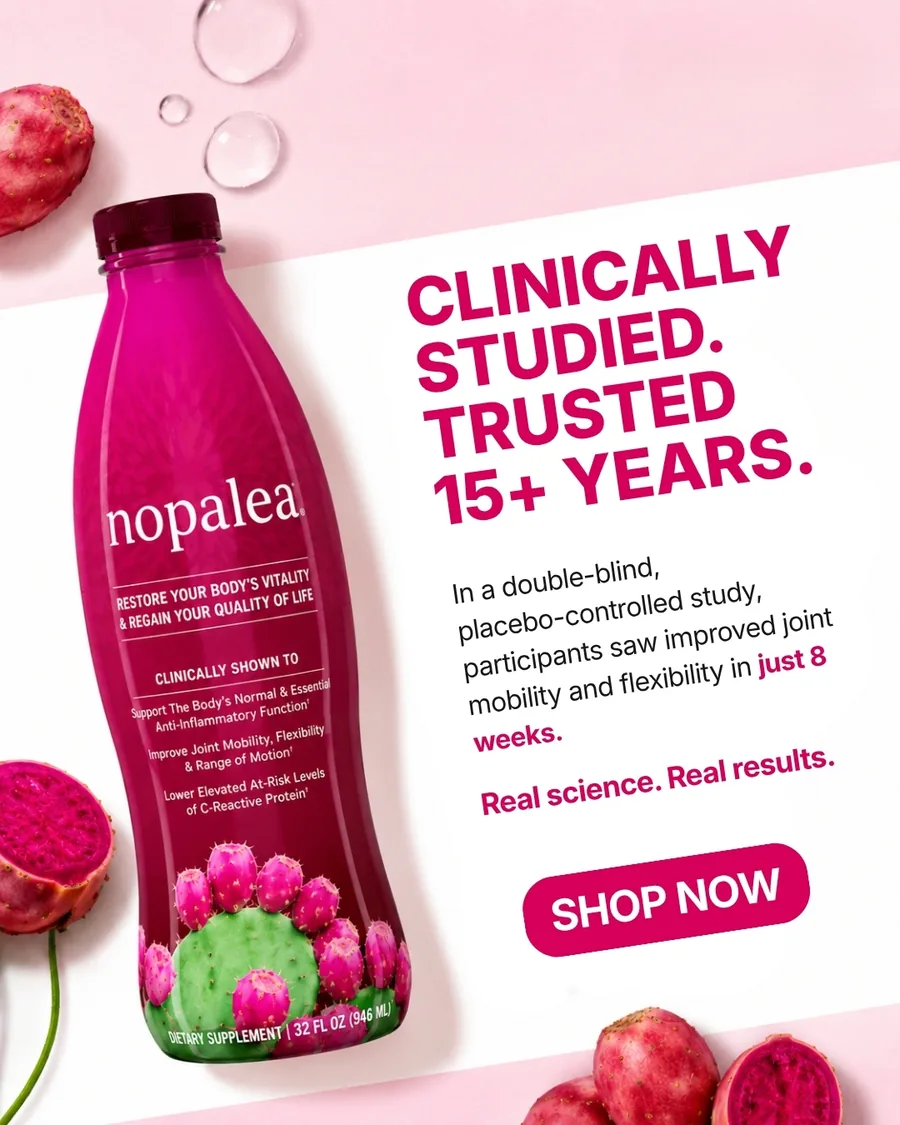
What it does: A bright pink bottle sits at an angle with cactus fruit around it. The headline is pure proof: "Clinically studied. Trusted 15+ years." One line explains the study (double-blind, placebo-controlled, participants saw improved joint mobility in a set number of weeks). Then "Real science. Real results." and a "Shop now" button.
Why it works: Instead of promising a result, it tells you why you can believe the result. Years in business and a named study type are both specific and checkable.
Steal this: If you have a real study, make it the headline and describe it plainly. Do not exaggerate what it found.
2. The education split
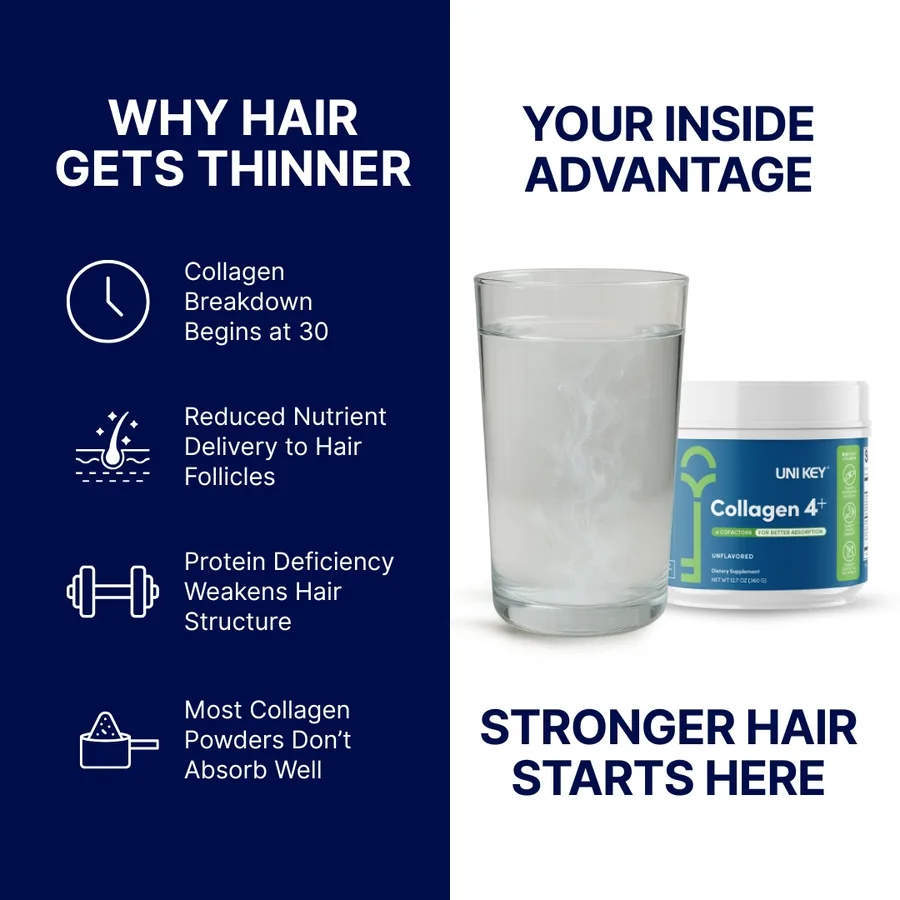
What it does: The left panel, in navy, asks "Why hair gets thinner" and lists four reasons with simple icons: collagen breakdown begins at 30, reduced nutrient delivery to hair follicles, protein deficiency, and many collagen powders do not absorb well. The right panel shows a glass and the product tub with "Your inside advantage" and "Stronger hair starts here."
Why it works: It teaches before it sells. The buyer learns something, feels smarter, and the product appears as the logical answer. The last reason on the list ("most powders don't absorb well") quietly sets up why this one is different.
Steal this: Explain the problem in three or four short points, then show your product as the answer. Education ads work especially well for cold audiences.
3. The calm offer
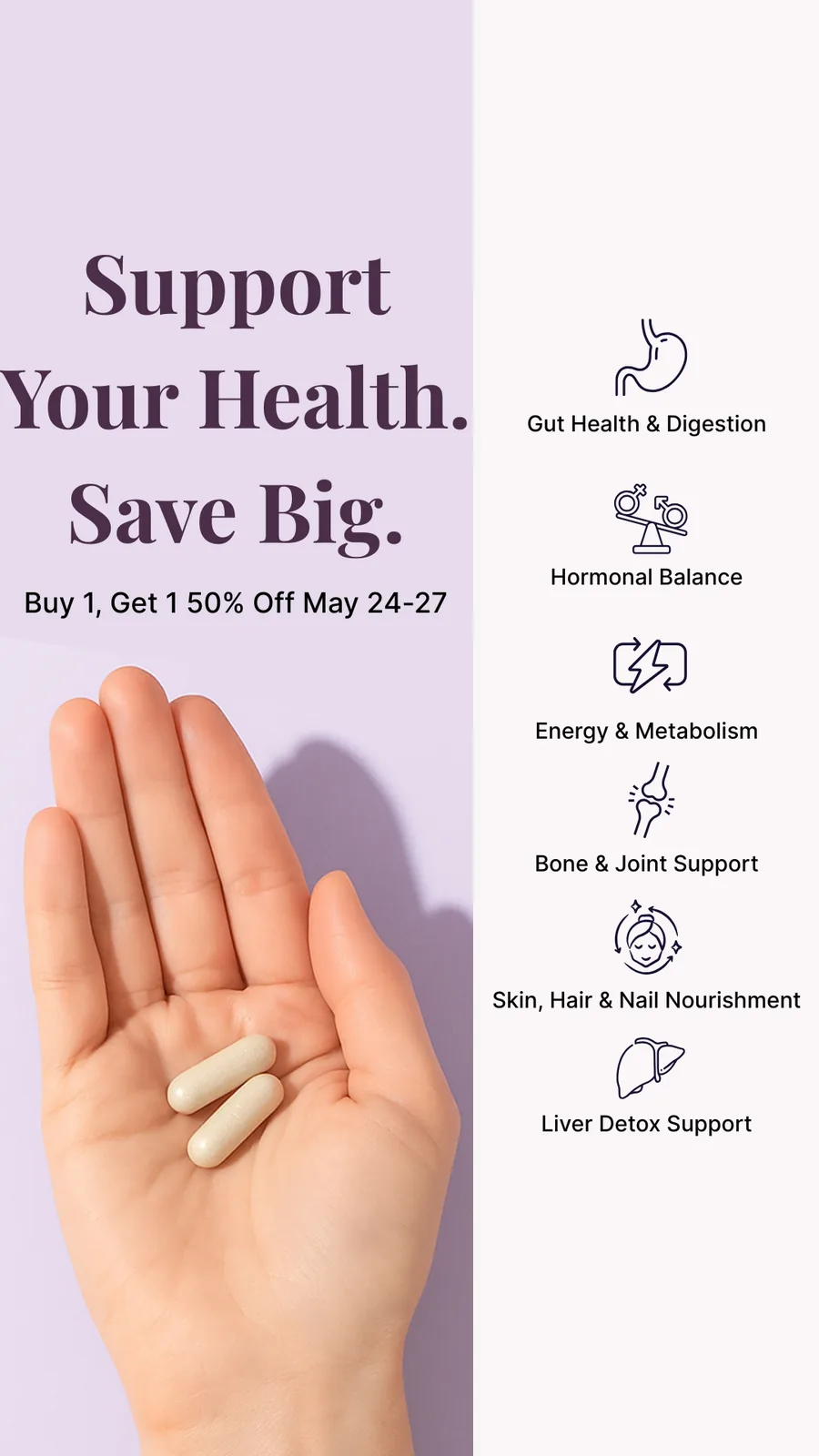
What it does: A soft purple panel with a serif headline: "Support your health. Save big." Under it, the offer: "Buy 1, get 1 50% off" with dates. A hand holds two capsules, and a thin column of six line icons lists support areas like gut health, energy, and skin, hair and nail nourishment.
Why it works: The language is careful ("support," "nourishment"), which is the kind of wording that tends to stay within the rules. The quiet design stands out in a feed of loud supplement ads.
Steal this: Use "supports" language for general wellness benefits, and let the offer do the selling.
4. Show what is inside
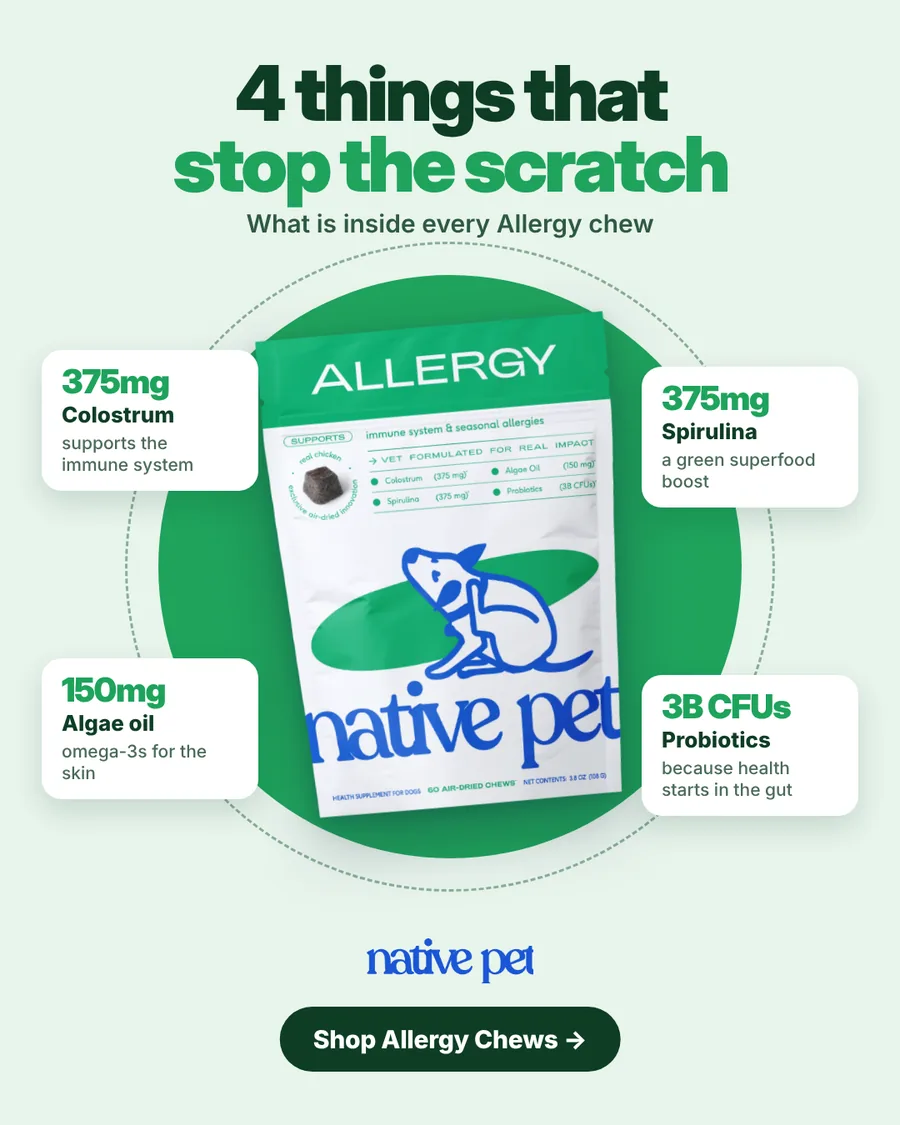
What it does: "4 things that stop the scratch. What is inside every Allergy chew." The pack sits in a green circle, and four labels point to it with exact amounts: colostrum, spirulina, algae oil and probiotics, each with a short line on what it is for.
Why it works: Exact amounts look transparent and confident. Skeptical buyers like to see the formula, and the labels give them something concrete instead of a vague promise.
Steal this: Pick your three or four hero ingredients, show the real amounts, and add one plain line for each.
5. The first-order deal
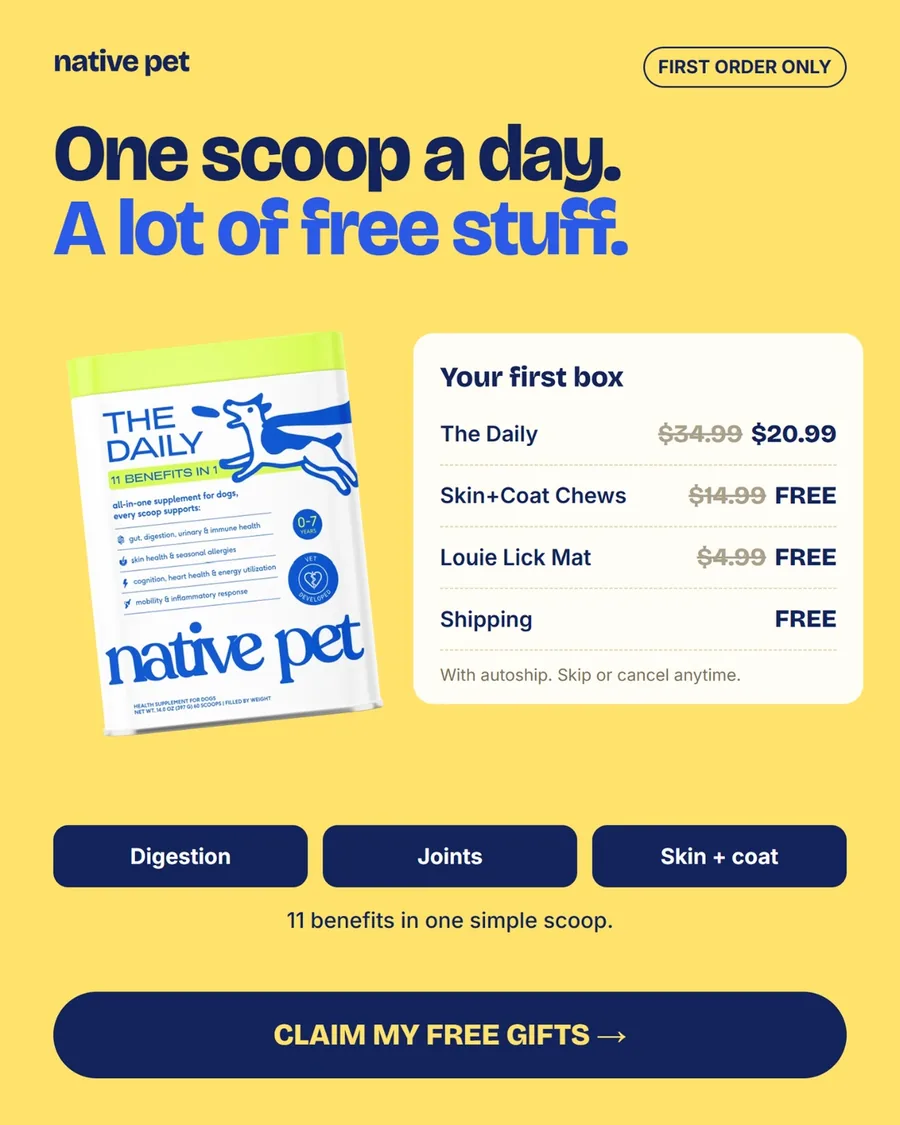
What it does: A bright yellow background with "One scoop a day. A lot of free stuff." A clean card lists the first box: the supplement with the old price crossed out, plus free chews, a free lick mat and free shipping. Three tabs show the main benefit areas, and a big "Claim my free gifts" button sits at the bottom.
Why it works: Supplements are bought again and again, so the first order is the hardest. Free extras make trying it feel low risk, and the line "with autoship, skip or cancel anytime" removes the fear of being trapped.
Steal this: Make the first purchase feel like a no-brainer, and be upfront about subscriptions.
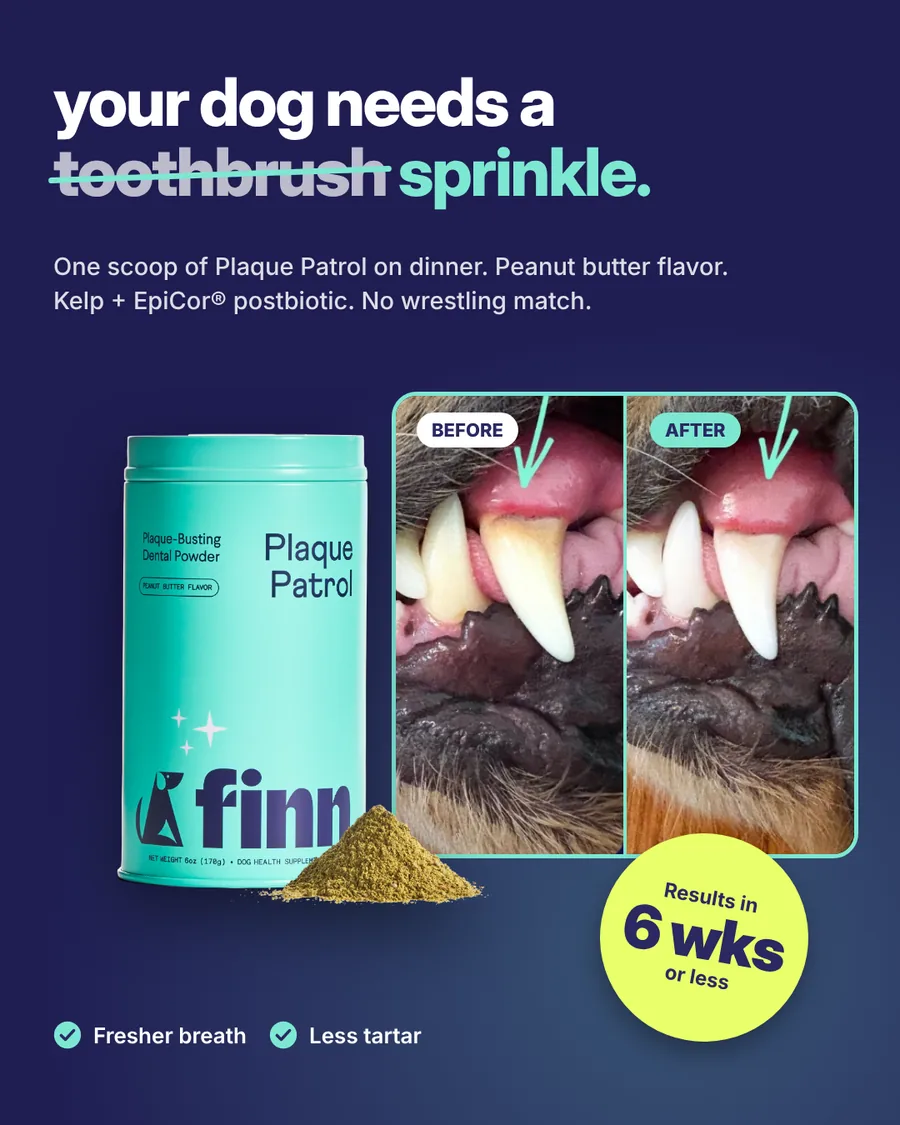
6. The swap headline
What it does: "Your dog needs a toothbrush sprinkle," with "toothbrush" crossed out. A dental powder tin sits next to before and after photos of a dog's teeth, and a round badge says "Results in 6 weeks or less."
Why it works: It replaces a hard habit (brushing a dog's teeth) with an easy one (a sprinkle on dinner). The crossed-out word tells the whole story in one glance.
Steal this: Find the annoying routine your product replaces and cross it out in the headline.
Supplement ad angles that work
If you are stuck, start with one of these:
- The proof angle. A study, years in business, number of reviews or a third-party test.
- The education angle. "Why X happens" in three or four points, then your product.
- The ingredient angle. What is inside, with real amounts.
- The routine angle. "One scoop a day," "two capsules with breakfast." Show how easy it is.
- The comparison angle. Your formula vs "most powders" or "most gummies," for example on absorption, sugar or ingredient count.
- The first-order angle. A discount, free gifts or a trial size.
- The customer story angle. One specific review about one specific change.
Test three different angles at once, not three versions of the same angle. I explain why in how many ad creatives to test per week.
Claims: what to avoid and what to say instead
This is where most supplement ads get into trouble. In the US, dietary supplements can make structure and function claims (how a nutrient affects the body), but they cannot claim to diagnose, treat, cure or prevent a disease. Supplement labels with structure and function claims also need the standard FDA disclaimer. Meta adds its own rules on top, especially around weight loss and body image.
| Risky | Safer |
|---|---|
| "Cures joint pain" | "Supports joint comfort and mobility" |
| "Melts belly fat fast" | "Supports your fitness routine" (and no body images implying weight loss) |
| "Boosts your immune system against flu" | "Supports normal immune function" |
| "Doctors hate this" | "Formulated with [ingredient], studied in [type of study]" |
| "Lose 10 kg in a month" | Avoid weight-loss promises entirely |
| "Guaranteed results" | "30-day money-back guarantee" |
| A before and after of a body | A product shot, an ingredient breakdown or a lifestyle photo |
Other rules of thumb:
- Every claim needs evidence. The FTC's Health Products Compliance Guidance says health claims should be supported by competent and reliable scientific evidence. If you cannot back it up, do not say it.
- Do not suggest the buyer has a problem. Meta does not allow ads that try to create negative self-perception. "Tired of feeling fat?" is risky. "Feel your best this summer" is safer.
- Do not target personal attributes in the copy. "You have joint pain" can be a problem. "Looking for joint support?" is safer.
- Weight loss is the strictest area. Meta treats weight loss and body image ads strictly, including restricting who they can be shown to by age. If your product touches weight, read the current policy first.
- Be clear about subscriptions. Hidden autoship is a fast way to get complaints and refunds.
Pre-launch checklist for supplement ads
- Is every claim in the image and the copy backed by evidence I can show?
- Am I using "supports" language, not "treats," "cures" or "prevents"?
- Does the ad avoid making the buyer feel bad about their body?
- Are there no body before and afters or zoomed-in body parts?
- Are ingredient amounts and product photos accurate to the real product?
- Is the offer clear, including subscription terms?
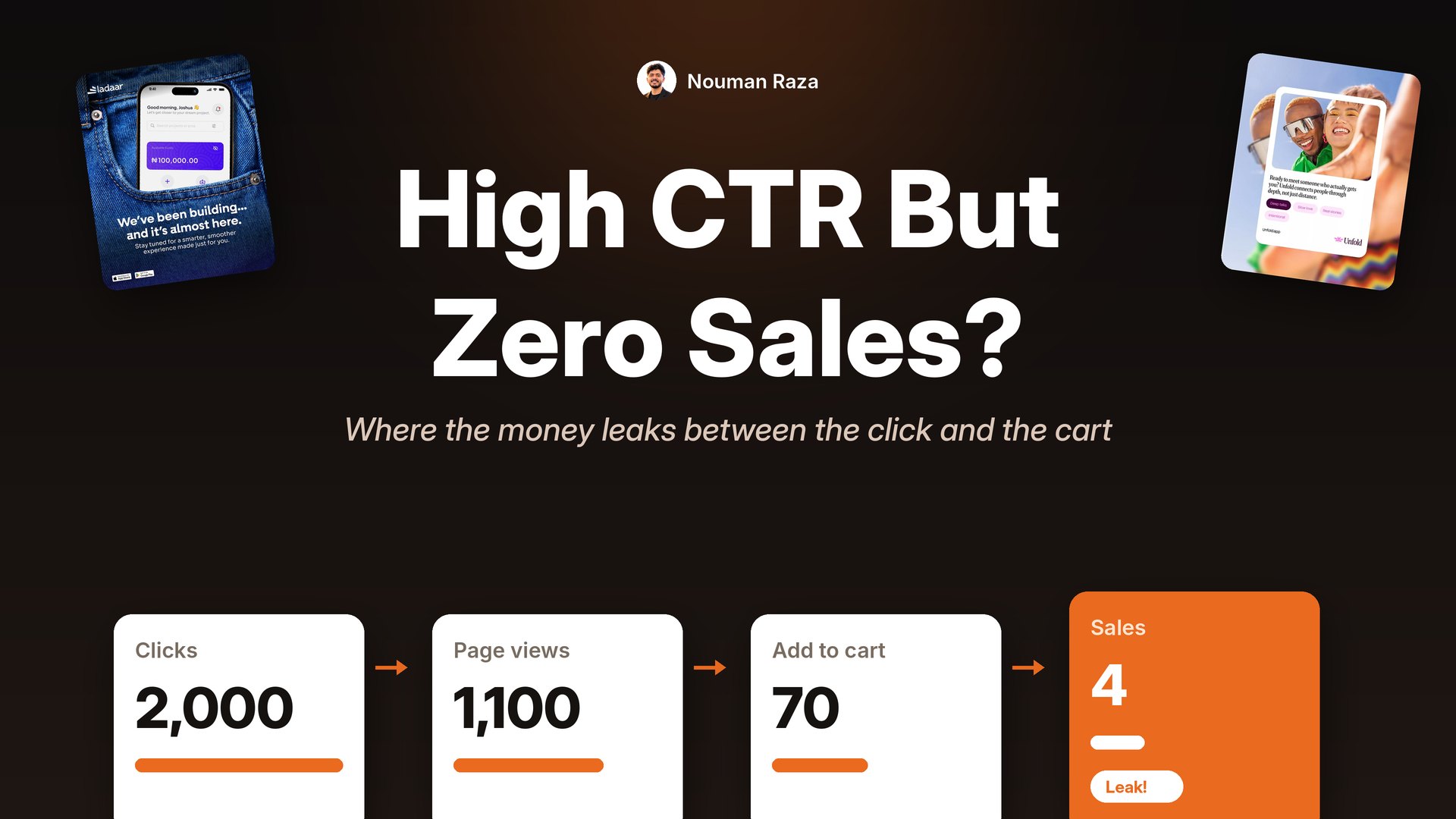
- Does the landing page match the ad's promise? If it does not, see high CTR but no sales.
- Do I have 4:5 and 9:16 versions?
Keep reading: see more layouts for physical products in 10 product ad examples.
FAQ
Can you advertise supplements on Facebook?
Yes. Supplements are allowed on Facebook and Instagram, but they must follow Meta's Advertising Standards, including its rules on health and appearance claims. Weight loss products face the strictest rules. Check the current policy before you launch.
Why do supplement ads get rejected on Meta?
Common reasons are claims that sound like medical promises, images that imply weight loss, before and after body photos, wording that suggests the viewer has a health problem, or a landing page that makes claims the ad does not. Often changing one word or one image is enough.
What makes a good supplement ad?
A good supplement ad gives one clear, provable benefit, shows proof like a study, ingredient amounts or reviews, keeps the language careful ("supports," not "cures"), and makes the first purchase feel easy.
Do I need the FDA disclaimer in my supplement ads?
In the US, the FDA disclaimer is required on supplement labels that carry structure and function claims. Many brands also add it to ads and landing pages. Because rules vary by country and claim, check with a regulatory expert for your exact case.
Are static or video ads better for supplements?
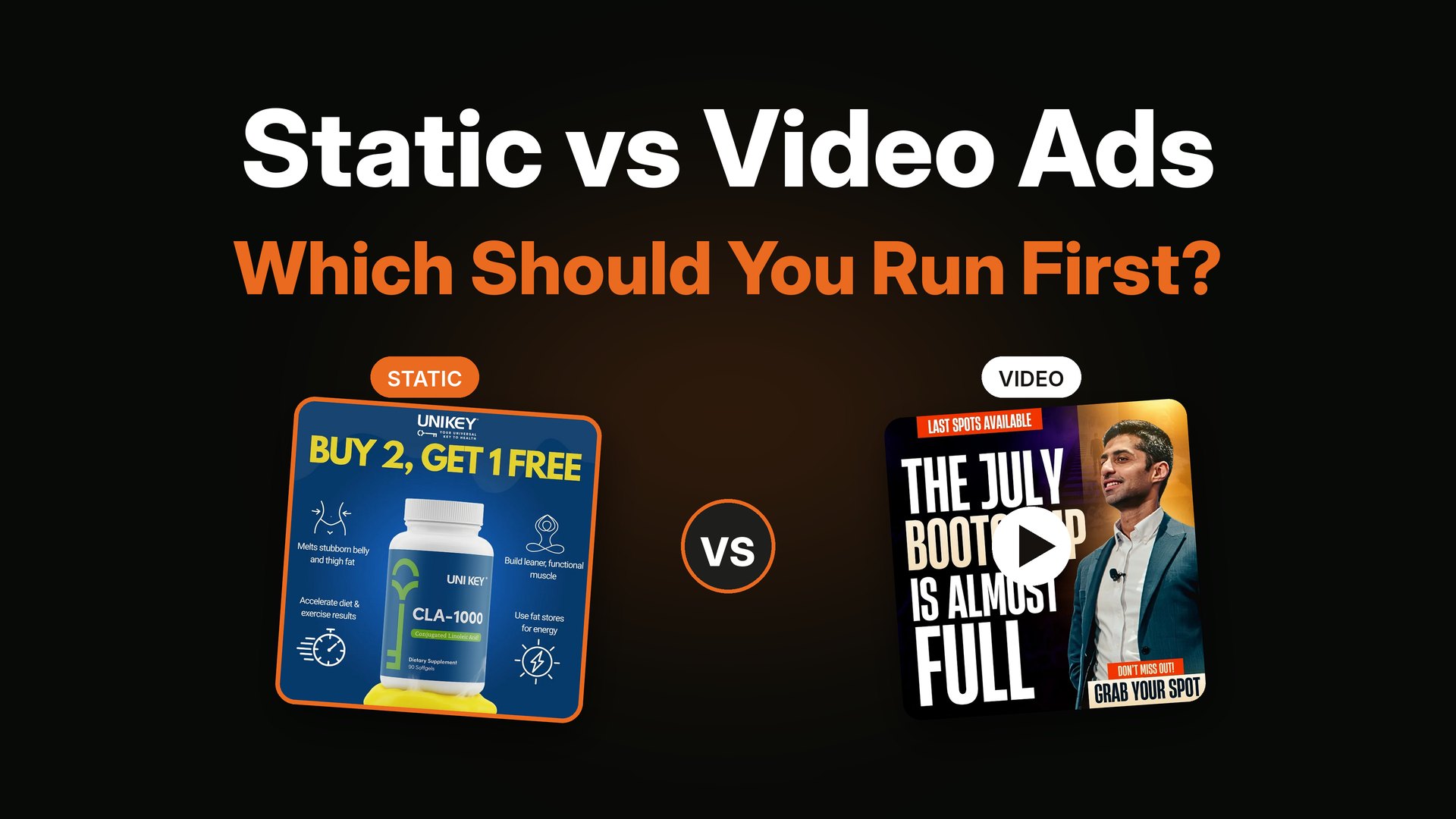
Both work. Static ads are great for testing angles and showing ingredient breakdowns, offers and comparisons. Video is useful for routines and testimonials. Many brands test the angle in static first. See static vs video ads.
Are TikTok ads for supplements different?
TikTok has its own health and supplement policies, and some products or claims that run on Meta may not run there. The same principles apply: careful claims, real proof and no body-shaming. Always check the platform's own rules.
Need supplement ads that sell and stay compliant?
I design static ads for supplement, wellness and pet brands, plus other DTC, e-commerce and coaching brands. I write the angles with claims in mind, so you get ads that stand out without promising what you cannot prove. You can see what is included on my services page. If it looks like a fit, book a short call and we can start with a small test batch.