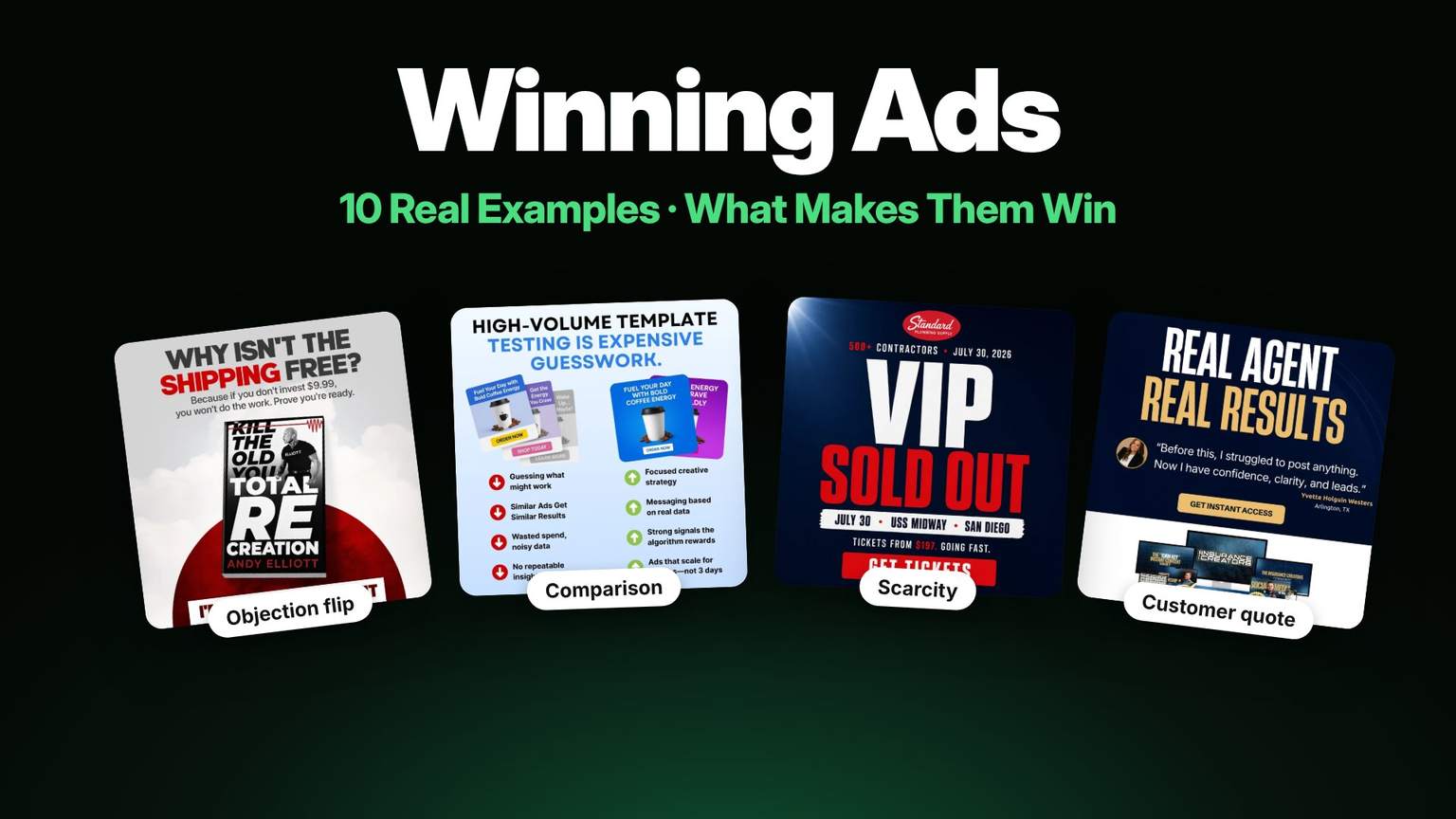
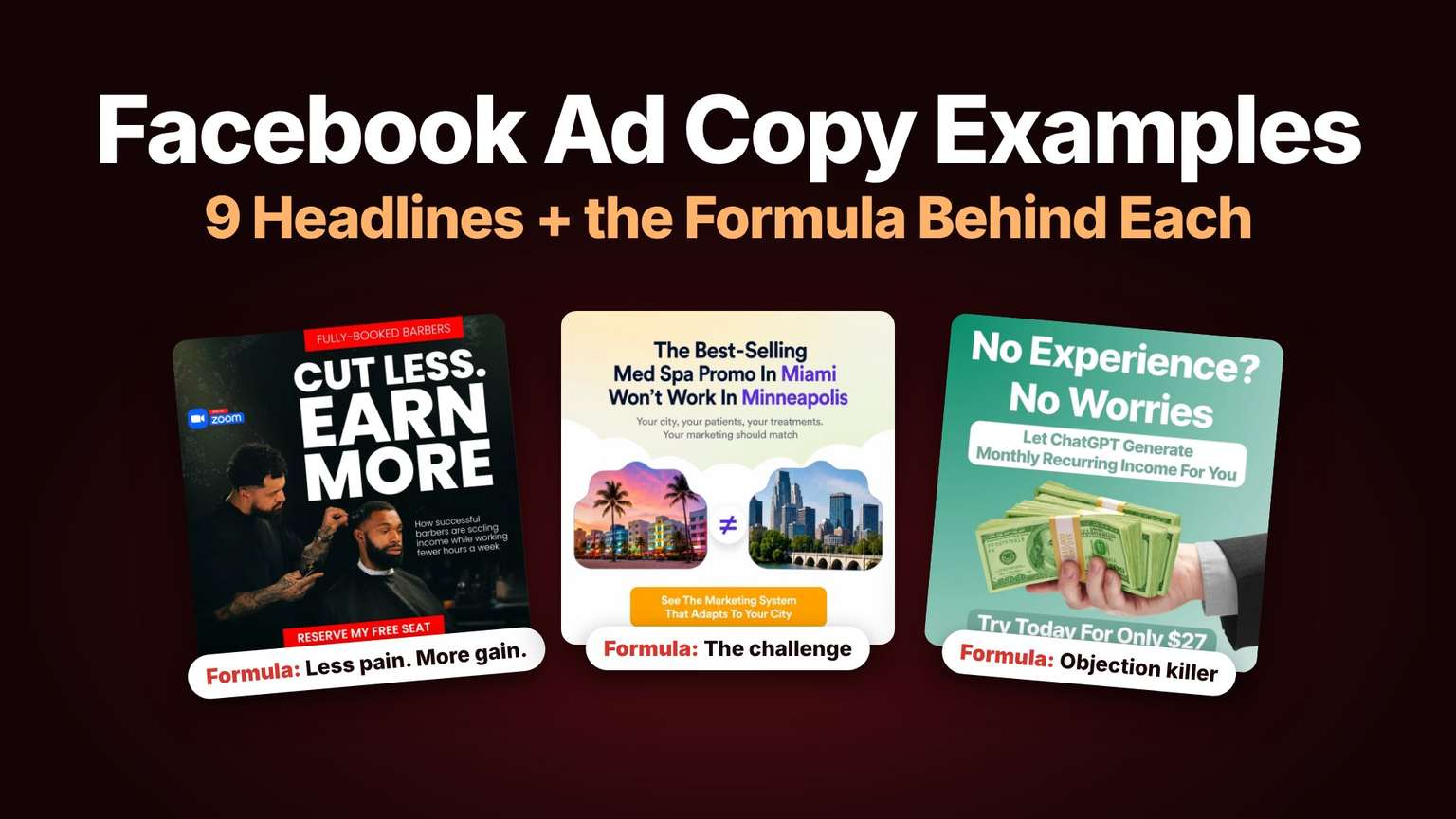
TL;DR: Facebook ad copy has three jobs: stop the right person, make them believe you, and tell them what to do next. The best copy is short, specific and written in the buyer's own words. Below are 9 real headline examples from static ads I designed, the 8 headline formulas behind them, primary text examples you can copy, and the character limits so nothing gets cut off.
Most Facebook ad copy fails for one boring reason: it is about the brand, not the buyer.
"Introducing our new and improved formula." "We are proud to announce." "Quality you can trust." Nobody stops scrolling for that. People stop for copy that describes their problem better than they could describe it themselves.
In this post I will show you real headlines from static ads I designed, explain why each one works, and give you the formula so you can write your own. Then I will cover the primary text (the caption), the headline field, the button, and the limits for each.
If you want the design side, read Facebook ad design rules. If you want to see how copy and visual fit together, see the anatomy of a static ad.
The parts of Facebook ad copy
A Facebook ad has four places where words go. Each one has a different job.
| Part | Where it shows | Job | What shows before it gets cut |
|---|---|---|---|
| Text on the image | On the creative itself | Stop the scroll, say the one idea | Everything, if it is big enough to read |
| Primary text | Above the image | Hook, then explain and prove | About 125 characters, then "See more" |
| Headline | Below the image | Restate the offer or benefit | About 27 to 40 characters |
| Description | Below the headline (not always shown) | Extra detail or proof | Often hidden on mobile |
| Call to action button | Bottom right | Next step | Chosen from Meta's list |
Here is the part many people miss: on a static ad, the text on the image is the most important copy you write. It is the only text everyone sees. Many people never read the caption at all. So I write the image headline first, and the caption second.
9 Facebook ad headline examples (and why they work)
These are headlines from static ads in my portfolio. For each one: the headline, why it works, and the formula you can reuse.

1. "The best-selling med spa promo in Miami won't work in Minneapolis"
Why it works: It challenges a belief the buyer holds, that a promo that works somewhere will work everywhere. Naming two real cities makes the point concrete, and the "not equal" sign between two city photos says it again without words.
Formula: The [thing that works for others] won't work for [your buyer's situation].
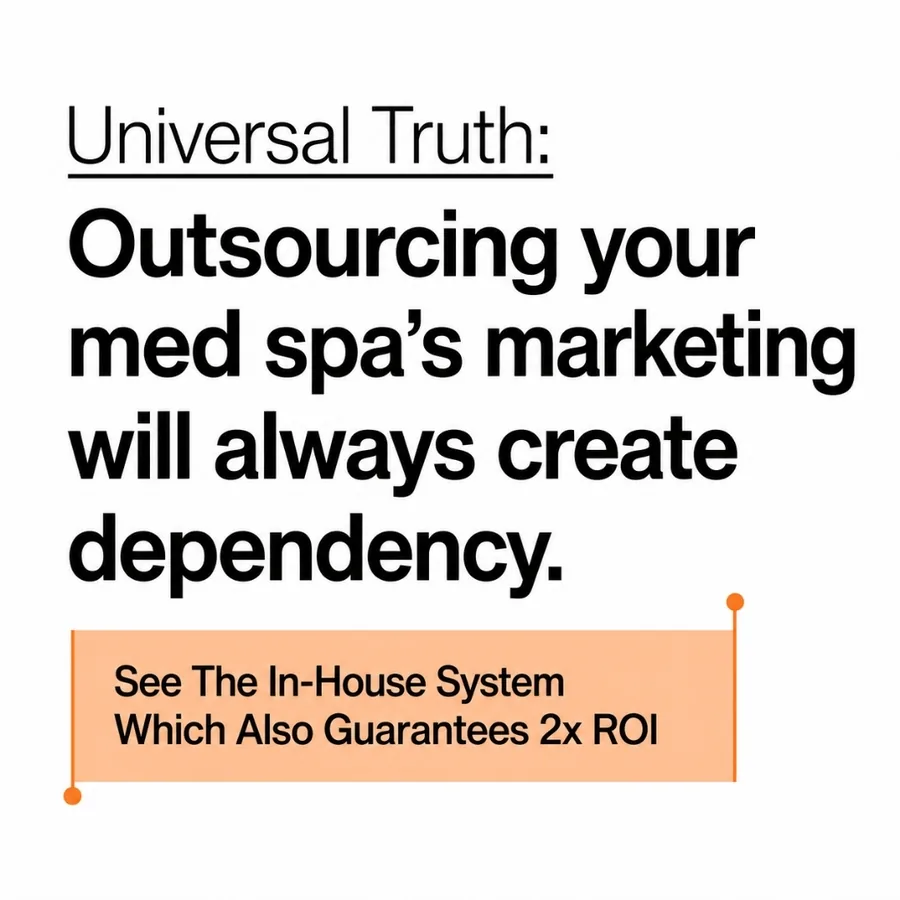
2. "Universal truth: Outsourcing your med spa's marketing will always create dependency"
Why it works: "Universal truth" is a strong, confident opener. It frames the claim as a fact, not an opinion, which gets either agreement or a reaction. Both make people read.
Formula: Universal truth: [bold statement your buyer secretly agrees with].
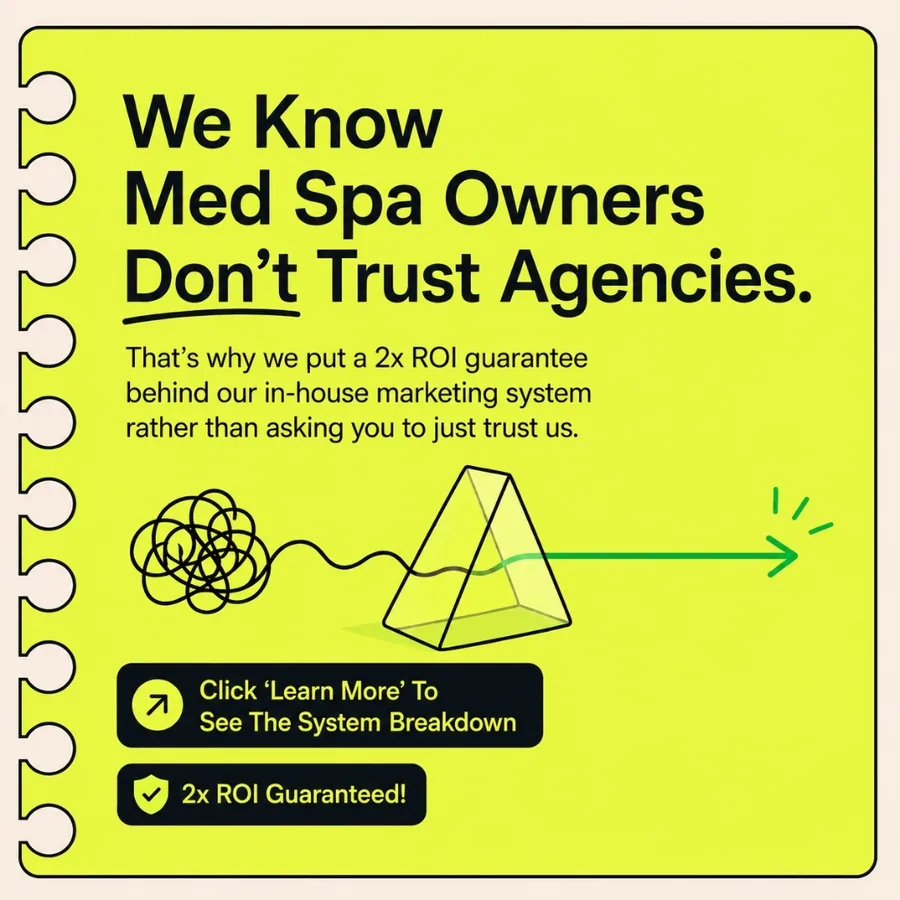
3. "We know med spa owners don't trust agencies"
Why it works: It says the objection out loud before the buyer can. That builds trust fast. Then the next line answers the objection directly with a guarantee, instead of asking for blind trust.
Formula: We know [your buyer] doesn't trust [the usual solution]. That's why [your proof or guarantee].
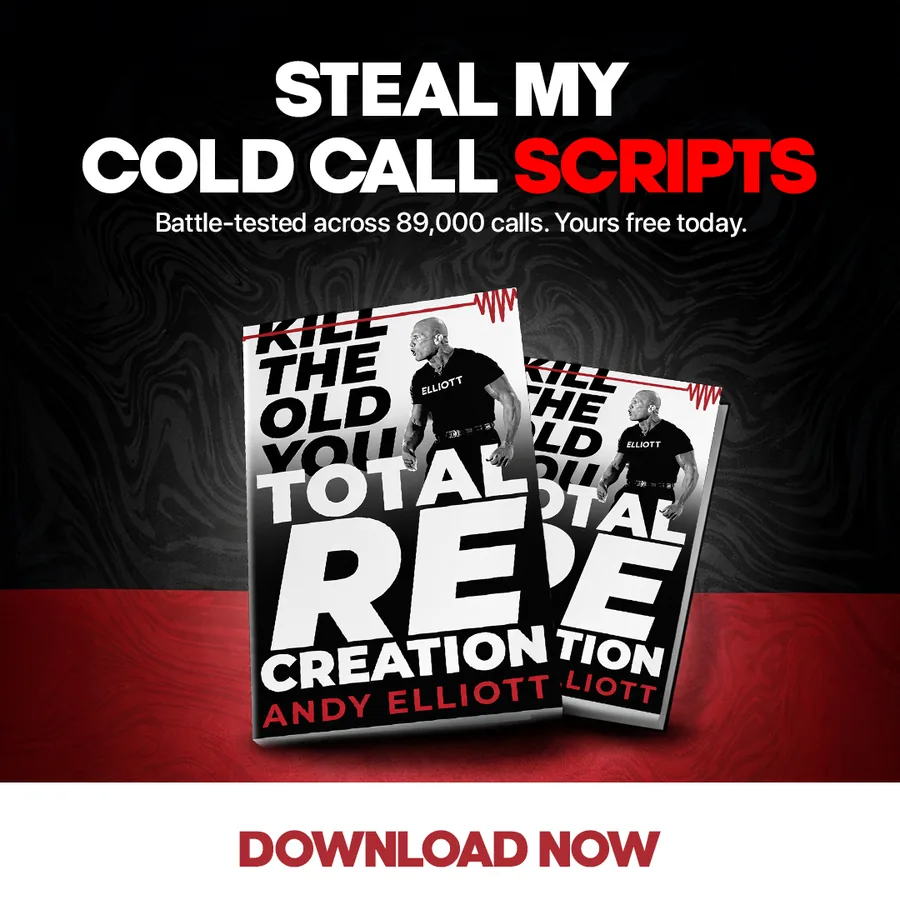
4. "Steal my cold call scripts"
Why it works: "Steal" is a playful, active word. It makes a free download feel like getting away with something. The line underneath adds proof (tested across a large number of calls) and the offer (free today).
Formula: Steal my [useful thing]. [Proof]. [Offer].
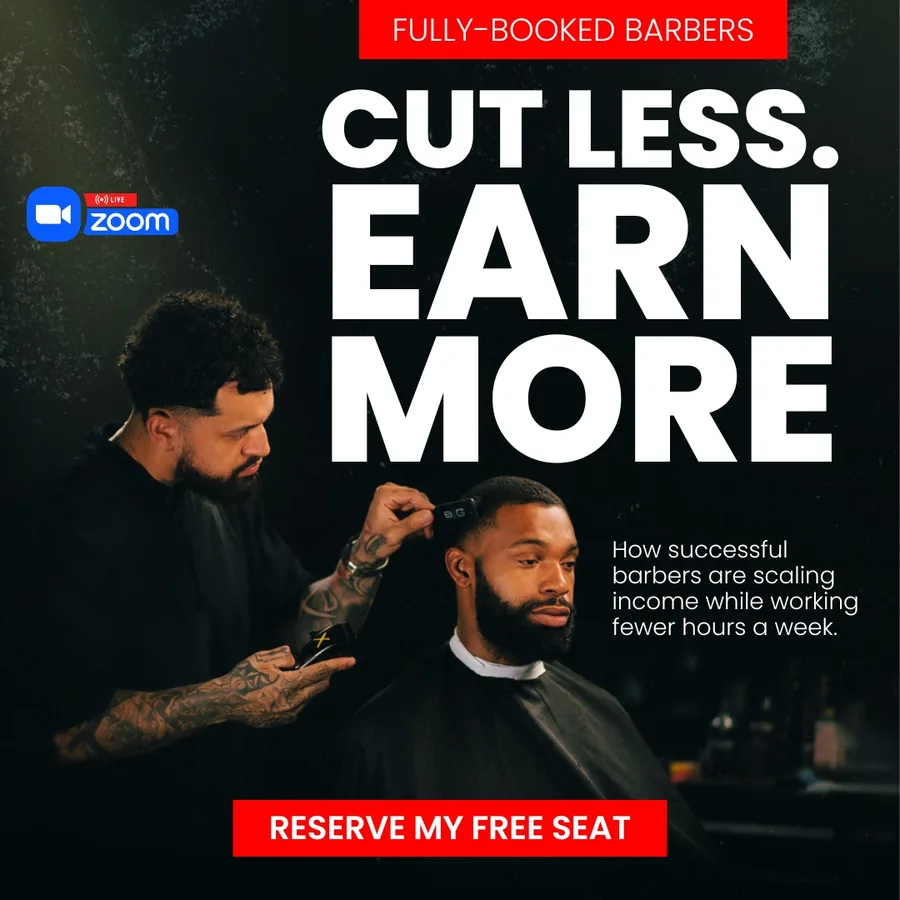
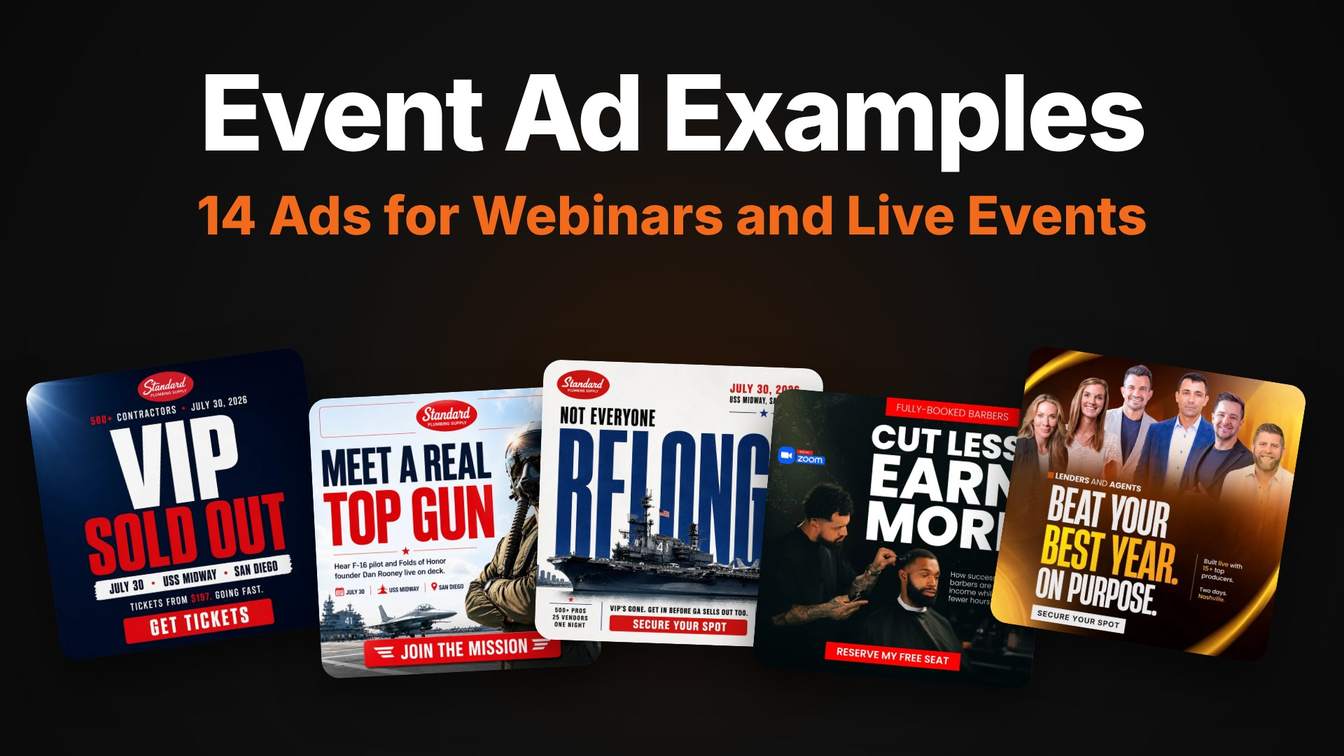
5. "Cut less. Earn more."
Why it works: Four words, two short sentences, a perfect contrast. It promises the dream outcome (more money for less work) in language barbers actually use. "Fully-booked barbers" at the top filters the audience to people who already have the problem of being too busy.
Formula: [Do less of the hard thing]. [Get more of the result].

6. "No experience? No worries."
Why it works: It removes the biggest objection in the first two words. The rhyme makes it easy to remember. The price at the bottom ($27) makes it a small, easy yes.
Formula: No [objection]? No [problem]. [What you get] for [small price].

7. "You're too successful to still be this behind"
Why it works: A compliment and a jab in one sentence. The buyer feels proud and uncomfortable at the same time, and that tension makes them read the next line: "Your business grew. Your financial system didn't."
Formula: You're too [good thing about them] to still be [bad situation].
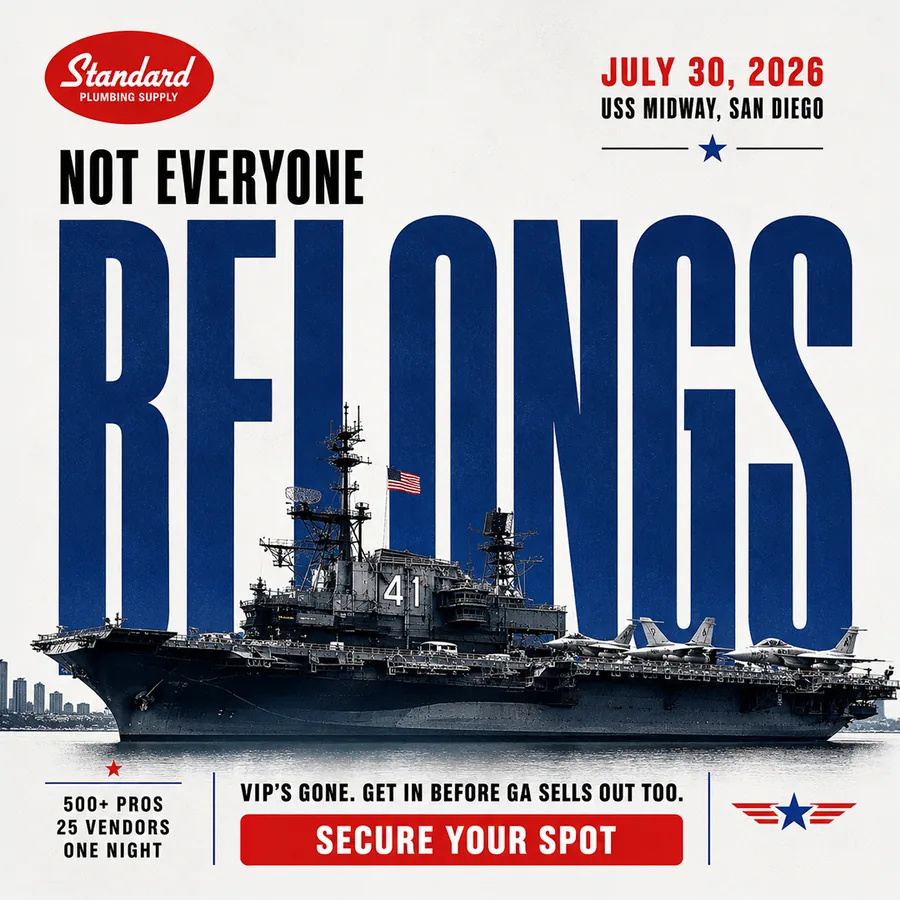
8. "Not everyone belongs"
Why it works: Exclusivity. It turns an event ticket into a status question. The small line near the button, "VIP's gone. Get in before GA sells out too," adds real urgency.
Formula: Not everyone [gets in / qualifies / belongs]. [Scarcity line].
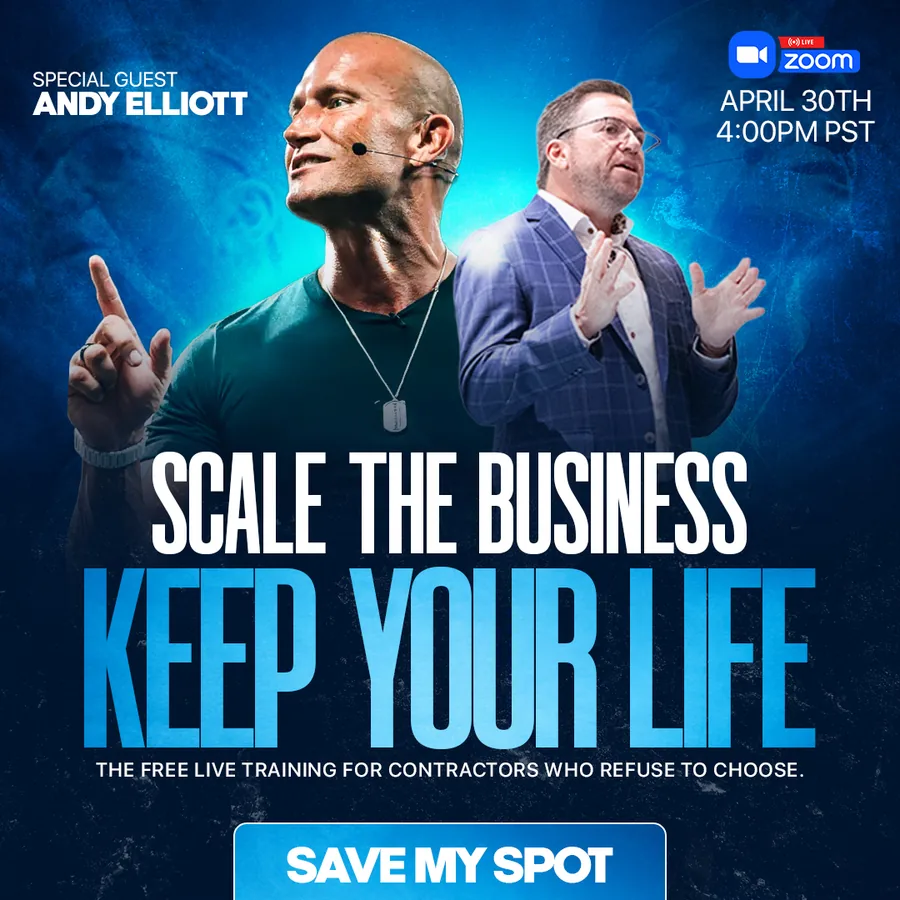
9. "Scale the business. Keep your life."
Why it works: It names the trade-off the buyer thinks is unavoidable (grow the business or have a life) and promises both. The subline "for contractors who refuse to choose" makes the buyer feel like the hero.
Formula: [Get the big result]. Keep [the thing they fear losing].
8 headline formulas, in one list
Here are the formulas from above, ready to fill in:
- The challenge: The [popular thing] won't work for [their situation].
- The universal truth: Universal truth: [bold statement they agree with].
- The objection out loud: We know [buyer] doesn't trust [solution]. That's why [proof].
- The steal: Steal my [useful asset]. [Proof]. [Offer].
- The contrast: [Less of the pain]. [More of the gain].
- The objection killer: No [objection]? No problem.
- The compliment jab: You're too [good trait] to still be [bad situation].
- The trade-off killer: [Big result]. Keep [what they fear losing].
A few more classics that work well on Facebook:
- The call-out: [Job title]: [their exact problem]?
- The number: [Number] [buyers] already [result]. Only use numbers you can prove.
- The question: Still [doing the old painful thing]?
- The "how to" with no catch: How to [result] without [the thing they hate].
Facebook primary text examples
The primary text sits above the image. Only the first line or two shows before "See more," so the first sentence has to work on its own. Here are three structures I use, with short examples.
1. The short version (one to three lines)
Best for retargeting and simple offers.
Your dog's itching is not "just the season." One chew a day. 40% off your first order.
2. The problem, agitate, solve version
Best for cold audiences who need a reason to care.
Every week your clinic replies late, a patient books somewhere else. It is not your fault. Your front desk is busy, and leads come in at 10 pm. We set up a system that replies in minutes, day or night, so you keep the patients you already paid for. See how it works. Free audit, no pitch.
3. The story version
Best for coaches, info products and anything personal. In this sample, a barber coach is speaking in their own voice.
Two years ago I was cutting hair six days a week and still stressed about rent. Now I work three days and make more. Same chair, same city. I'm showing exactly how in a free live class on Thursday. Seats are limited.
Tips for the primary text:
- Put the hook in the first 125 characters. Treat everything after "See more" as a bonus.
- Use short lines and white space. Walls of text get skipped.
- Write like you talk. Read it out loud. If it sounds like a press release, rewrite it.
- Emojis are fine if they fit your brand, but do not use them to replace words.
- One idea per ad. If you have three benefits, test them in three ads.
Facebook headline field examples
The headline field sits under the image, next to the button. It is short, so use it to restate the offer or the main benefit.
- "40% off your first box"
- "Free live class, Thursday 2 pm"
- "Get your free marketing audit"
- "Ships free in 2 days"
- "Results in 6 weeks or less"
Keep it to about 27 to 40 characters so it does not get cut on mobile.
The call to action button
Meta gives you a fixed list of buttons: Learn More, Shop Now, Sign Up, Book Now, Download, Get Offer and so on. Pick the one that matches what actually happens after the click. "Shop Now" for a product page, "Sign Up" for a webinar, "Book Now" for a call.
But the button on the image is yours to write, so make it specific: "Save my seat," "Try it 40% off," "Get my free audit." A specific button tells people exactly what they get, which makes the click feel safer.
Where to find words that convert
The best ad copy is rarely invented. It is found. Before writing, I read:
- Customer reviews, yours and competitors'. One-star reviews of competitors are gold, because they show the exact pain your buyer wants fixed.
- Reddit threads and Facebook groups where your buyers complain.
- Sales call notes and support emails. The questions people ask are your objections.
- Comments on your own ads. If people keep asking the same thing, put the answer in the next ad.
Copy the exact words people use. "My dog won't stop scratching at night" beats "Supports skin health" every time.
Common Facebook ad copy mistakes
- Starting with the brand name. Start with the buyer or the problem.
- Vague promises. "Better results" means nothing. "Results in 6 weeks" means something.
- Writing the message only in the caption. On a static ad, the image text is what most people read.
- Too many claims. Pick one benefit per ad and test.
- Claims you cannot back up. Meta can reject ads with misleading claims, and buyers stop trusting you even faster. Health, money and before-and-after claims need extra care.
- "Learn more" everywhere. Tell people what they will get.
If your copy gets clicks but no sales, the issue may be the page after the ad. I cover that in high CTR but no sales.
FAQ
How long should Facebook ad copy be?
There is no single right length. Short copy (one to three lines) works well for simple offers and retargeting. Longer copy can work for cold audiences and higher-priced offers, as long as the first line hooks. Test both. Whatever the length, the first 125 characters must stand on their own.
What is the character limit for Facebook ad headlines?
Facebook allows longer headlines, but on mobile only around 27 to 40 characters show before they get cut. Primary text shows about 125 characters before "See more." Plan your key words to fit inside those limits.
What makes a good Facebook ad headline?
A good headline names the buyer or their problem, makes one clear promise, and creates a reason to keep reading. Specific beats clever. "Cut less. Earn more." works because every barber knows exactly what it means.
Should I put text on my Facebook ad image?
Yes, for static ads. The text on the image is often the only copy people read. Keep it short: a headline under about ten words, one supporting line and a button. Meta removed its old 20% text rule, so text-heavy designs are allowed, but clean ones are easier to read.
Can I use AI to write Facebook ad copy?
AI tools are useful for drafts and for generating many headline variations quickly. But they do not know your buyer's exact words, your proof or your angle unless you give them that. Use AI as an assistant, not as the strategist.
How many copy variations should I test?
Start with 3 to 5 clearly different angles, not small word swaps. Once you find a winning angle, test headline variations within it. See how many ad creatives to test per week for a plan by budget.
Want ad copy and design done together?
I design static ads for DTC, e-commerce, info-product and coaching brands, and I write the on-image copy and angles too, so the words and the design work as one. You can see what is included on my services page. If it looks like a fit, book a short call and we can start with a small test batch.